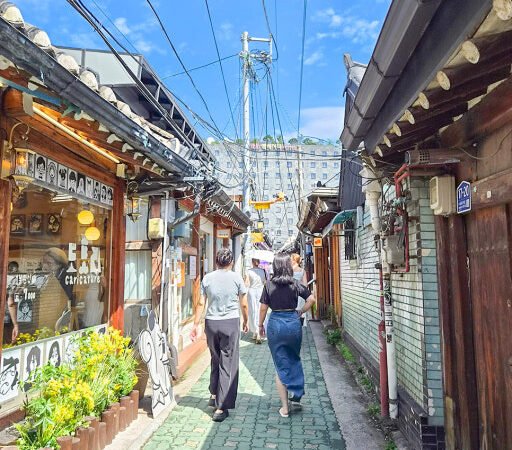
Ikseon-dong, Seoul’s youth street in 100-year-old hanok alleys. Discover trendy food, cafés and fashion where tradition meets young Korean style.
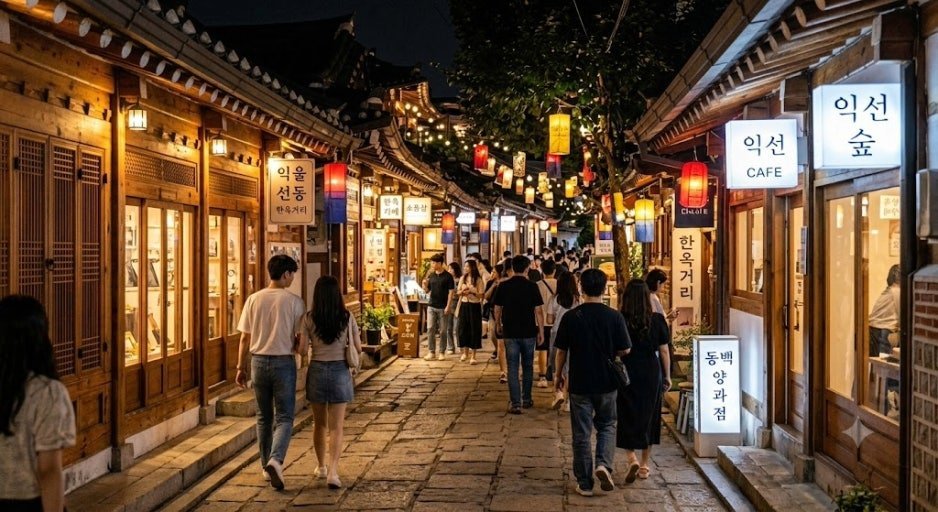
Just one minute from a busy subway station, the city noise fades and you step into a maze of narrow lanes lined with tiled roofs, wooden lattice windows and tiny courtyards. This is Ikseon-dong (익선동), one of the oldest hanok (traditional Korean house) villages in Seoul — and today, one of the city’s most charming places to eat, drink coffee and take photos.
Quick Facts
| Where | Ikseon-dong, Jongno-gu, central Seoul |
| Subway | Jongno 3-ga Station (Line 1, 3, 5), Exit 4 or 6 |
| Walk from station | 1–2 minutes |
| Time needed | 2–3 hours (half a day with nearby palaces) |
| Best time | Weekday mornings, before 11 AM |
| Entry fee | Free (it is a living neighborhood) |
A Short History
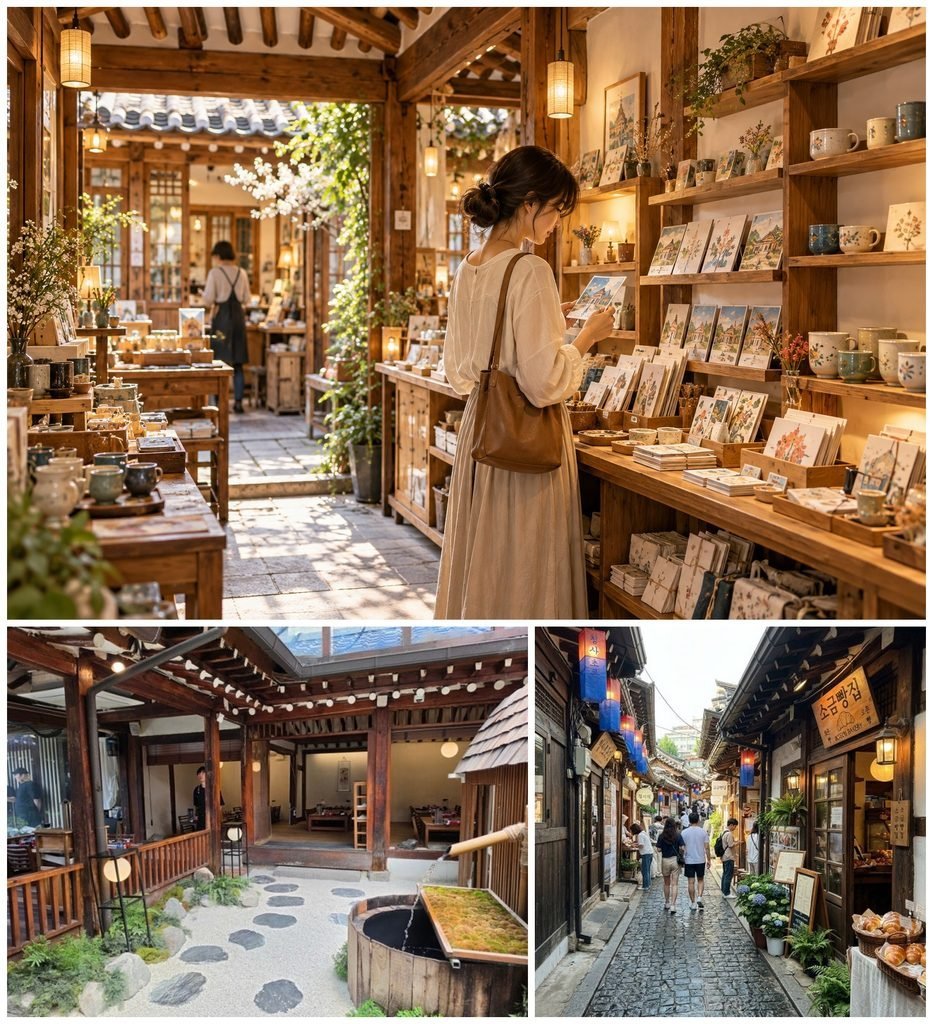
Ikseon-dong was developed in the 1920s–1930s by Jeong Se-gwon, a Korean real-estate developer who built small, affordable hanok for ordinary city families. Roughly a hundred of these houses still stand along a handful of lanes. Since the late 2010s, young owners have turned many of them into cafés, restaurants and boutiques — while keeping the original roofs, beams and courtyards.
What to Do in Ikseon-dong
- Get lost in the alleys. Some lanes are barely wide enough for two people. Every corner has a new doorway, flower pot or lantern to photograph.
- Café hopping in a hanok. Order tea or dessert and sit in a converted courtyard under the old wooden eaves. Cheongsudang (famous for soufflé castella) is a local favorite.
- Taste Korean comfort food. Try sotbap (rice cooked in a stone pot) or Korean street snacks in the small restaurants along the lanes.
- Rent a hanbok. Rental shops nearby let you dress in traditional clothes — perfect for photos here and at Changdeokgung Palace.
- Come back at night. When the lanterns light up, the village feels completely different. After dark, the nearby Jongno 3-ga street-tent bars (pojangmacha) are a fun local experience.
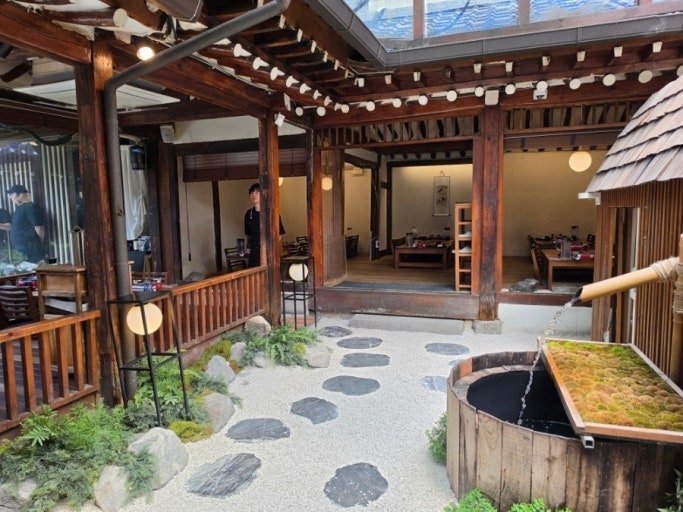
Inside a hanok courtyard (madang) turned café — wooden pillars and open sky
Ikseon-dong Visitor Map
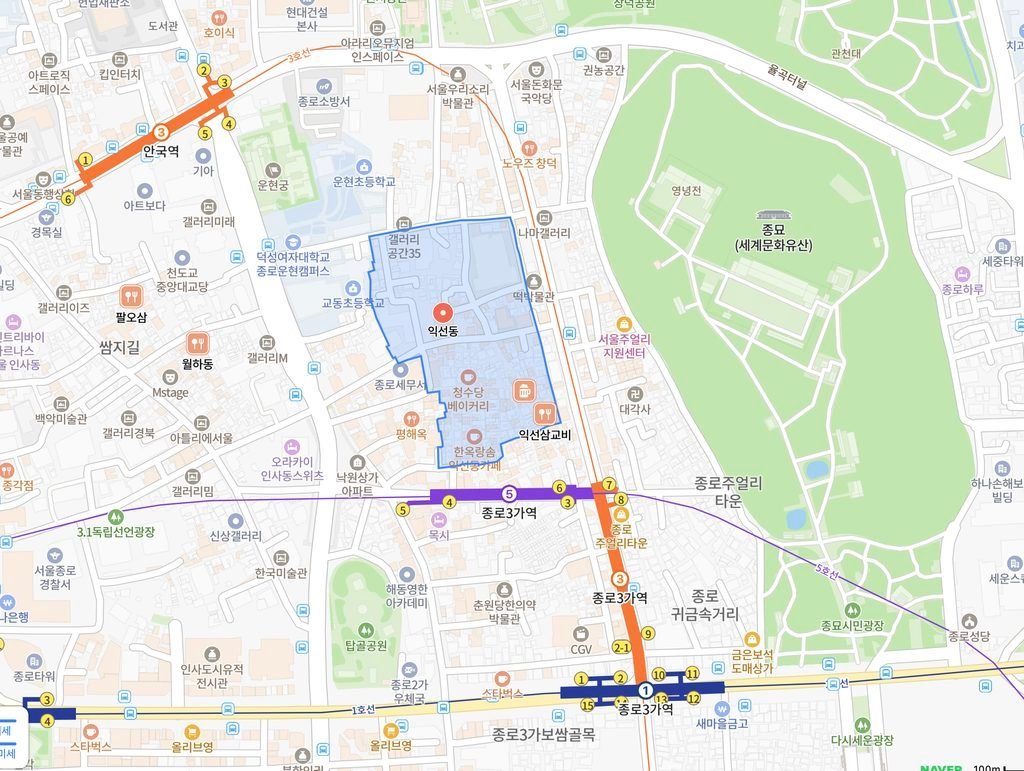
Schematic visitor map of Ikseon-dong and nearby sights (not to scale)
How to read the map — a simple half-day walking route:
- Start at Jongno 3-ga Station (Exit 4 or 6). Walk north for 1–2 minutes; the hanok lanes (1) begin right behind the main road. Spend 1–2 hours exploring, eating and café hopping.
- Changdeokgung Palace (2). Walk about 10–12 minutes north along Donhwamun-ro to a UNESCO World Heritage palace and its famous Secret Garden.
- Jongmyo Shrine (3). About 5 minutes east — the royal ancestral shrine of the Joseon Dynasty, also UNESCO-listed.
- Insadong (4). About 10 minutes west — traditional craft shops, tea houses and souvenir stores to finish your day.
Travel Tips
- Go early on weekdays. Weekend afternoons are crowded and popular cafés can have 30–60 minute lines.
- Use Naver Map or KakaoMap. Google Maps is less accurate for walking directions in these tiny lanes.
- Be respectful. People still live here — keep your voice down and don’t enter private gates.
- Wear comfortable shoes. The lanes are narrow and some surfaces are uneven.
Ikseon-dong is small, but it packs a century of Seoul’s story into a few lanes. Come for the coffee, stay for the rooftops — and don’t forget to hold hands in the narrowest alley.
Continue your walk: Gyeongbokgung Palace guide: hours, tickets and costs · Bukchon Hanok Village guide · Jongmyo Shrine guide · Cheongsudang café in Ikseon-dong