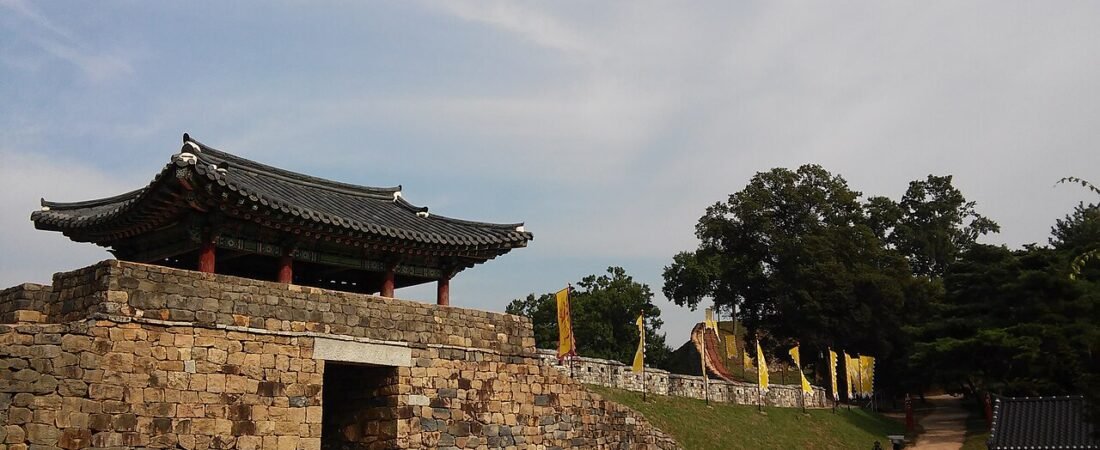
Gongju in autumn is one of the easiest ways to combine fall color with real history on a day trip from Seoul. This quiet city on the Geum River was Ungjin, the capital of the Baekje Kingdom from 475 to 538, and three of its sites – Gongsanseong Fortress, the Royal Tombs of King Muryeong and Magoksa Temple – are UNESCO World Heritage. In late October and early November, maples line the fortress walls and the valley road to Magoksa, while the riverside and the city’s famous chestnut bakeries add the flavors of the season. Here is how to plan the trip, what it costs in 2026, and where to eat.
Why Visit Gongju in Autumn?
- Foliage timing: Gongju’s leaves usually start turning in mid-October and peak in early November; late October already brings strong reds (Nate Travel, Sep 2026). Korea’s 2026 foliage map puts the capital region and central inland areas at peak from late October.
- Fortress walk with a view: the 2.6 km wall of Gongsanseong follows a ridge above the Geum River, and autumn’s clear air gives you the best views of the river and old town.
- Magoksa’s maple valley: the 1.2 km stream-side approach from the free parking lot to the temple is a tunnel of red and yellow from late October to early November.
- Chestnut season: Gongju is Korea’s best-known chestnut region, and fall is when chestnut pastries and roasted chestnuts are everywhere.
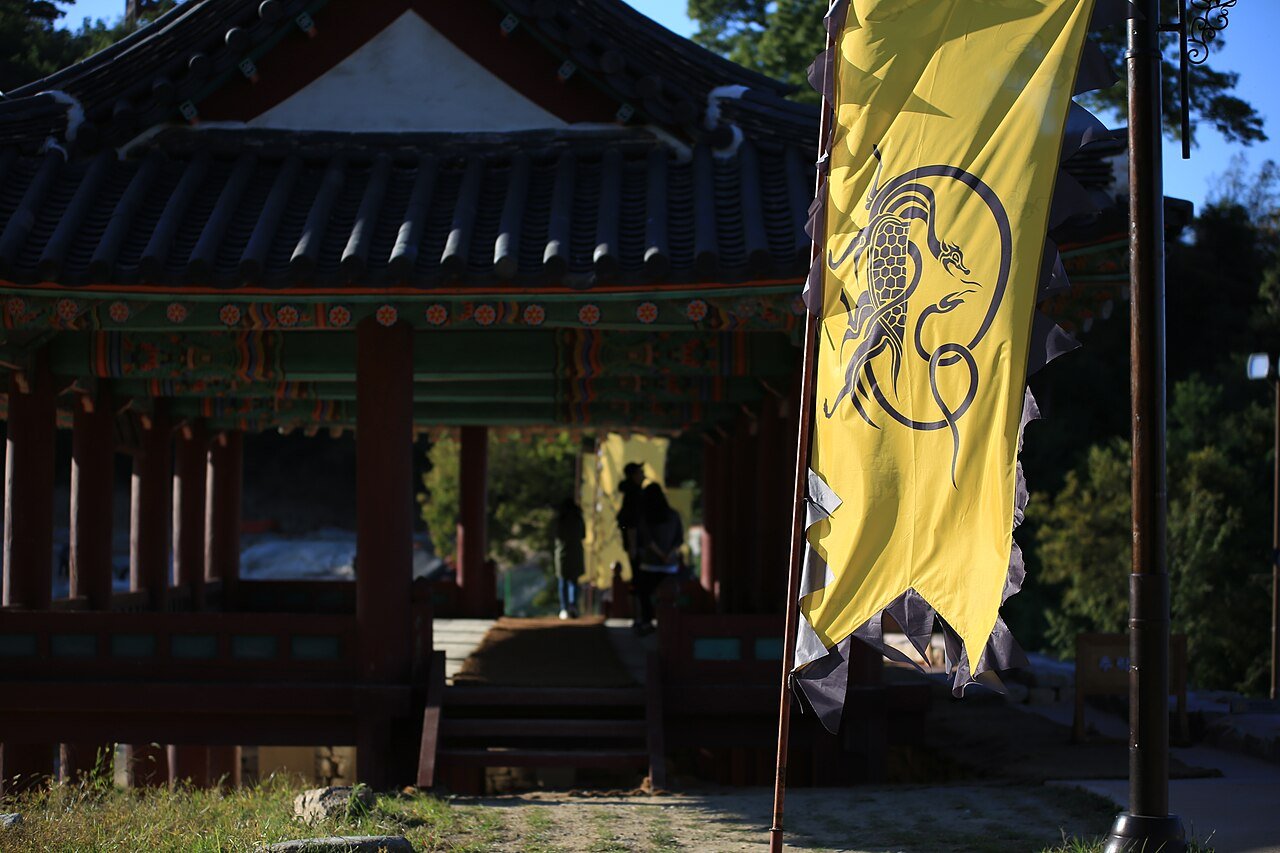
Gongbukru Pavilion at Gongsanseong (photo taken in October). Photo: Paulsbgo / Wikimedia Commons, CC BY-SA 4.0
How to Get to Gongju from Seoul
The easiest option is the express bus from Seoul Express Bus Terminal (Gyeongbu side, Express Bus Terminal Station, Lines 3/7/9) to Gongju Bus Terminal. Buses run from 06:45 to 23:35, take about 1 hour 30 minutes, and cost (2026): standard ₩10,200 · deluxe (udeung) ₩14,900 · premium ₩19,300. The last bus back to Seoul leaves around 21:00.
KTX trains stop at Gongju Station, but it is about 20 km from the city center, so the bus is usually faster door to door.
| Leg | How | Time | Cost (2026) |
|---|---|---|---|
| Seoul → Gongju | Express bus, Seoul Express Bus Terminal | ~1h30 | ₩10,200 / ₩14,900 / ₩19,300 |
| Gongju Bus Terminal → Magoksa | City bus 770 (about 14 runs a day) | ~40 min | City bus fare (card) |
| Terminal → Gongsanseong / Royal Tombs | Short taxi ride or city bus across the Geum River | 10–15 min | Taxi ~₩5,000–8,000 (estimate) |
Approximate Cost for a Day Trip
| Item | Cost per adult |
|---|---|
| Round-trip express bus (deluxe) | ₩29,800 |
| Local buses / taxis in Gongju | ₩5,000–20,000 |
| Combined ticket: Gongsanseong + Royal Tombs + Seokjang-ri Museum | ₩6,000 (each site alone ₩3,000) |
| Magoksa Temple / Gongju National Museum | Free |
| Lunch + dinner + chestnut pastries | ₩30,000–45,000 |
| Total | about ₩70,000–100,000 (US$53–75) |
Seniors with a Korean senior card enter the heritage sites free. If you want to stay overnight, the Gongju Hanok Village near the Royal Tombs is a popular option.
Suggested One-Day Itinerary
- 08:00 – Express bus from Seoul; arrive Gongju around 09:30.
- 09:50–12:30 – Bus 770 (or taxi) to Magoksa. Walk the maple-lined valley from the parking lot, see the five-story stone pagoda and Daegwangbojeon hall, then have a temple-village lunch.
- 13:30–15:30 – Royal Tombs of King Muryeong and the free Gongju National Museum, home to the treasures excavated from King Muryeong’s tomb.
- 15:45–17:30 – Loop the walls of Gongsanseong Fortress for golden-hour views of the Geum River; pick up chestnut pastries at the foot of the fortress.
- 17:45 – Dinner of Gongju gukbap by the river, then a bus back to Seoul (last departure around 21:00).
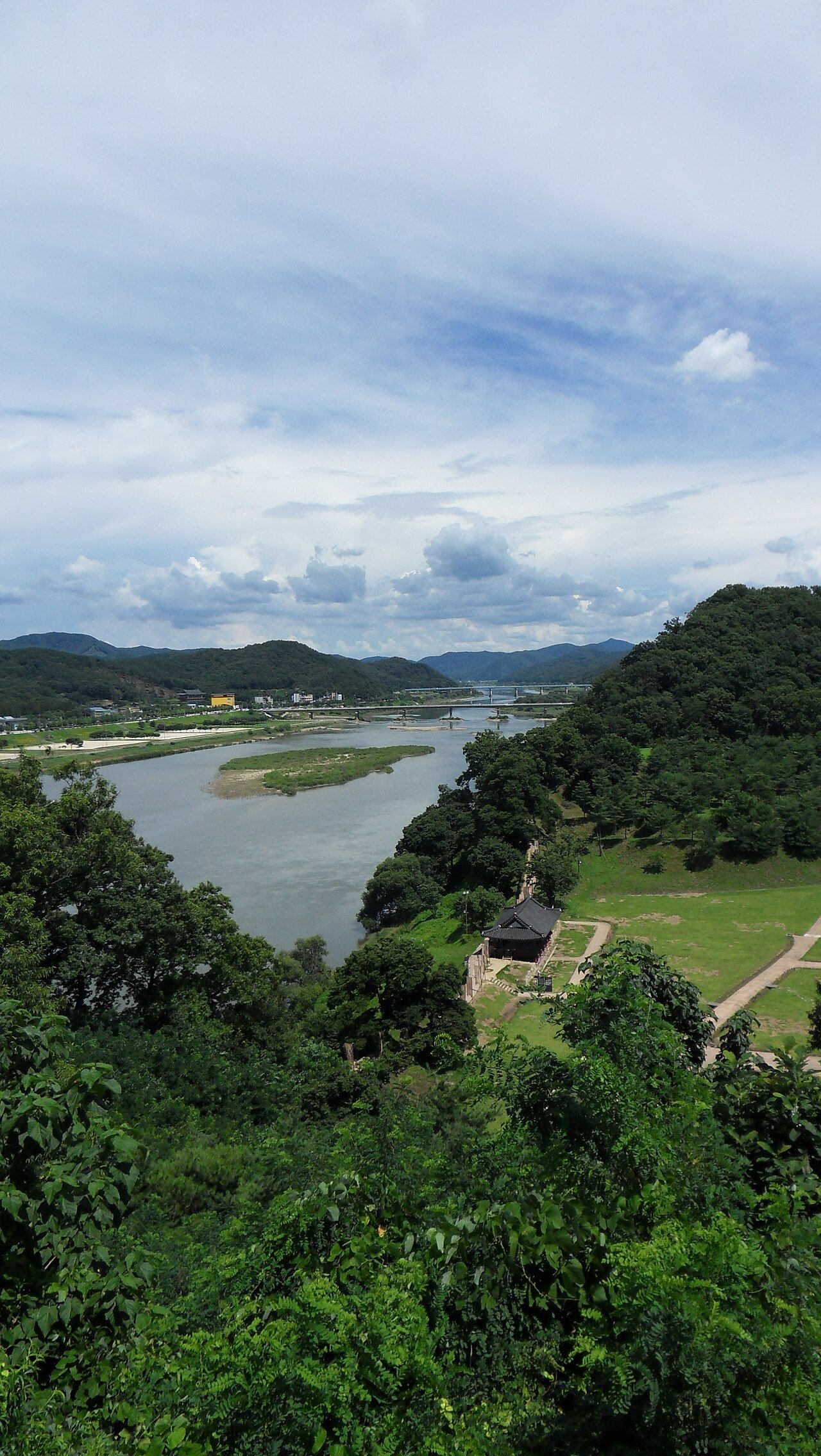
The Geum River from Gongsanseong’s walls. Photo: Ashy Minivet / Wikimedia Commons, CC0
Top Attractions in Gongju
Gongsanseong Fortress
A Baekje-era mountain fortress later rebuilt in stone during the Joseon period, with gate pavilions such as Geumseoru and Gongbukru. Open 09:00–18:00 (₩3,000 adult; walls are lit at night). It is part of the UNESCO Baekje Historic Areas (2015).
Magoksa Temple
A mountain monastery said to date to 643, listed by UNESCO in 2018 as one of Korea’s seven “Sansa” Buddhist mountain monasteries. Admission has been free since May 4, 2023. The outdoor parking lot 1.2 km below the temple is free; driving closer costs ₩4,000.
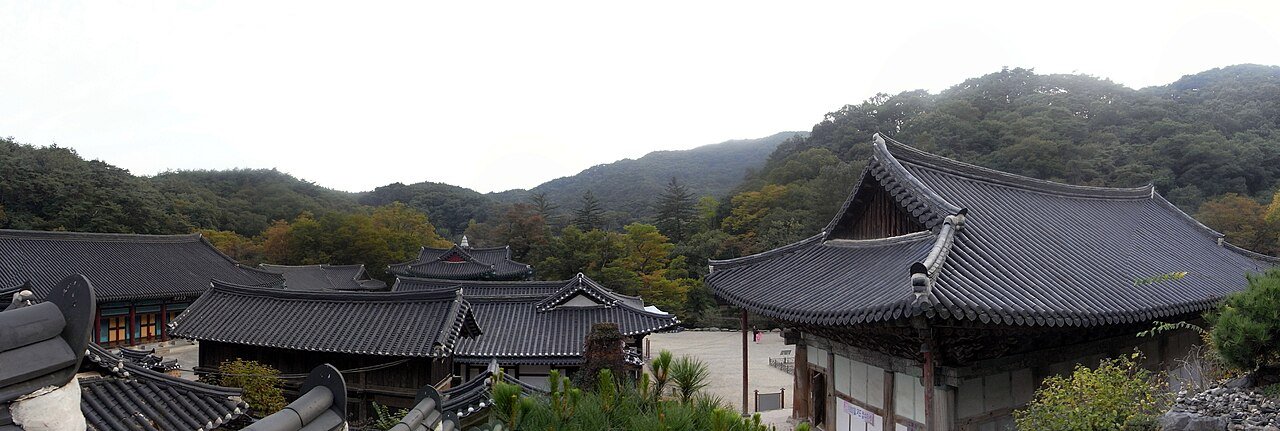
Magoksa Temple in mid-October. Photo: Jpbarrass / Wikimedia Commons, Public domain
Royal Tombs of King Muryeong and Royal Tombs (Songsan-ri)
Grassy burial mounds of Baekje kings, including the only Baekje royal tomb whose occupant is known, discovered intact in 1971. Admission ₩3,000; included in the ₩6,000 combined ticket.
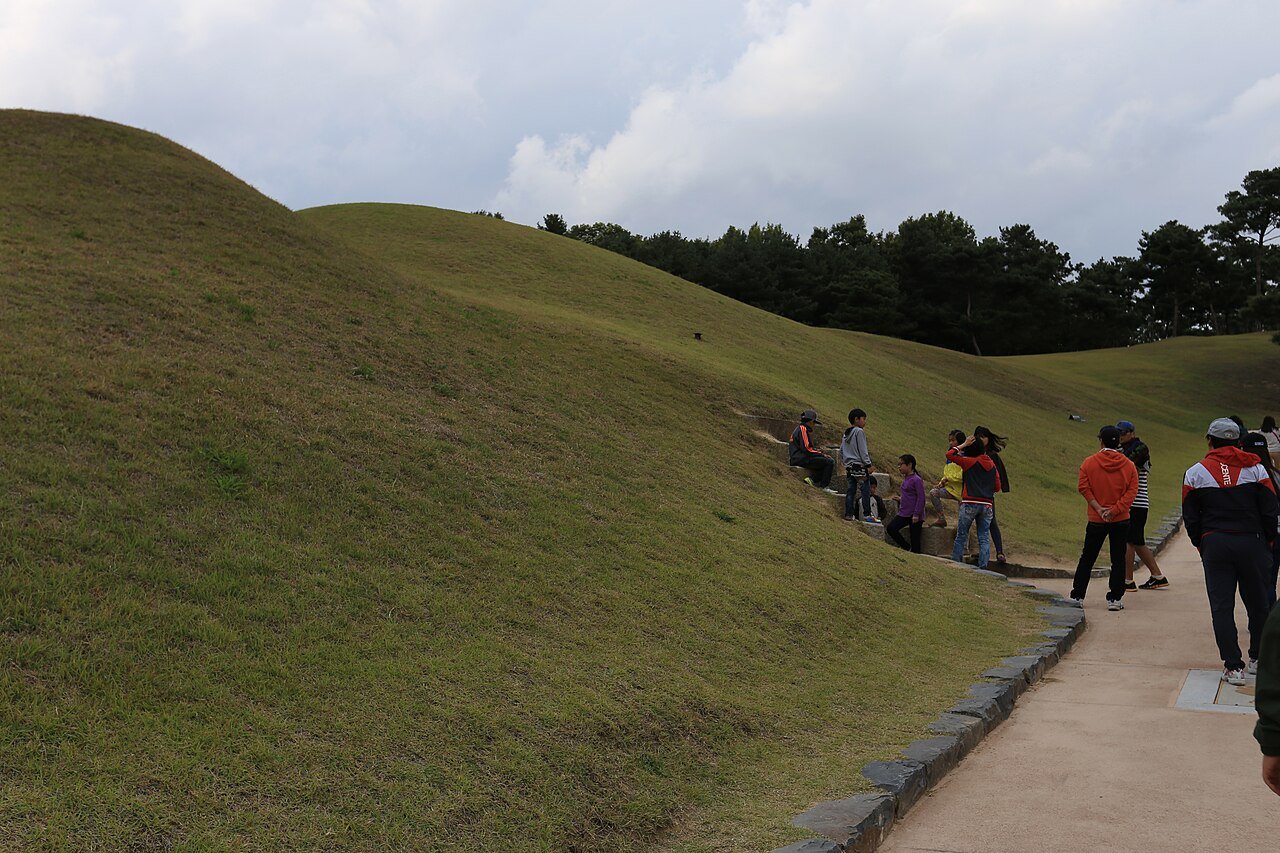
Royal Tombs in Songsan-ri, including King Muryeong’s tomb. Photo: Paulsbgo / Wikimedia Commons, CC BY-SA 4.0
Gongju National Museum
Free museum showcasing the gold crown ornaments, earrings and guardian beast found in King Muryeong’s tomb – a perfect pairing with the tombs a short walk away.
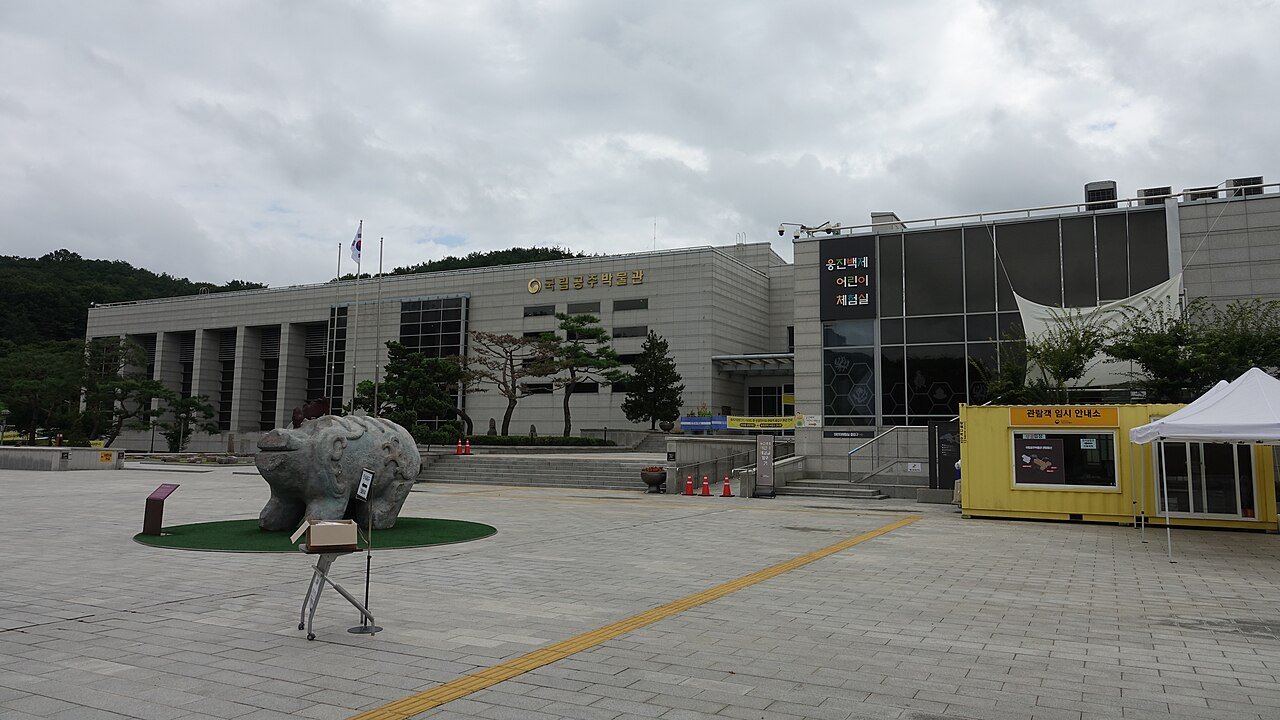
Gongju National Museum (free admission). Photo: Seohae1999 / Wikimedia Commons, CC BY-SA 3.0
Where to Eat in Gongju
- Sae-ihak Garden (새이학가든) – 15-2 Geumganggongwon-gil, by the Geum River near Gongsanseong. Famous for Gongju gukbap, a red beef-and-scallion soup (₩11,000); mushroom bulgogi ₩16,000. Daily 10:30–21:30, closed Mondays (2025). Kakao Map
- Gomanaru 1999 (고마나루 1999) – 5-8 Baekmigoeul-gil, in the Baekmi Goeul lanes below Gongsanseong. Ssambap (lettuce-wrap) set menu ₩18,000; extra boiled pork from ₩10,000. Tel. 041-857-9999. Kakao Map
- Bakery Bammaeul (베이커리 밤마을) – 5-9 Baekmigoeul-gil, next door. Gongju’s best-known chestnut pie: ₩2,500 each, ₩14,000 for 6, ₩22,000 for 10. Tel. 041-853-3489. Kakao Map
Tips for Visiting Gongju in Autumn
- Go on a weekday if possible – Magoksa’s parking and the bakery queues get long on peak-foliage weekends.
- City bus 770 to Magoksa runs only about 14 times a day; take a photo of the timetable at the terminal or use a taxi one way.
- Wear sturdy shoes: Gongsanseong’s walls have steep stairs.
- Book your return bus in advance on Sunday evenings in late October and November.
- Bring cash for small temple-village restaurants and chestnut stands.
Planning more fall trips? Read our guides to Asan Ginkgo Tree Road in autumn, Songnisan in autumn and Buseoksa Temple in autumn.
FAQ: Gongju in Autumn
When is the best time to see autumn leaves in Gongju?
Leaves usually start turning in mid-October and peak in early November; late October to the first week of November is the safest window.
How do I get from Seoul to Gongju?
Take an express bus from Seoul Express Bus Terminal to Gongju Bus Terminal: about 1 hour 30 minutes, ₩10,200–19,300 one way in 2026.
Is Gongju a good day trip from Seoul?
Yes. In one day you can see Magoksa, the Royal Tombs, the national museum and Gongsanseong, then return by evening bus. Stay overnight if you want a slower pace.
How much are tickets for Gongsanseong and the Royal Tombs?
Each costs ₩3,000 for adults, or ₩6,000 for a combined ticket that also covers the Seokjang-ri Museum. Magoksa and Gongju National Museum are free.
Sources
- Nate Travel – Gongju autumn foliage spots (Sep 2026)
- FN News – 2026 autumn foliage map (Oct 2026)
- Seoul–Gongju express bus timetable & fares (updated Oct 2026)
- Gongju City – Gongsanseong & Royal Tombs admission
- Gongju City – Magoksa (bus 770)
- Telltrip – Magoksa free entry and autumn road
- Hot Siksin – Gongju restaurants (Sep 2025) · Polle: Gomanaru 1999, Bakery Bammaeul
Fares, hours and prices can change – please check before you go. Featured photo: Gongsanseong Fortress under an autumn sky – Sweetwonders / Wikimedia Commons, CC BY-SA 4.0.