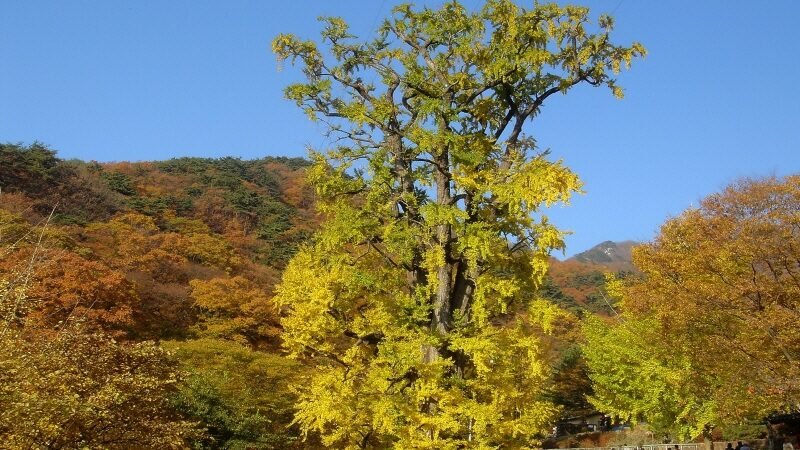
The Yongmunsa ginkgo tree in Yangpyeong is about 1,100 years old, 42 metres tall, and – for one or two weeks every autumn – a tower of pure gold. It is one of the easiest and most rewarding autumn day trips from Seoul: a train from Cheongnyangni, a short bus ride, and a gentle forest walk to an ancient Buddhist temple. Here is everything you need for a 2026 visit, with timing, transport, costs and where to eat.
Why Visit the Yongmunsa Ginkgo Tree in Autumn
Yongmunsa Temple sits on the slopes of Yongmunsan, one of the highest mountains in Gyeonggi-do. Tradition says it was founded in 913; Japanese troops burned it in 1907 because it sheltered the Righteous Army, and it was rebuilt from 1909 onward. The ginkgo in front of the temple survived. Korea’s heritage authorities estimate its age at about 1,100 years, list it at 42 m tall with an 11 m trunk girth, and designated it a Natural Monument in 1962 (No. 30). Legends say it grew from the walking staff of the monk Uisang, or was planted by the last Silla prince on his way to the Diamond Mountains.
Best timing in 2026: the Korea Forest Service forecast put the Gyeonggi ginkgo peak (Korea National Arboretum, Pocheon) around October 31, so the Yongmunsa tree should be at or near full gold in the first week of November, with a carpet of fallen leaves right after. Colour varies with temperature, so check recent photos before you go.
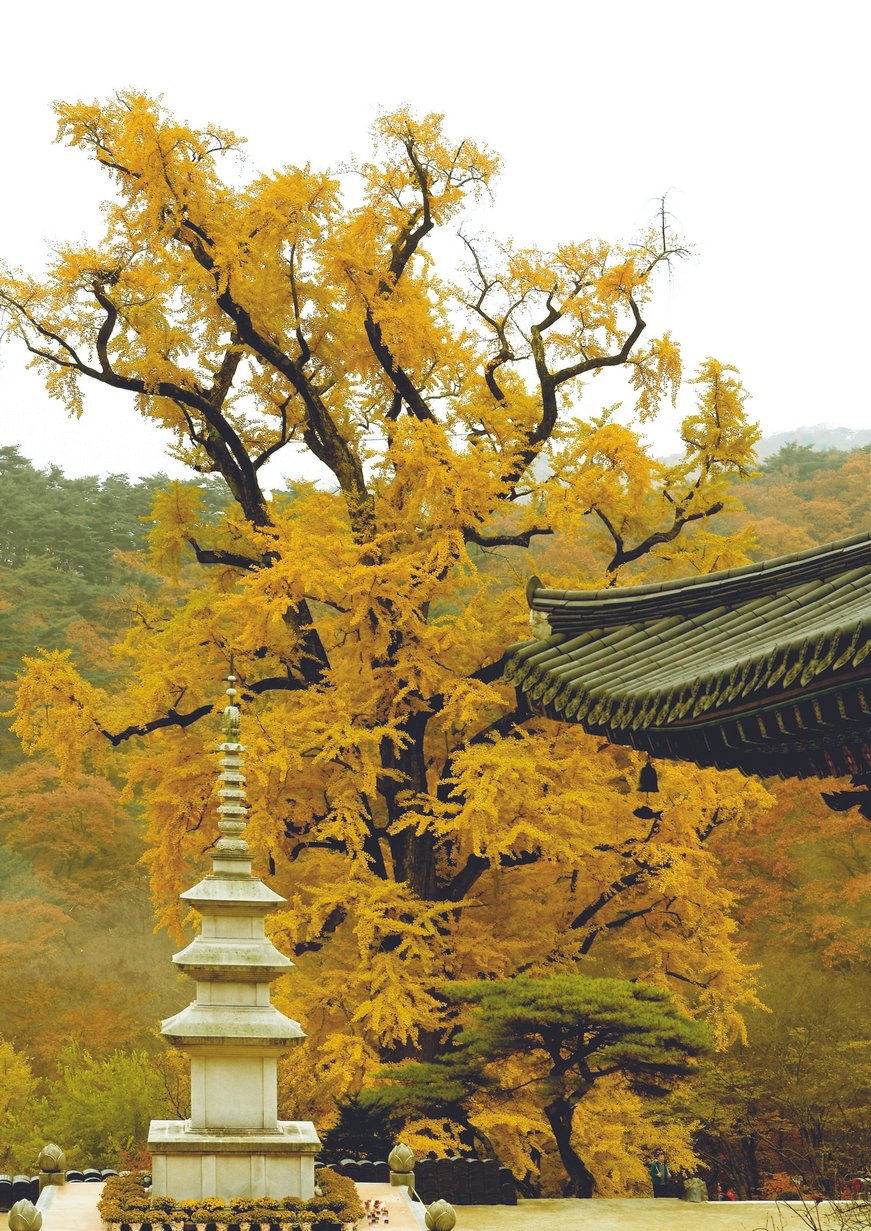
Photo: Cultural Corps of Korean Buddhism (한국불교문화사업단) / Wikimedia Commons, CC BY-SA 4.0
How to Get to Yongmunsa from Seoul
| Option | Route | Time | Fare (one way) |
|---|---|---|---|
| ITX-Saemaeul train | Cheongnyangni → Yongmun | 28–43 min | ₩5,600 |
| Mugunghwa train | Cheongnyangni → Yongmun | 38–42 min | ₩3,800 |
| Subway | Gyeongui–Jungang Line to Yongmun (terminus) | ~1 h 15 min from Cheongnyangni | T-money distance fare (approx. ₩2,500–3,000) |
| Local bus / taxi | Yongmun Stn → Yongmunsan Tourist Complex (bus 7, 7-4) | ~15–20 min (taxi ~10 min) | bus ~₩1,500 / taxi ~₩10,000–12,000 (estimates) |
There are 12 trains a day (6 ITX-Saemaeul, 6 Mugunghwa), first departure 06:38 and last 22:00 from Cheongnyangni (timetable for Nov 1, 2026, via Korea Charts). Book on the Korail app at weekends in peak season. From the tourist-complex car park it is a walk of about 20–30 minutes up a gently climbing forest road, past the Iljumun gate, to the temple. Drivers: parking is ₩1,500 (compact) / ₩3,000 (small car) / ₩5,000 (mid–large), about 700 spaces. Because weekends are the busiest time to see the Yongmunsa ginkgo tree, an early start from Seoul is a good idea.
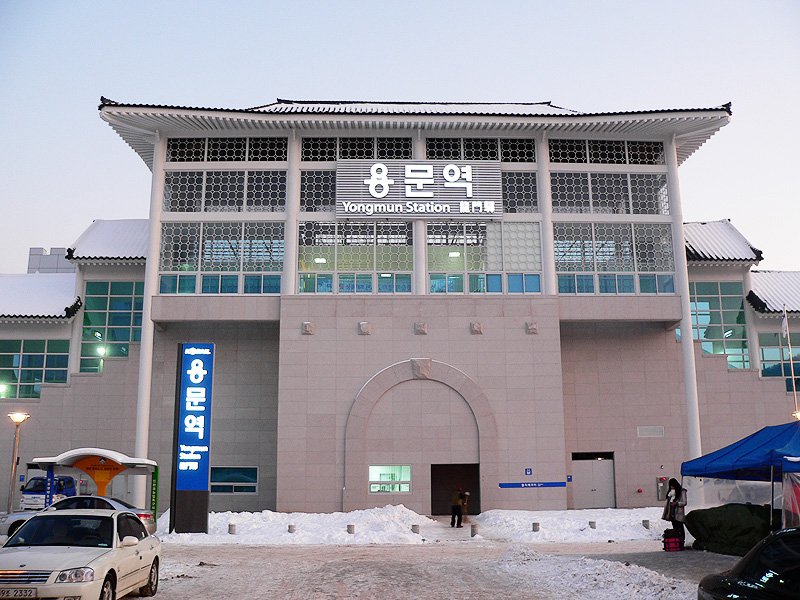
Photo: Subway06 / Wikimedia Commons, CC BY 3.0
Approximate Cost of a Day Trip
In general, a Yongmunsa ginkgo tree day trip stays affordable, since most of the budget goes to transport and admission.
| Item | Cost (per person) |
|---|---|
| Train round trip (Mugunghwa / ITX-Saemaeul) | ₩7,600 / ₩11,200 |
| Local bus round trip | ~₩3,000 |
| Yongmunsa admission | Free |
| Lunch (sanchae bibimbap or deodeok set) | ₩11,000–22,000 |
| Coffee / temple tea | ₩5,000–7,000 |
| Total | about ₩27,000–43,000 (US$20–32) |
Yongmunsa Ginkgo Tree Day Trip: Suggested Itinerary
For example, the plan below gives you plenty of time at the Yongmunsa ginkgo tree and still gets you back to Seoul the same evening.
- 08:30–09:15 – ITX-Saemaeul or Mugunghwa from Cheongnyangni to Yongmun.
- 09:30 – Bus or taxi to the Yongmunsan Tourist Complex.
- 10:00–12:00 – Walk the forest road to Yongmunsa, see the ginkgo tree, the main hall and the bell pavilion; morning light makes the leaves glow.
- 12:15 – Lunch at the restaurant row by the car park.
- 14:00–16:30 – Train two stops west to Yangsu and visit Dumulmeori and Semiwon at sunset.
- 17:30 – Back to Seoul on the Gyeongui–Jungang Line.
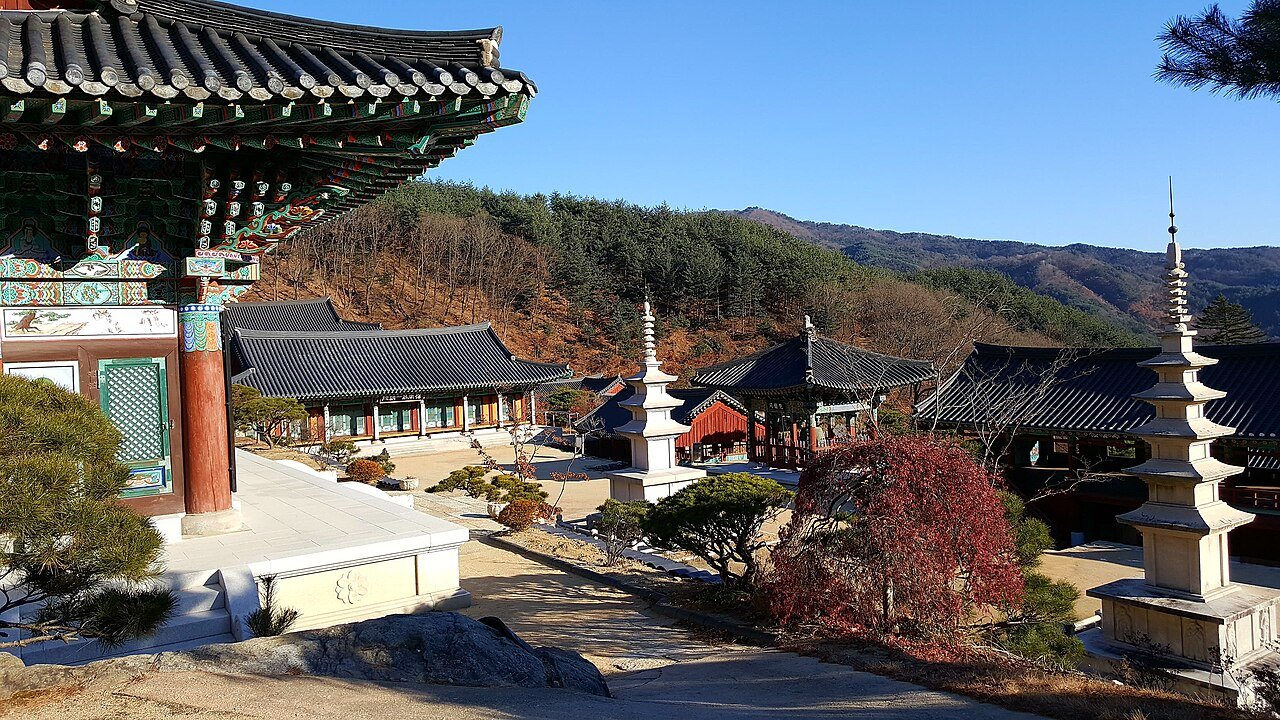
Photo: Jangg8962 / Wikimedia Commons, CC BY-SA 4.0
What to See at Yongmunsa Temple
The walk itself is part of the experience. From the tourist-complex car park, a wide forest road follows a stream lined with maples and oaks, which turn red and orange at about the same time as the ginkgo turns gold. After the Iljumun (one-pillar gate) the valley narrows and you hear the water below the path. Around the final bend, the ginkgo suddenly appears above the temple steps – the moment most visitors remember.
Take time to walk around the tree (a fence keeps visitors off its roots) and look up into the canopy; on a sunny morning the light comes through the leaves like stained glass. Behind it stand the main hall (Daeungjeon), the bell pavilion, the Gwaneum and Jijang halls, a small mineral spring, and a tea house where you can rest with a cup of traditional tea. Further up the slope is the stupa of State Preceptor Jeongji, a Goryeo-era monument. Most visitors spend about 1.5 hours at the temple, or around 2 hours including the tourist complex. Strong hikers can continue to the summit of Yongmunsan, but this is a long, steep climb – allow most of the day and start early in short November daylight.
Nearby Attractions
In addition, the Yangpyeong area has a few easy stops that pair well with a visit to the Yongmunsa ginkgo tree.
- Yongmunsan Tourist Complex – the start of the trail, with an eco-agriculture museum, outdoor stage and autumn-coloured valley.
- Dumulmeori – where the North and South Han rivers meet; misty mornings and an old zelkova tree. See our Dumulmeori & Semiwon guide.
- Semiwon – a lotus water garden next to Dumulmeori, beautiful even after the lotus season.
- Yangpyeong Market – the town’s traditional market, busiest on its five-day market days, for snacks and local produce.
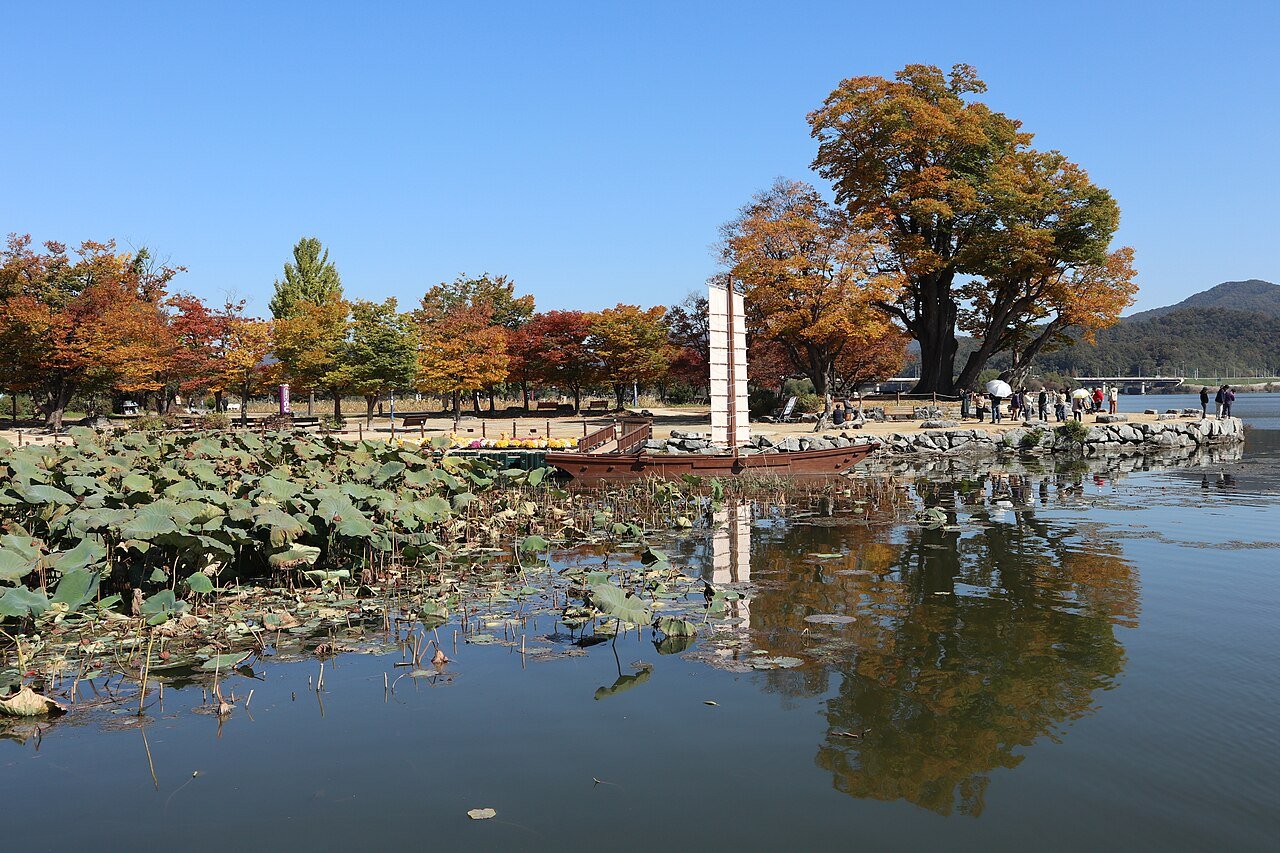
Photo: S h y numis / Wikimedia Commons, CC BY-SA 4.0
Where to Eat near Yongmunsa
Yongmunsan Cheotbeonjjae Sikdang (용문산 첫번째식당)
1F, 654 Yongmunsan-ro, Yongmun-myeon (tourist-complex restaurant row). Signature: deodeok (mountain root) sets – deodeok bulgogi ssambap ₩22,000, deodeok jeyuk ssambap ₩20,000, grilled deodeok set ₩18,000 (Polle).
Eunhaengnamu Sikdang (은행나무식당)
Near the Yongmunsan entrance. Signature: sanchae bibimbap with wild mountain greens ₩11,000 and deodeok makgeolli ₩5,000 (Travel Map Journey, 2026).
Eomui-mat Yangpyeong Haejangguk (어무이맛양평해장국)
1F, 88 Jungang-ro, Yangpyeong-eup (near Yangpyeong Station). Open 06:00–21:00, break 15:00–16:00. Signature: Yangpyeong-style haejangguk (spicy beef-blood and offal soup) and haenaetang – an ideal warm breakfast or dinner on the way back. Prices not published; expect roughly ₩12,000–15,000.
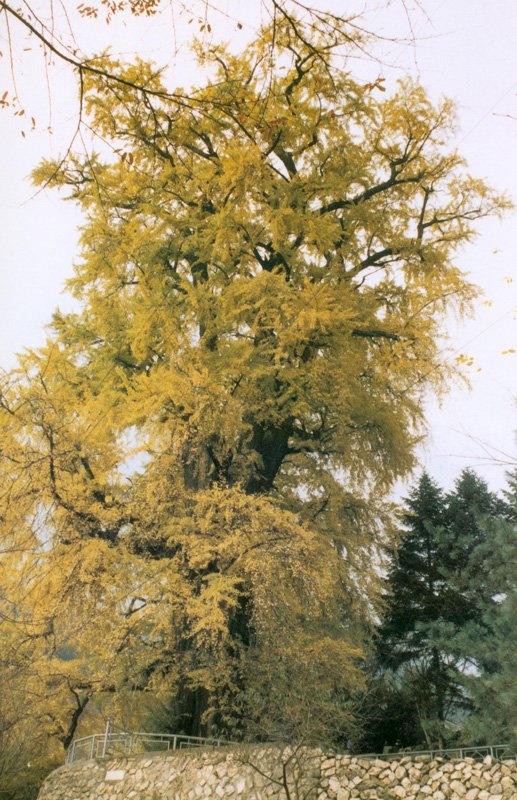
Photo: Cultural Heritage Administration / Wikimedia Commons, KOGL Type 1
Tips for Visiting the Yongmunsa Ginkgo Tree
- Go on a weekday or arrive before 10 a.m. at weekends – the car park and buses fill quickly in early November.
- Wear walking shoes; the path is paved but climbs steadily.
- The temple is an active place of worship: speak quietly and don’t climb the fence around the tree.
- Pair this trip with other golden-leaf spots: Asan Ginkgo Tree Road, Buseoksa Temple and Hwadam Forest.
FAQ: Yongmunsa Ginkgo Tree
When is the Yongmunsa ginkgo tree yellow in 2026?
Expect peak gold around the end of October to the first week of November 2026, based on the Korea Forest Service’s Gyeonggi ginkgo forecast of about October 31.
How do I get to Yongmunsa from Seoul without a car?
Take an ITX-Saemaeul or Mugunghwa train (or the Gyeongui–Jungang subway) from Cheongnyangni to Yongmun Station, then bus 7 or 7-4 or a taxi to the Yongmunsan Tourist Complex, and walk about 20–30 minutes to the temple.
Is there an entrance fee for Yongmunsa?
No. Admission is free; only parking is charged (₩1,500–5,000 depending on vehicle size).
How old is the Yongmunsa ginkgo tree?
About 1,100 years old, according to Korea’s heritage authorities. It is about 42 m tall and has been a Natural Monument since 1962.
Sources
- Travel & Leisure News – Yongmunsa ginkgo (Aug 2026)
- Korea Trip Tips (KTO data) – Yongmunsa Ginkgo Tree
- 2026 ginkgo peak forecast (Korea Forest Service data)
- Korea Charts – Cheongnyangni → Yongmun timetable (Nov 1, 2026)
- Nate Travel – Yongmunsa ginkgo (bus routes)
- Travel Map Journey – Yongmun Valley guide (2026)
- Polle – Yongmunsan Cheotbeonjjae Sikdang menu
- Daum – Yangpyeong restaurants (Jul 2025)
Featured image: The 1,100-year-old Yongmunsa ginkgo tree in autumn. Photo: Cultural Heritage Administration / Wikimedia Commons, KOGL Type 1.