Opened in 1905, Gwangjang Market is Seoul’s oldest permanent market — and today it is the city’s most famous place to eat like a local. Under one roof you will find more than a hundred food stalls frying, steaming and slicing classic Korean dishes, with locals and travelers squeezed shoulder-to-shoulder on wooden benches. It even starred in Netflix’s Street Food: Asia.
This Gwangjang Market food guide covers the 6 stalls and dishes you should not miss, what they cost in 2026, and how to visit without stress.
Gwangjang Market at a Glance
Address
88 Changgyeonggung-ro, Jongno-gu, Seoul
Subway
Jongno 5-ga Station (Line 1), Exit 8 · Euljiro 4-ga Station (Line 2, 5), Exit 4
Food stall hours
approx. 9:00 AM – 11:00 PM (shops ~9:00 AM – 6:00 PM)
Closed
Many stalls close on Sundays; check before you go
Budget
₩20,000–30,000 per person for a full tasting tour
Peak time
6–8 PM (go before 5 PM for shorter lines)
Must-Eat Stalls at Gwangjang Market
1. Sunhee-ne Bindaetteok — Mung Bean Pancakes
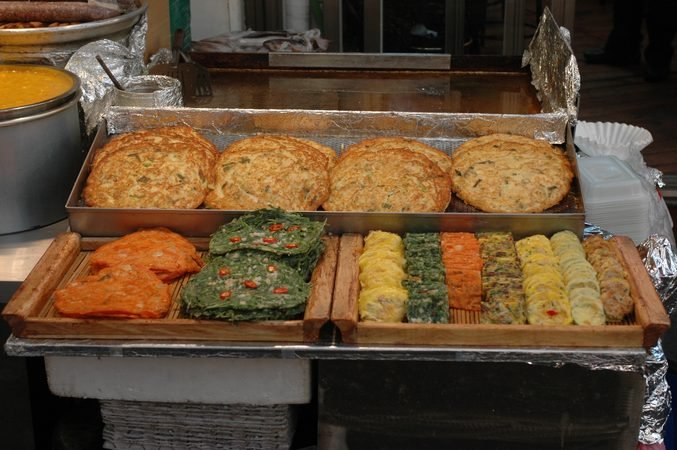
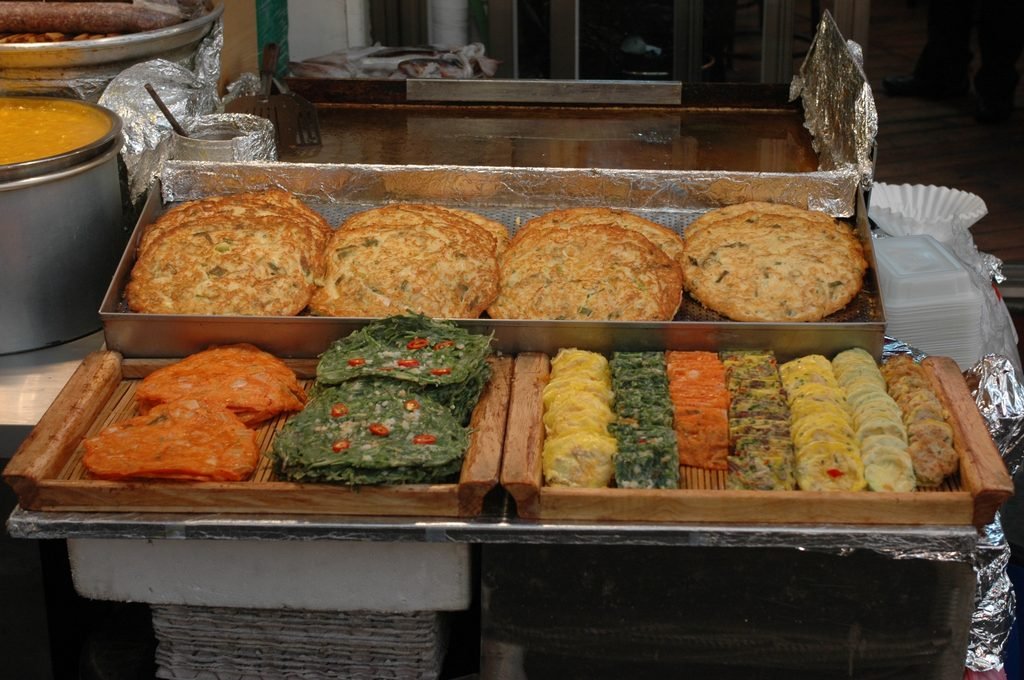
You will hear and smell it first: the crackle of thick mung bean pancakes frying in oil. Sunhee-ne (Soonhee’s) grinds soaked mung beans on-site with a stone mill, mixes them with kimchi, bean sprouts and pork, then fries them until the edges are crispy. Dip in soy-onion sauce and pair with a bottle of makgeolli (rice wine). This is the dish that made Gwangjang Market famous.
Price
approx. ₩5,000 per pancake
Location
Central food intersection
Tip
Order one to share so you have room for more
Shot to use
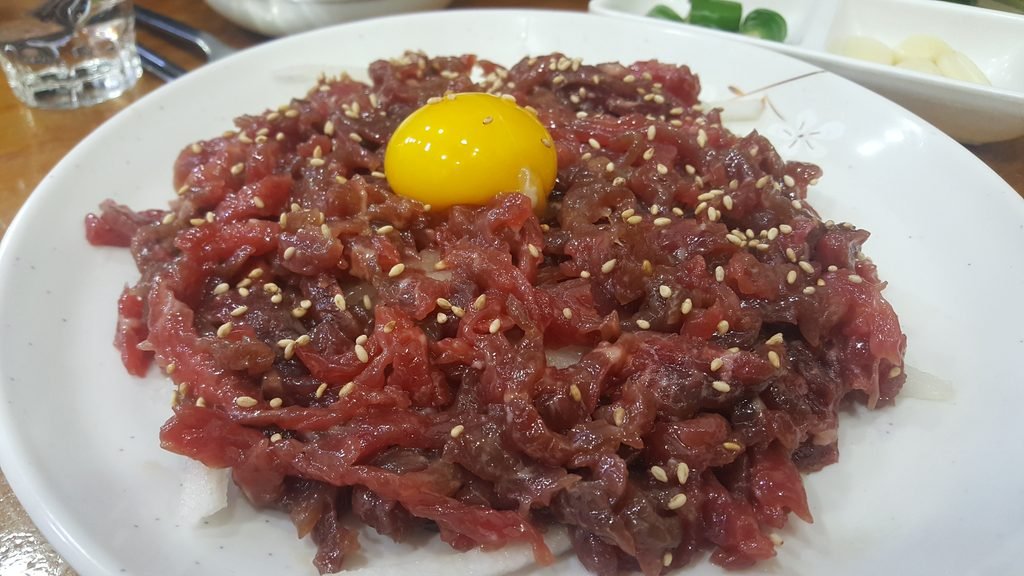
Plate of yukhoe (beef tartare) with pear and egg yolk
Alt text
Korean beef tartare yukhoe topped with egg yolk and sliced pear at Yukhoe Alley, Gwangjang Market
Caption
Yukhoe: Korean-style beef tartare in Yukhoe Alley
Title attribute
Yukhoe Gwangjang Market
2. Buchon Yukhoe — Seoul’s Yukhoe Alley
Just off the main market is Yukhoe Alley, and Buchon Yukhoe is its most famous restaurant. Yukhoe is Korean beef tartare: thin strips of fresh raw beef seasoned with sesame oil and garlic, served with sweet pear and an egg yolk. For the brave, try yukhoe tangtangi, which adds live chopped octopus. It is the market’s most “special” meal and worth the wait.
Price
approx. ₩20,000–32,000 per plate
Location
Yukhoe Alley, near the East Gate
Tip
Lines get long after 6 PM — come early or take a waiting number
Shot to use
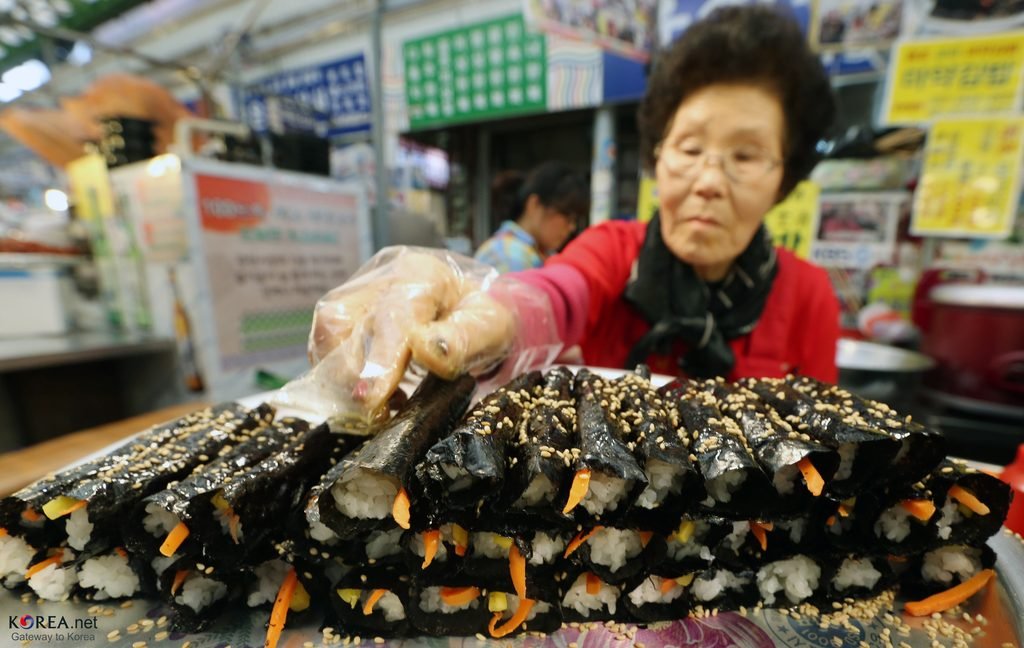
Plate of small mayak gimbap rolls with mustard dipping sauce
Alt text
Mini mayak gimbap rice rolls with mustard soy dipping sauce at Gwangjang Market
Caption
Mayak gimbap — bite-size and dangerously addictive
Title attribute
Mayak gimbap
3. Mayak Gimbap — The “Addictive” Mini Rolls
Mayak means “narcotic” in Korean — a playful way of saying you can’t stop eating them. These finger-size rolls of rice, carrot, pickled radish and spinach are brushed with sesame oil and dipped in a tangy mustard-soy sauce. Many stalls sell them, so pick any one with a busy counter.
Price
approx. ₩4,000 per plate
Tip
Great takeaway snack for walking around the market
Shot to use
Bowl of hand-cut kalguksu noodle soup with a lady making noodles behind
Alt text
Hand-cut kalguksu noodle soup at a Gwangjang Market stall in Seoul
Caption
Hand-cut noodles made in front of you
Title attribute
Kalguksu Gwangjang Market
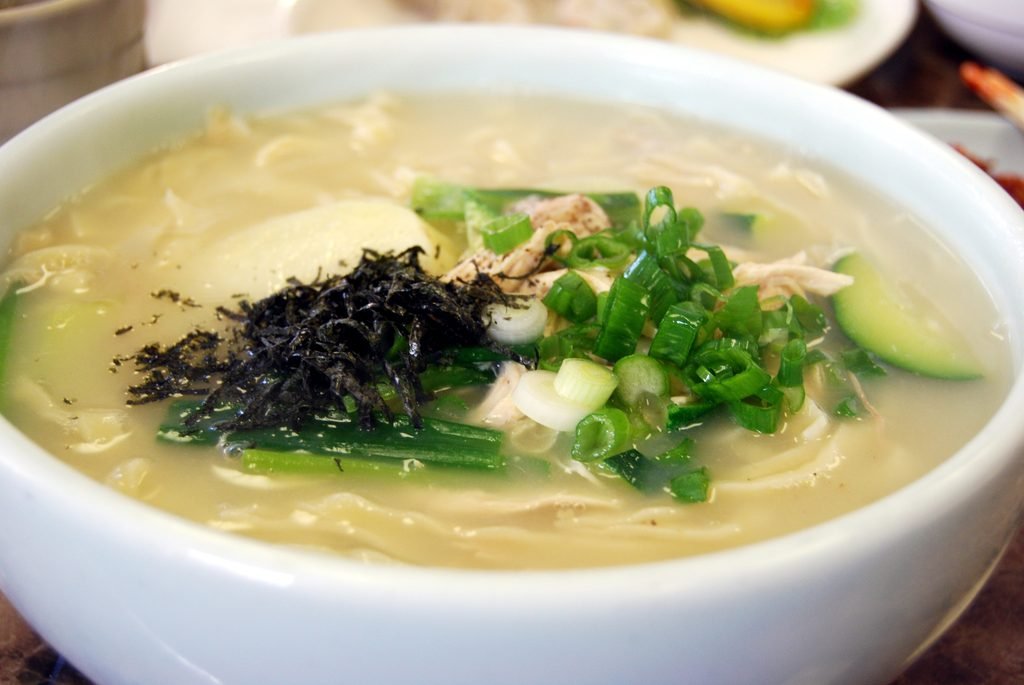
4. Kalguksu — Hand-Cut Noodle Soup
Watch the ladies roll and slice the noodle dough by hand, then drop it into a light anchovy broth. The stall run by Cho Yoon-soon (Gohyang Kalguksu), featured on Netflix’s Street Food: Asia, is the best known, but several kalguksu counters serve similar bowls. Comforting, generous and cheap.
Price
approx. ₩7,000 per bowl
Tip
Ask for a few kimchi dumplings on the side
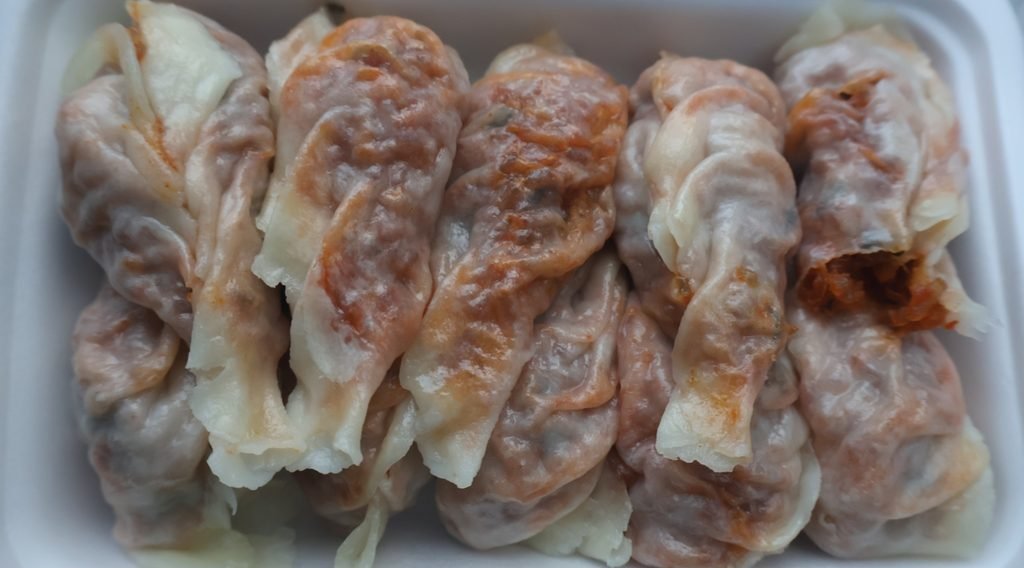
5. Mandu — Kimchi & Meat Dumplings
Big, steaming dumplings filled with kimchi and pork or with glass noodles and vegetables. They are freshly made every morning and are perfect with kalguksu or on their own.
Price
approx. ₩7,000 per plate
Shot to use
Steaming kimchi mandu in a steamer basket, and twisted kkwabaegi donuts
Alt text
Steamed kimchi dumplings and twisted kkwabaegi donuts at Gwangjang Market, Seoul
Caption
Kimchi mandu and kkwabaegi for dessert
Title attribute
Mandu and kkwabaegi
6. Kkwabaegi — Twisted Donuts for Dessert
Finish with kkwabaegi, a chewy twisted donut rolled in sugar. At around ₩1,000 each, it is the cheapest happiness in Seoul.
Tips for Visiting Gwangjang Market
Bring cash: many stalls still prefer ₩1,000 and ₩10,000 bills.
Check the price first: menus with prices are now posted at most stalls — confirm before ordering.
Sit and share: stalls have small benches; it is normal to sit next to strangers.
Go hungry, order small: one dish per stall lets you try 4–5 places.
Nearby: combine your visit with Cheonggyecheon Stream or Dongdaemun Design Plaza (DDP).
Is Gwangjang Market Worth It?
Absolutely. It can be crowded and a little chaotic, but that is part of the fun. In one evening you can taste Korea’s most loved traditional dishes for less than the price of one restaurant meal elsewhere. Come hungry, bring a friend, and say “Masisseoyo!” (It’s delicious!) to the stall owners.