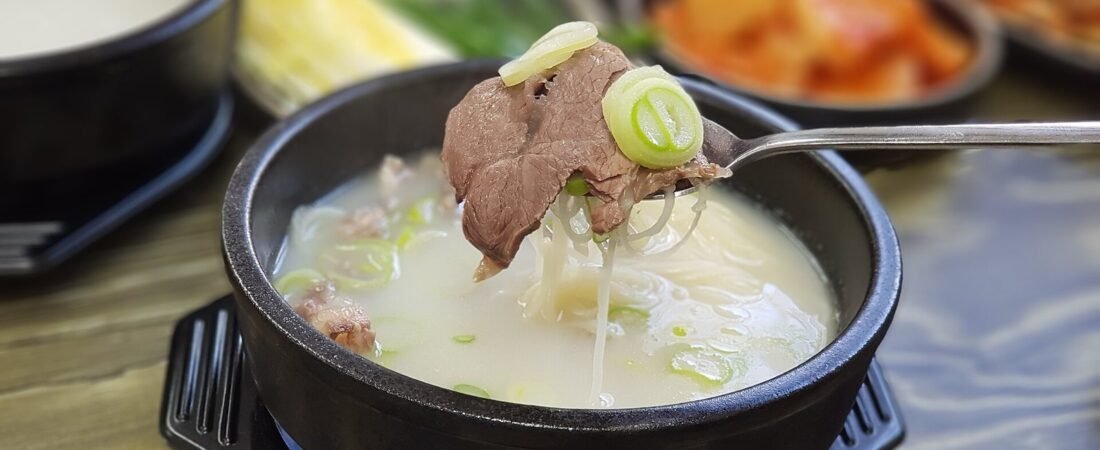
When the air turns crisp in Seoul, locals head for one thing: a steaming bowl of soup. Koreans call it gukbap (soup with rice), tang (long-simmered soup) or jjigae (a thicker, bubbling stew), and in fall and winter a hot bowl is the best way to warm up after a day of sightseeing.
We picked 10 legendary places, from Korea's oldest restaurant (1904) to Michelin Bib Gourmand favorites, that are easy to reach by subway and friendly to first-time visitors.
Quick list: 10 warming soups and stews in Seoul
| # | Restaurant | Must-order | Area |
|---|---|---|---|
| 1 | Imun Seolleongtang (이문설농탕) | Seolleongtang (ox bone soup) | Jongno |
| 2 | Hadongkwan (Myeongdong) (하동관 명동본점) | Gomtang (clear beef soup) | Myeongdong |
| 3 | Mapo Ok (마포옥) | Seolleongtang & yangji-tang | Mapo |
| 4 | Eunho Sikdang (은호식당) | Kkori-gomtang (oxtail soup) | Namdaemun Market |
| 5 | Cheongjinok (청진옥) | Haejangguk (hangover soup) | Jongno |
| 6 | Okdongsik (옥동식) | Dwaeji-gukbap (pork rice soup) | Hapjeong (Mapo) |
| 7 | Gwanghwamun Jip (광화문집) | Kimchi jjigae (kimchi stew) | Gwanghwamun |
| 8 | Jinokhwa Halmae Wonjo Dakhanmari (진옥화할매원조닭한마리) | Dakhanmari (whole chicken hot pot) | Dongdaemun |
| 9 | Myeongdong Kyoja (명동교자 본점) | Kalguksu (knife-cut noodle soup) | Myeongdong |
| 10 | Bada Sikdang (바다식당) | Johnson-tang (budae jjigae army stew) | Itaewon / Hannam |
1. Imun Seolleongtang (이문설농탕) – Seolleongtang (ox bone soup)
Open since around 1904, Imun Seolleongtang is recognized by the Seoul Metropolitan Government as Korea's oldest operating restaurant and is a Seoul Future Heritage site. The milky ox bone broth is simmered for more than 15 hours and arrives unsalted, so you season it yourself with salt and chopped green onions. Add a spoon of kkakdugi (radish kimchi) juice for extra kick.
- Must-order: Seolleongtang (ox bone soup)
- Price: About KRW 10,000–15,000
- Address: 38-13 Ujeongguk-ro, Jongno-gu (서울 종로구 우정국로 38-13)
- Subway: Jonggak Station (Line 1), about 5 minutes on foot
2. Hadongkwan (Myeongdong) (하동관 명동본점) – Gomtang (clear beef soup)
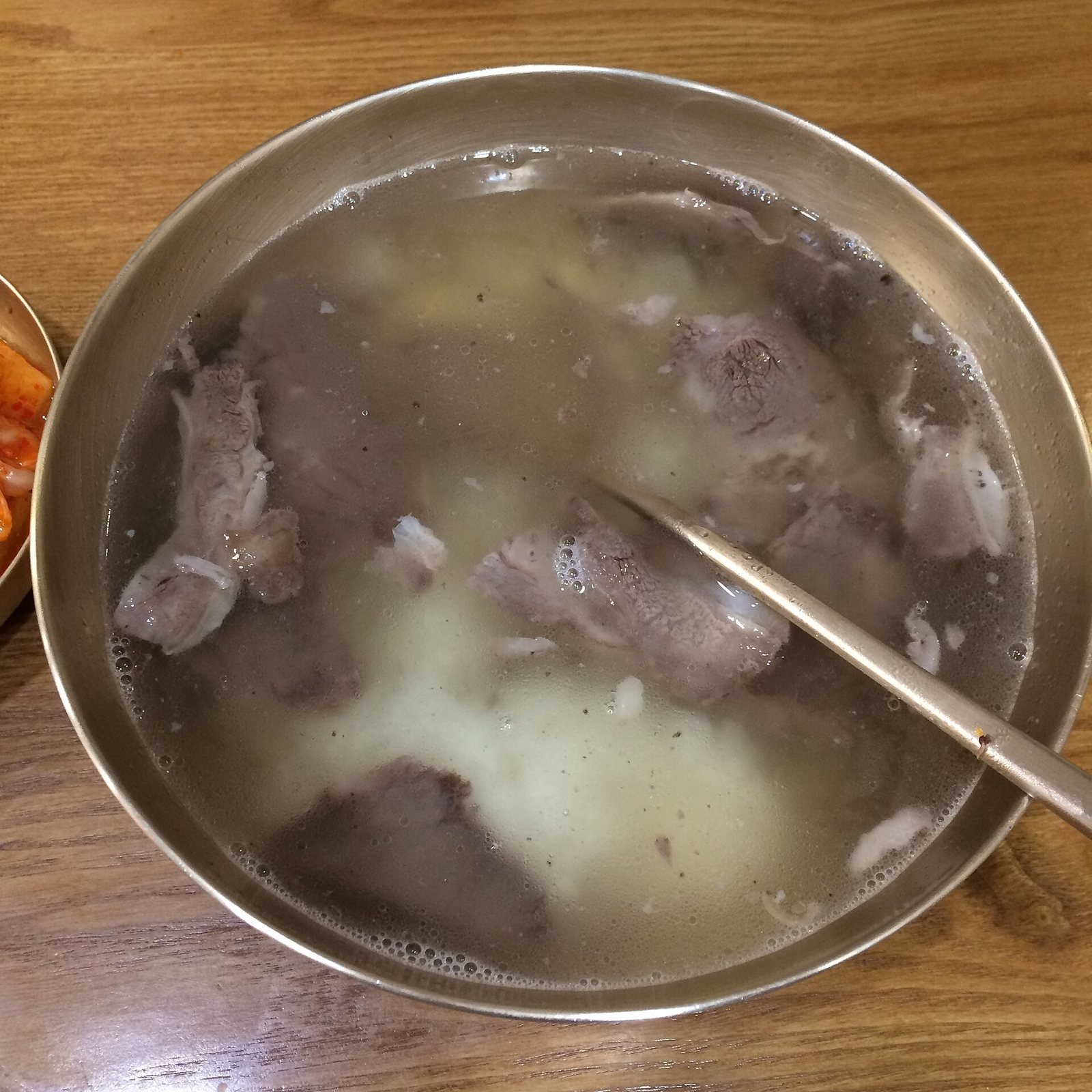
Photo: chomjong / CC BY 2.0 / via Wikimedia Commons
Serving gomtang since 1939 and a Michelin Bib Gourmand year after year, Hadongkwan makes a clear, rich soup from Korean hanwoo beef. It opens at 7:00 and closes around 16:00 (or earlier when the broth runs out), and it is closed on Sundays. Pay at the counter first. Ask for 'gogi-man juseyo' if you want meat only, without offal.
- Must-order: Gomtang (clear beef soup)
- Price: KRW 15,000 (small) – 30,000 (special)
- Address: 12 Myeongdong 9-gil, Jung-gu (서울 중구 명동9길 12)
- Subway: Euljiro 1-ga Station (Line 2) Exit 5 or Myeongdong Station (Line 4), about 5 minutes
3. Mapo Ok (마포옥) – Seolleongtang & yangji-tang
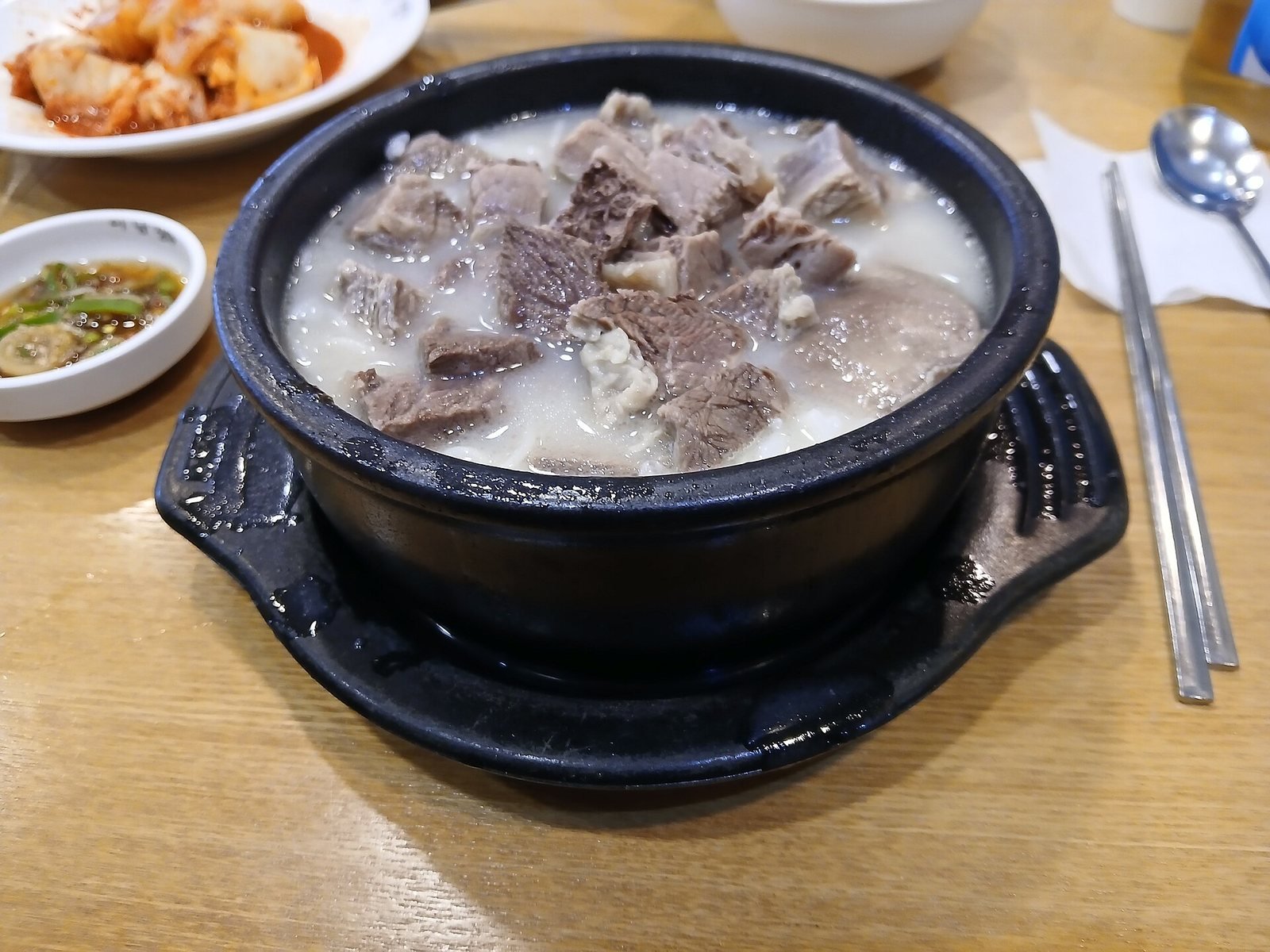
Photo: 緑さん / CC0 / via Wikimedia Commons
Since 1949, Mapo Ok has boiled brisket and ox bones into a deep, slightly opaque broth. It is a Michelin Bib Gourmand and was named one of Seoul's top 100 restaurants. The Michelin Guide suggests stirring in a little kimchi juice. Open early: from 7:00 on weekdays (until 21:00) and weekends (until 17:00).
- Must-order: Seolleongtang & yangji-tang
- Price: About KRW 15,000–20,000
- Address: 312 Tojeong-ro, Mapo-gu (서울 마포구 토정로 312)
- Subway: Mapo Station (Line 5), a few minutes on foot
4. Eunho Sikdang (은호식당) – Kkori-gomtang (oxtail soup)
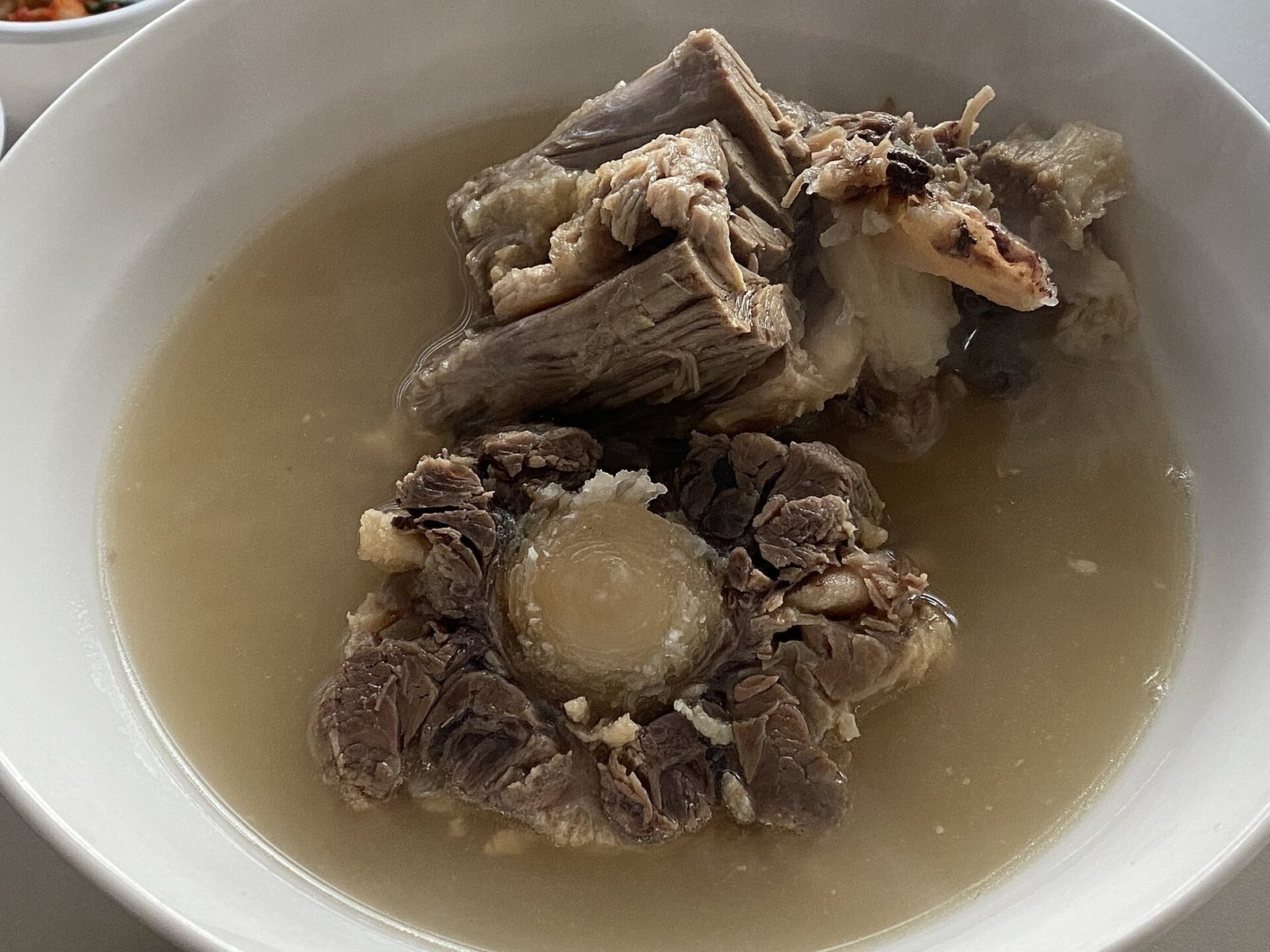
Photo: lazy fri13th / CC BY 2.0 / via Wikimedia Commons
Founded in 1932 as a tent stall in Namdaemun Market and run by the same family for four generations, Eunho Sikdang is famous for oxtail soup. Diners put on gloves to pick up the meaty bones and dip them in the house sauce. It is a Seoul Future Heritage site, and a perfect warm-up after shopping in the market.
- Must-order: Kkori-gomtang (oxtail soup)
- Price: About KRW 20,000 for oxtail soup
- Address: 28-4 Namdaemunsijang 4-gil, Jung-gu (서울 중구 남대문시장4길 28-4)
- Subway: Hoehyeon Station (Line 4), inside Namdaemun Market
5. Cheongjinok (청진옥) – Haejangguk (hangover soup)
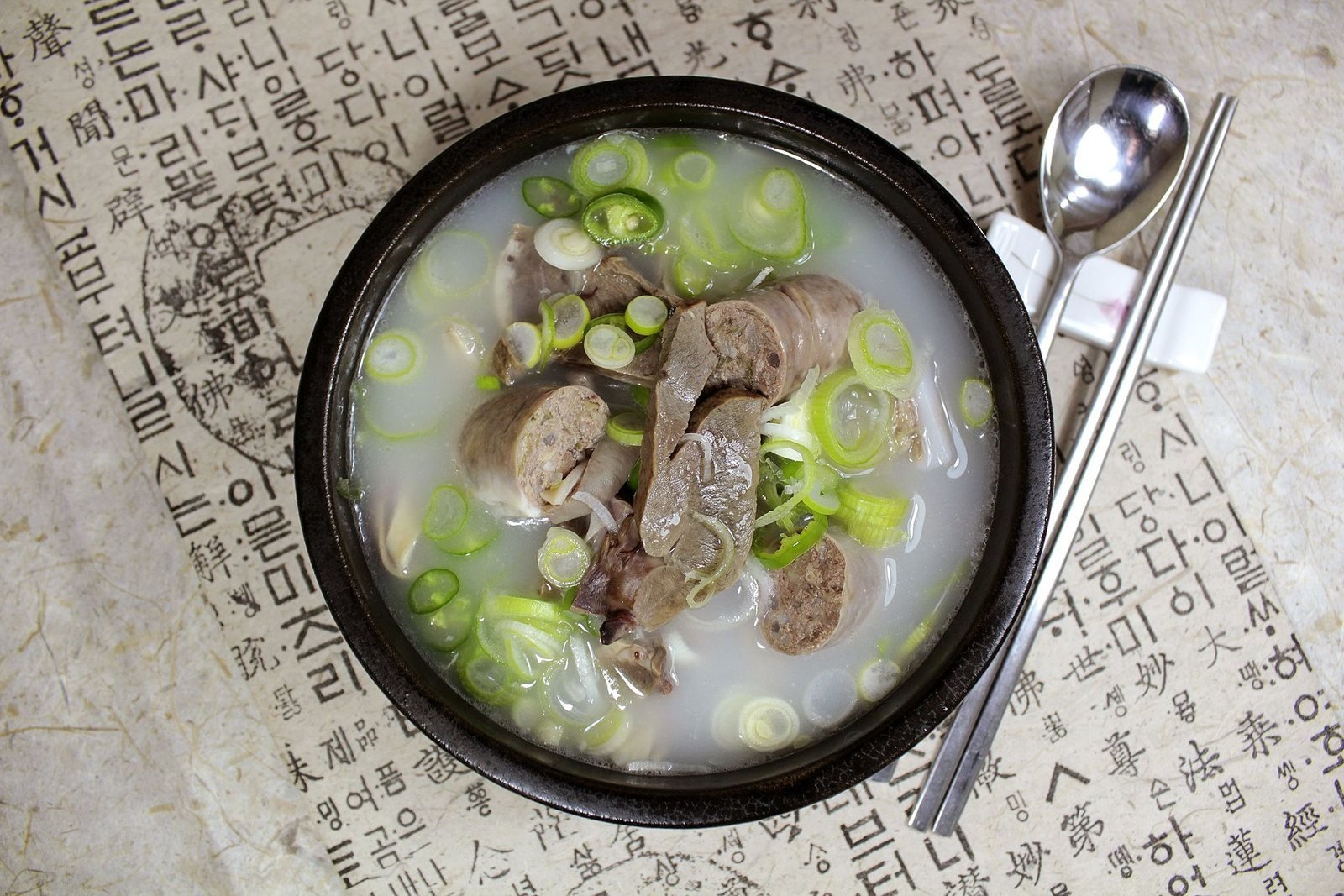
Photo: sangmins / CC0 / via Wikimedia Commons
Cheongjinok has been serving haejangguk since 1937 and is often called the place that made 'hangover soup' famous. The reddish-brown broth is full of ox blood (seonji), bean sprouts, dried radish greens and soybean paste. Even if you skip the seonji, the deep, warming broth is perfect on a cold morning.
- Must-order: Haejangguk (hangover soup)
- Price: About KRW 12,000–15,000
- Address: 19 Jong-ro, Jongno-gu (Le Meilleur Jongno Town) (서울 종로구 종로 19 (르메이에르 종로타운))
- Subway: Jonggak Station (Line 1) or Gwanghwamun Station (Line 5)
6. Okdongsik (옥동식) – Dwaeji-gukbap (pork rice soup)
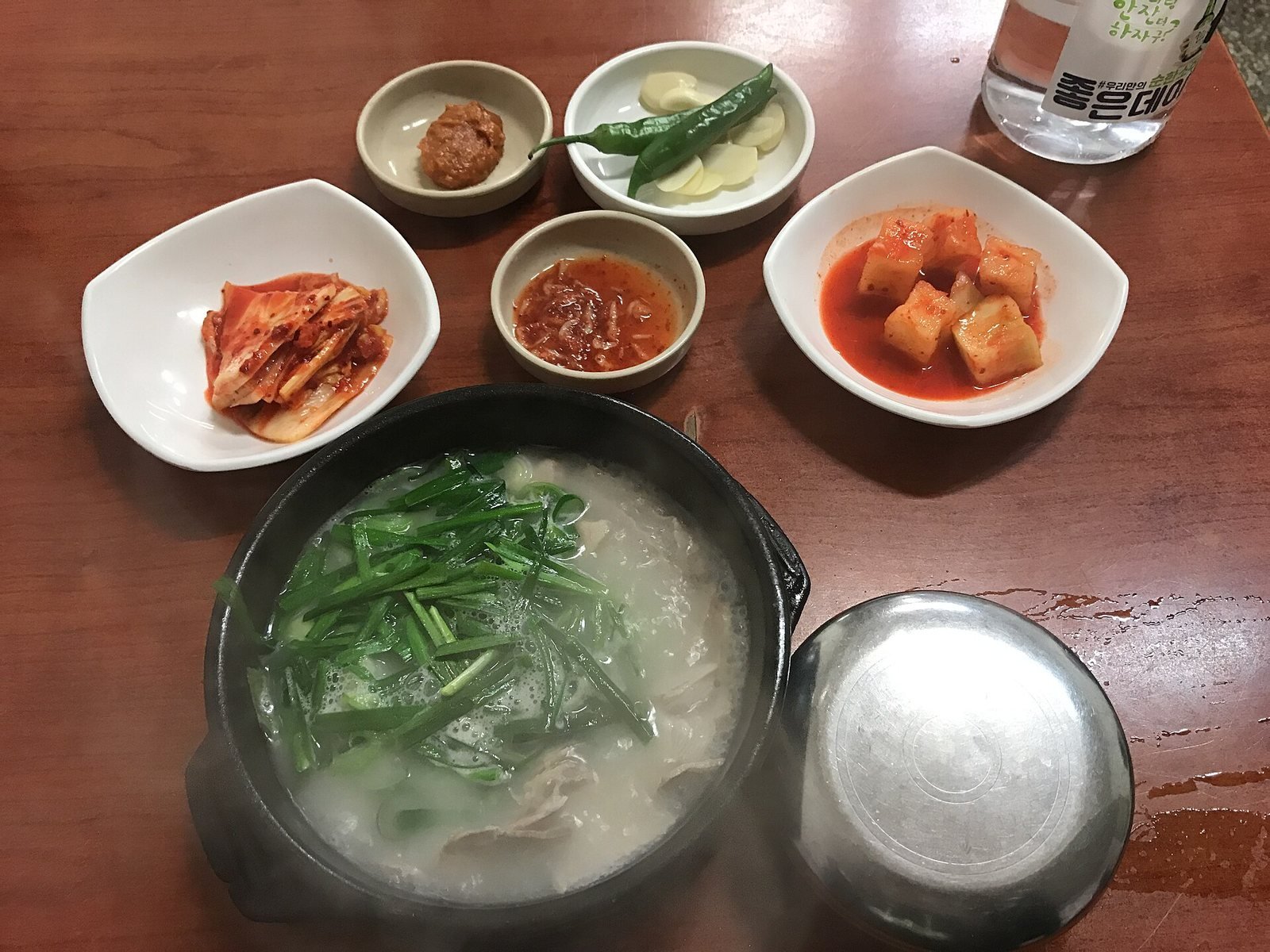
Photo: chomjong / CC BY 2.0 / via Wikimedia Commons
A Michelin Bib Gourmand in the 2026 guide, Okdongsik serves a light, clear pork soup made from Berkshire black pigs raised around Jirisan Mountain. Hot broth is poured over the rice again and again, and the paper-thin pork slices come with a house dipping sauce. Quantities are limited each day, so go early. Weekdays 11:00–15:00, weekends 11:00–20:30.
- Must-order: Dwaeji-gukbap (pork rice soup)
- Price: About KRW 12,000–15,000
- Address: 44-10 Yanghwa-ro 7-gil, Mapo-gu (서울 마포구 양화로7길 44-10)
- Subway: Hapjeong Station (Lines 2 & 6), about 5–10 minutes on foot
7. Gwanghwamun Jip (광화문집) – Kimchi jjigae (kimchi stew)
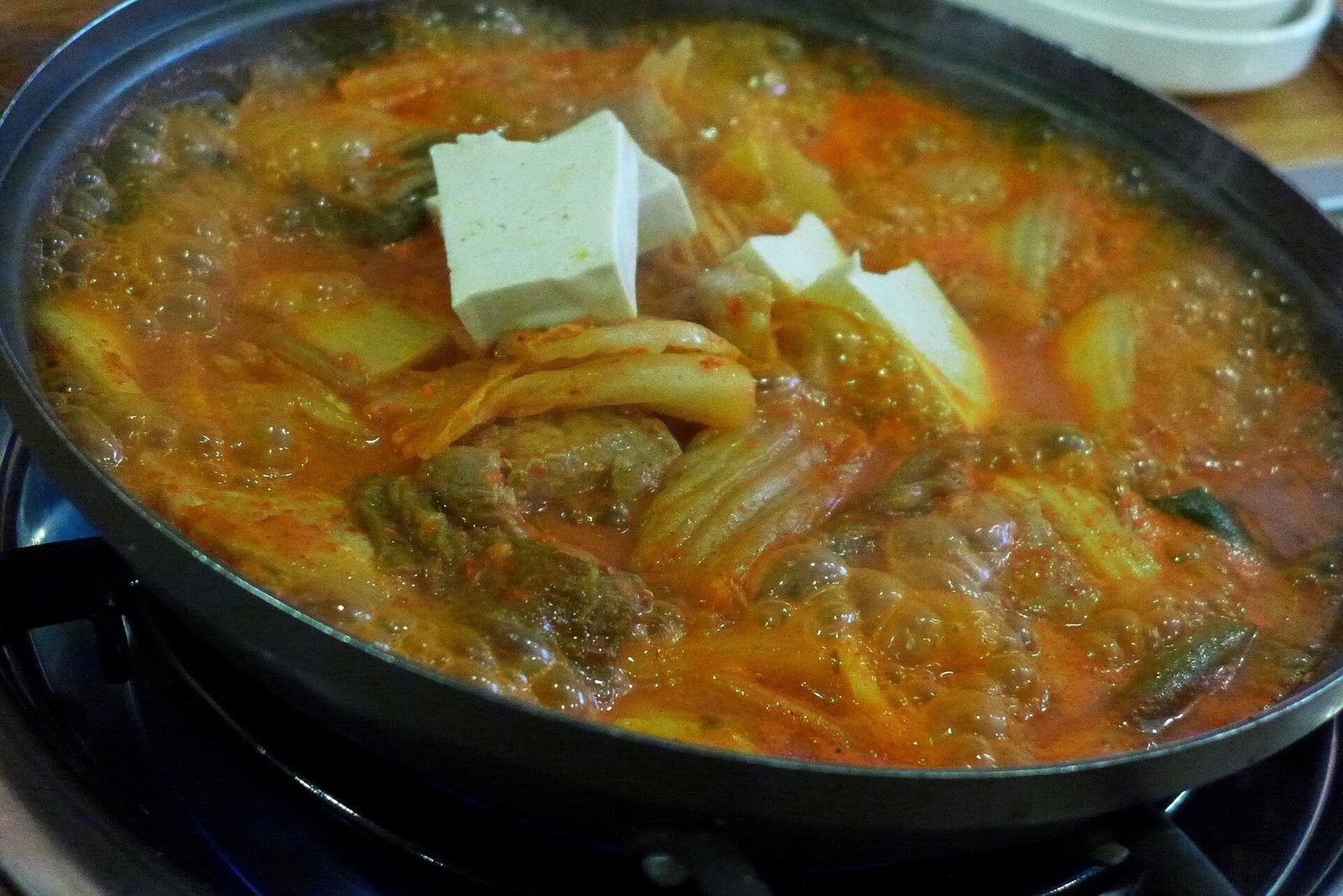
Photo: travel oriented / CC BY-SA 2.0 / via Wikimedia Commons
A tiny, decades-old restaurant behind Sejong Center, Gwanghwamun Jip was picked by the TV show Wednesday Food Talk as one of Seoul's top three kimchi stew spots. The stew, full of pork and tofu, finishes bubbling at your table. Order the scallion-filled rolled omelet (gyeran-mari) on the side.
- Must-order: Kimchi jjigae (kimchi stew)
- Price: About KRW 10,000
- Address: 12 Saemunan-ro 5-gil, Jongno-gu (서울 종로구 새문안로5길 12)
- Subway: Gwanghwamun Station (Line 5) Exit 8
8. Jinokhwa Halmae Wonjo Dakhanmari (진옥화할매원조닭한마리) – Dakhanmari (whole chicken hot pot)
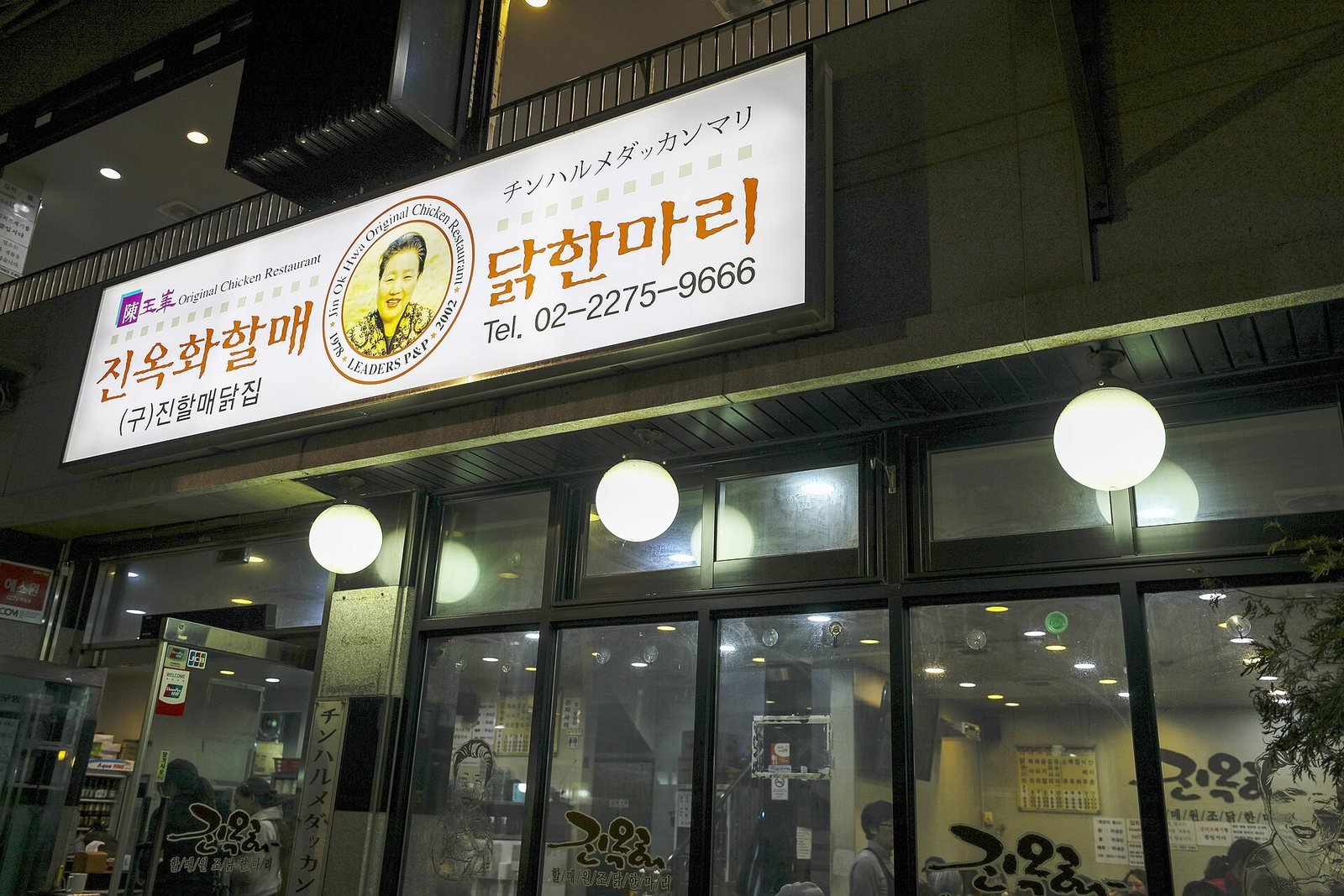
Photo: bryan… / CC BY-SA 2.0 / via Wikimedia Commons
Open since 1978 in Dongdaemun's 'Dakhanmari Alley', this is the original home of dakhanmari: a whole chicken boiled at your table in a light broth. Dip the chicken in the spicy-vinegar mustard sauce, then add rice cakes, potatoes and finish with kalguksu noodles in the broth. Open late (about 10:30–01:00), year-round.
- Must-order: Dakhanmari (whole chicken hot pot)
- Price: About KRW 30,000–35,000 per pot (for 2)
- Address: 18 Jong-ro 40ga-gil, Jongno-gu (서울 종로구 종로40가길 18)
- Subway: Jongno 5-ga Station (Line 1) or Dongdaemun Station (Lines 1 & 4)
9. Myeongdong Kyoja (명동교자 본점) – Kalguksu (knife-cut noodle soup)
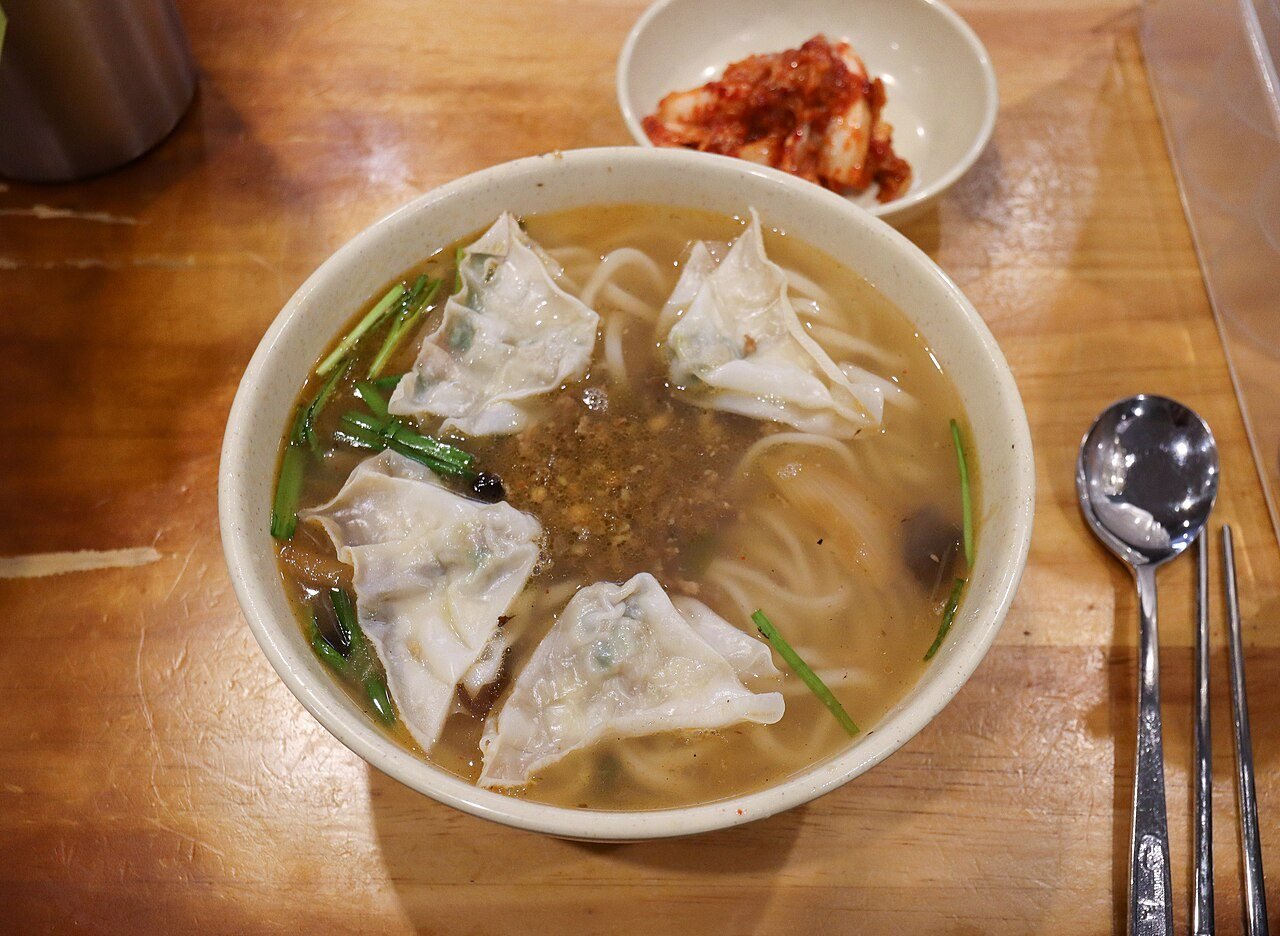
Photo: Mobius6 / CC BY-SA 4.0 / via Wikimedia Commons
A Myeongdong institution since 1966 and a Michelin Bib Gourmand, Myeongdong Kyoja serves silky noodles in a rich chicken broth topped with tiny dumplings and minced meat. Free noodle refills come with every bowl, and the punchy garlic kimchi is self-serve. Open daily 10:30–21:00; go before 11:30 or mid-afternoon to avoid lines.
- Must-order: Kalguksu (knife-cut noodle soup)
- Price: Kalguksu KRW 12,000
- Address: 29 Myeongdong 10-gil, Jung-gu (서울 중구 명동10길 29)
- Subway: Myeongdong Station (Line 4) Exit 8, about 3 minutes
10. Bada Sikdang (바다식당) – Johnson-tang (budae jjigae army stew)
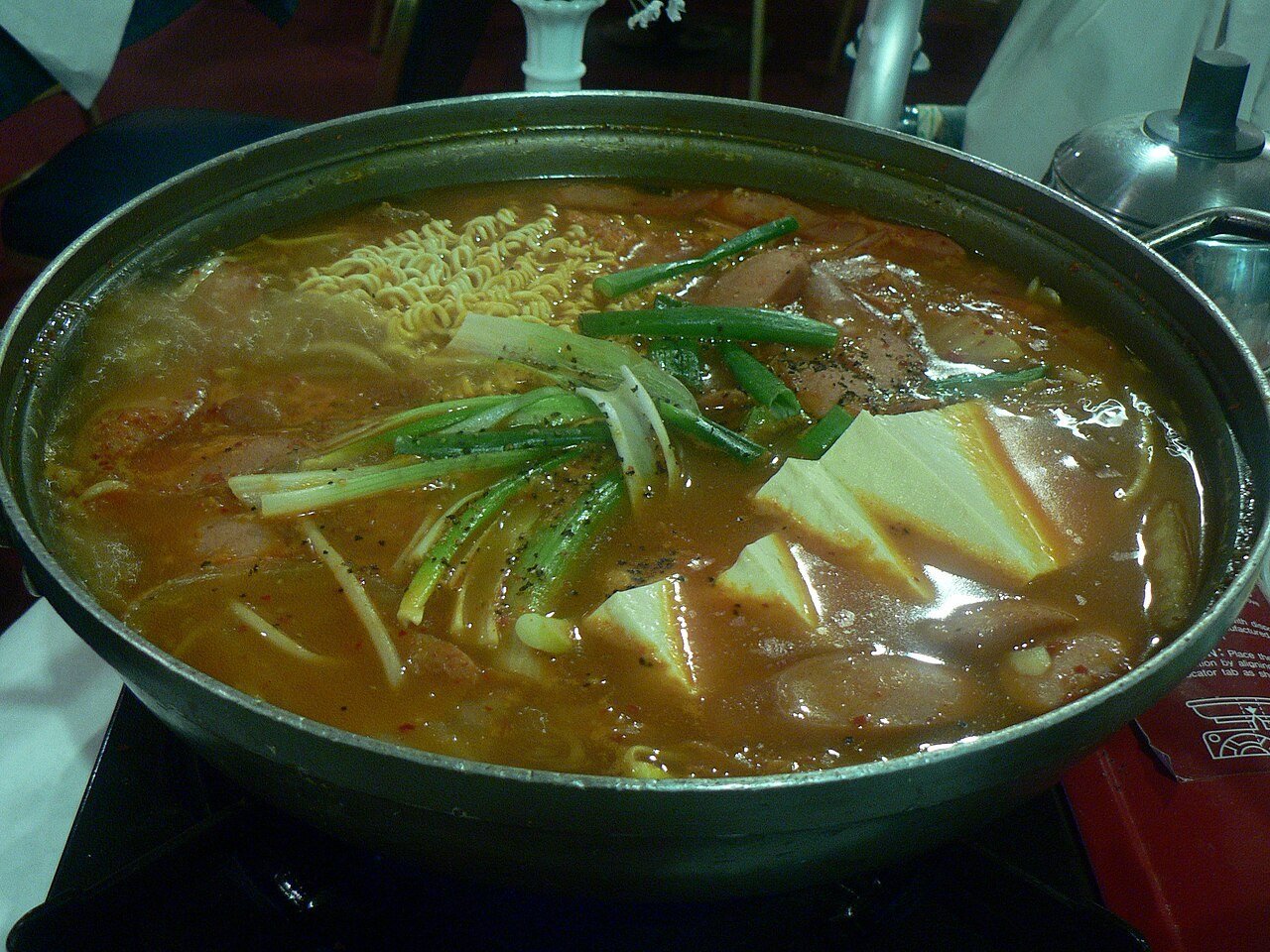
Photo: by stuart_spivack (flickr) / CC BY-SA 2.0 / via Wikimedia Commons
Bada Sikdang's 'Johnson-tang' is a milder, cheesy take on budae jjigae, the army-base stew born in the 1950s with sausage, ham and beans. The walls are covered with autographs from K-pop stars and actors. Rice is ordered separately. It usually closes on the first and third Mondays of the month.
- Must-order: Johnson-tang (budae jjigae army stew)
- Price: About KRW 25,000–30,000 for two
- Address: 2F, 245 Itaewon-ro, Yongsan-gu (서울 용산구 이태원로 245 2층)
- Subway: Hangangjin Station (Line 6) Exit 1, about 3 minutes
How to order soup like a local
- Many classic soup houses ask you to pay at the counter before you sit down.
- Seolleongtang and gomtang arrive lightly seasoned. Add salt, green onions or a spoon of kkakdugi (radish kimchi) juice to taste.
- Rice is usually included with gukbap; for jjigae and hot pots, rice may be extra.
- Many famous places close early or when the broth runs out, so lunch is the safest time.
- Use Naver Map or KakaoMap to check the latest hours and directions.
FAQ
Q. What is the difference between gukbap, tang and jjigae?
A. Gukbap is soup served with rice, tang is a long-simmered, often clear soup, and jjigae is a thicker, saltier stew that keeps bubbling at your table.
Q. Which Seoul soup restaurant is the oldest?
A. Imun Seolleongtang in Jongno, open since around 1904, is recognized as Korea's oldest operating restaurant.
Q. Are these restaurants good for solo travelers?
A. Yes. Most soup houses serve single portions. Dakhanmari and budae jjigae are usually ordered for two or more.
Featured image: Seolleongtang (ox bone soup). Photo: 이동원 / CC0 / via Wikimedia Commons. Dish photos are illustrative and may not be from the restaurant listed.
Sources
- Michelin Guide – Mapo Ok
- Michelin Guide – Okdongsik
- Taste Korean Food – Hadongkwan
- Taste Korean Food – Myeongdong Kyoja
- Wikipedia – Imun Seolnongtang
- Wikipedia – Eunhosikdang
- Time Out Seoul – Cheongjinok
- Time Out Seoul – Gwanghwamun Jip
- VisitKorea – Jinokhwa Halmae Wonjo Dakhanmari
- Creatrip – Bada Sikdang
Prices are approximate and hours can change. Please check Naver Map or KakaoMap before you go. Information as of October 2026.