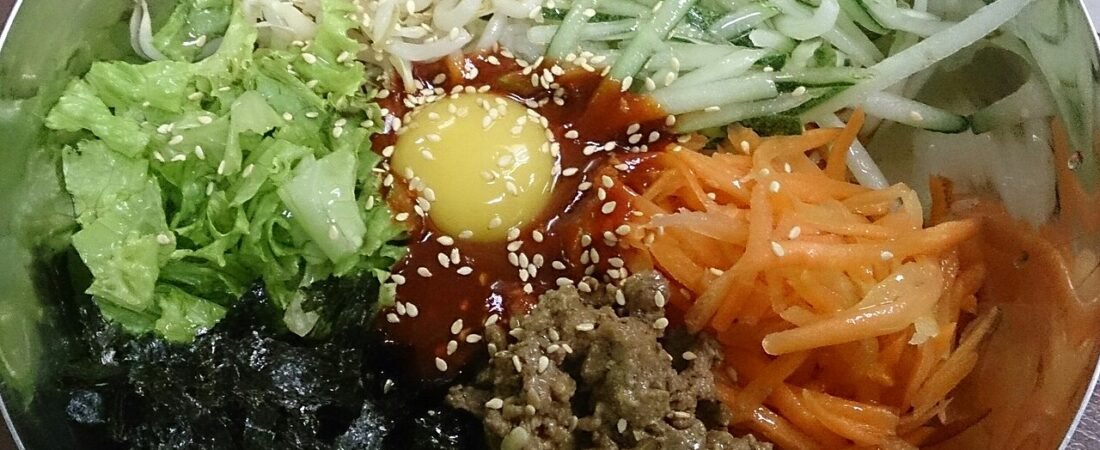
If you only eat one Korean dish on your first trip to Seoul, make it bibimbap. A bowl of warm rice arrives topped with neat piles of seasoned vegetables, a little beef, a fried egg and a spoonful of red pepper paste — and then you stir everything together. It is healthy, filling, cheap by big-city standards and friendly to almost every palate. This guide covers what bibimbap actually tastes like, why it has become one of Korea’s best-known foods worldwide, the typical 2026 price in Seoul, and two places near the main tourist areas where you can eat a great bowl.
What Is Bibimbap?
Bibim means “mixing” and bap means “cooked rice”, so bibimbap is literally “mixed rice”. A classic bowl has five to ten namul (seasoned vegetables) such as spinach, bean sprouts, bracken fern, shiitake mushrooms, carrot, zucchini and bellflower root, arranged in a circle over rice. Many versions add sautéed or raw beef (yukhoe), a fried egg and gochujang, a fermented chili paste, plus a drizzle of sesame oil.
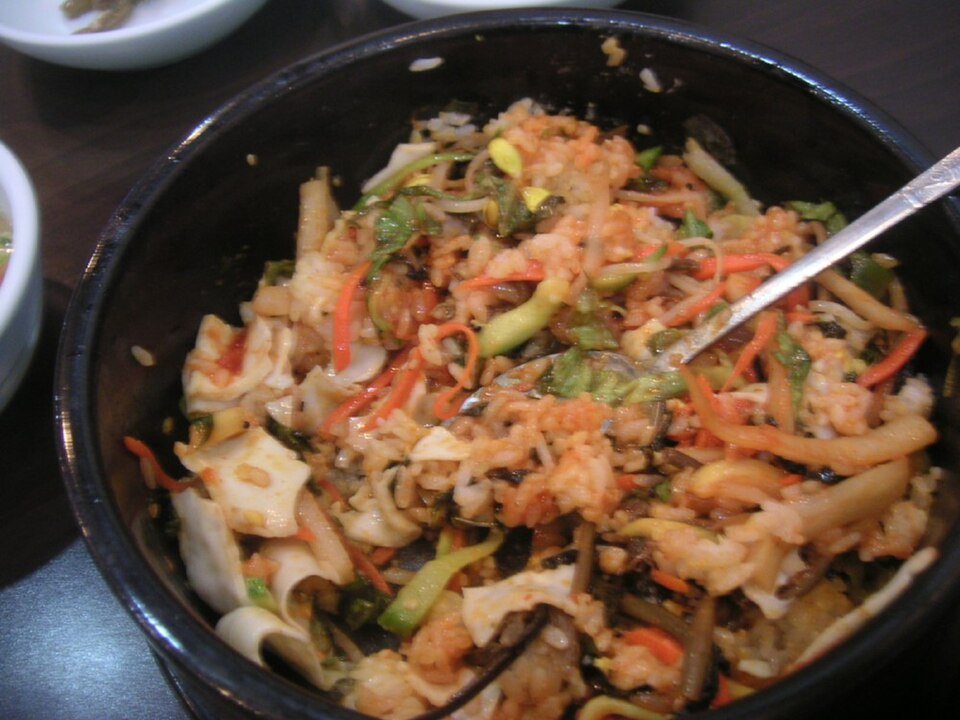
Taste and texture
Once mixed, every spoonful is a balance of nutty sesame oil, gentle sweetness and heat from gochujang, earthy mushrooms and fern, and the crunch of sprouts and carrot. The egg yolk makes it silky. Heat level is mild to medium — you control it by how much gochujang you add. In dolsot bibimbap, the bowl is a sizzling stone pot, so the bottom layer of rice turns into a crisp, golden crust (nurungji) that many people think is the best part.
Popular styles
- Jeonju bibimbap – the famous regional style from Jeonju, rich with many toppings and often raw beef.
- Dolsot bibimbap – served in a hot stone bowl for that crispy rice crust.
- Yukhoe bibimbap – topped with seasoned raw beef.
- Sanchae (mountain vegetable) bibimbap – foraged greens, popular near temples and hiking areas.
- Boribap – barley rice mixed with vegetables and soybean paste, a humble market favorite.
Why Koreans Love It – and Why Visitors Do Too
For Koreans, bibimbap is everyday comfort food. Its roots are often linked to the custom of mixing leftover side dishes with rice, and to ancestral rites where offerings were shared afterwards. It is also a symbol of balance: the colorful toppings traditionally echo the five colors of obangsaek and the idea of a nutritionally complete meal in one bowl.
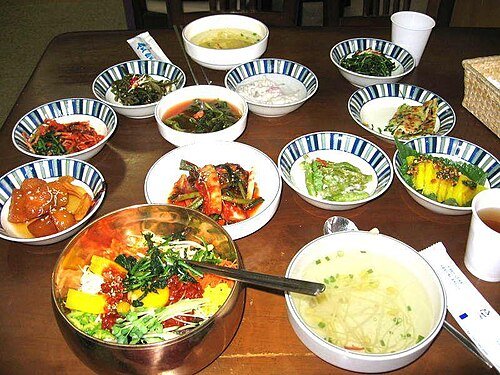
Internationally, the evidence is clear. In the 2025 Overseas Korean Food Consumer Survey by Korea’s Ministry of Agriculture, Food and Rural Affairs and the Korean Food Promotion Institute — 11,000 respondents in 22 countries — bibimbap ranked third among favorite Korean dishes (8.2%), behind only Korean fried chicken and kimchi. Korean Air has served bibimbap on flights since 1997, which introduced millions of travelers to the dish. Visitors love it because it is easy to understand, works for people who are cautious about spicy food, and can be made vegetarian simply by skipping the beef and egg.
How Much Does Bibimbap Cost in Seoul in 2026?
According to the Korea Consumer Agency’s Chamgagyeok price survey, the average price of bibimbap in Seoul is now just under 11,800 won (about US$8). As a rough guide:
| Type of place | Typical price (2026) | Approx. USD |
|---|---|---|
| Traditional market stall (boribap / simple bibimbap) | 8,000–10,000 won | $5.50–7 |
| Casual restaurant in central Seoul | 10,000–13,000 won | $7–9 |
| Dolsot / yukhoe or premium beef bibimbap | 13,000–18,000 won | $9–12.50 |
| Hotel or fine-dining Korean restaurant | 25,000 won and up | $17+ |
There is no tipping in Korea, and side dishes (banchan) such as kimchi are normally free and refillable.
2 Recommended Places to Eat Bibimbap in Seoul
1. Mokmyeoksanbang (목멱산방) – Namsan
Set in a traditional-style building on the slope of Namsan, Mokmyeoksanbang is a favorite of both locals and travelers and has been listed in the Michelin Guide Seoul. Toppings are arranged beautifully and the gochujang is served on the side, so you can season to taste. The kiosk menu includes the signature Sanbang bibimbap and premium Korean-beef tartare bibimbap; the cheese kimchi pancake is a popular add-on.
- Address: 71 Toegye-ro 20-gil, Jung-gu, Seoul (1F) – at the foot of the Namsan walking trail
- Nearest subway: Myeongdong Station (Line 4), about a 10–15 minute uphill walk
- Price range: about 10,000–16,000 won per bowl (Sanbang bibimbap around 10,000 won; beef tartare bibimbap around 15,500 won at last check)
- Hours: listed as 11:00–20:00 daily; check maps apps before you go
- Notes: self-service – order at the kiosk, pick up when your number is called, and return your tray. Lines form at lunch on weekends.
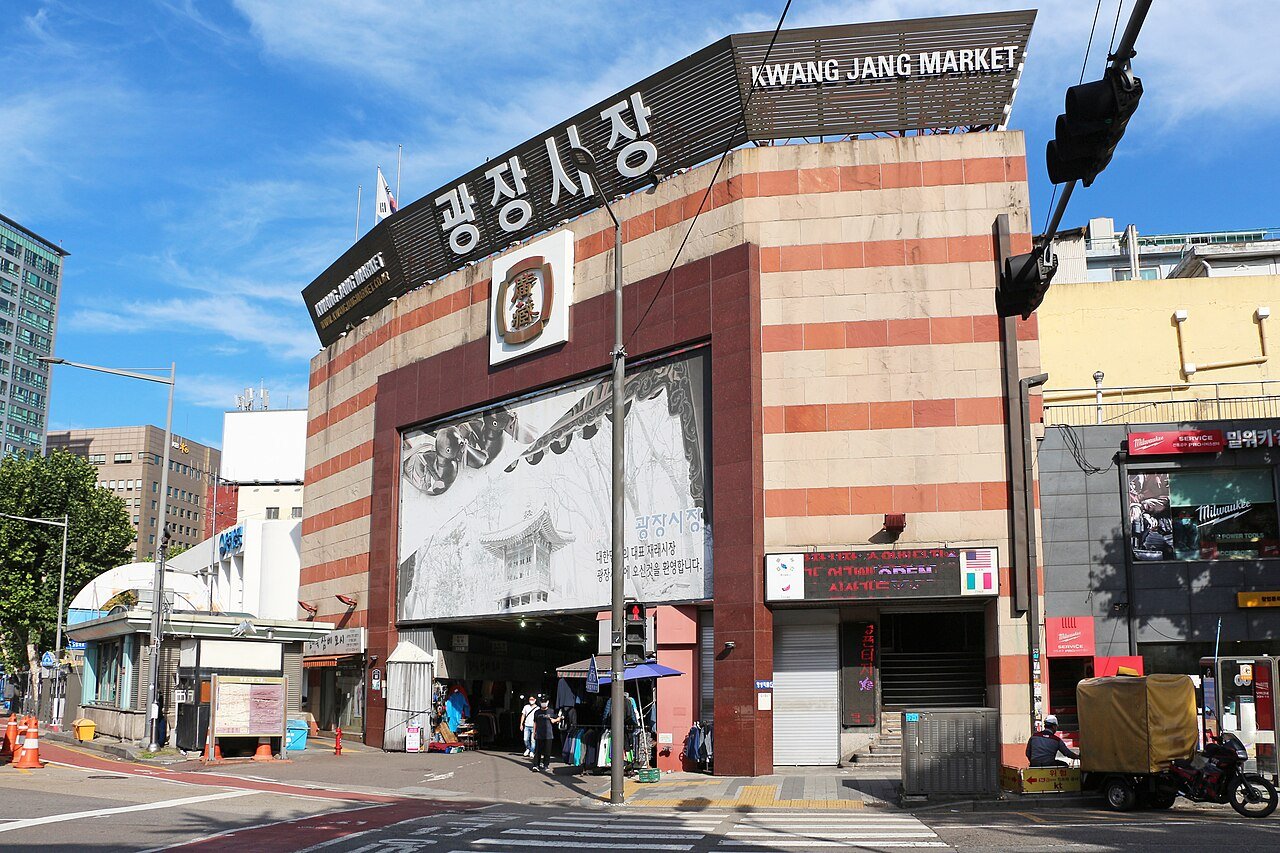
2. Gwangjang Market (광장시장) – Jongno
Seoul’s oldest covered market is the best place to eat bibimbap the way locals have for generations: elbow-to-elbow at a food stall. Look for the vendors selling boribap and vegetable bibimbap with a self-serve choice of namul — the cook mixes everything in a big bowl with gochujang and sesame oil. Pair it with a crispy mung bean pancake (bindaetteok) from the next stall.
- Address: 88 Changgyeonggung-ro, Jongno-gu, Seoul
- Nearest subway: Jongno 5-ga Station (Line 1), Exit 8, or Euljiro 4-ga Station (Lines 2 & 5), Exit 4
- Price range: roughly 8,000–10,000 won per bowl; prices are posted at each stall
- Hours: the market opens around 9:00; many food stalls stay open into the evening (individual stalls vary, and some close on Sundays)
- Notes: pay at the stall (cash and cards widely accepted); weekday late mornings are the least crowded.
Ordering and Eating Tips
- Mix it well. Use the spoon, not chopsticks, and fold everything together until the rice is evenly red.
- Add gochujang gradually. Start with half and taste — you can always add more.
- Wait a minute with dolsot. Let the stone bowl sizzle so the rice crust forms, then scrape it up at the end.
- Vegetarian? Ask for gogi ppaego (“without meat”) and check whether the broth or sauces contain fish.
- Useful phrases: Bibimbap hana juseyo (One bibimbap, please); An maepge juseyo (Not spicy, please).
FAQ
Is bibimbap spicy?
Only as spicy as you make it. The heat comes from gochujang, which is usually served on top or on the side, so you can use a little or none at all.
How much is bibimbap in Seoul in 2026?
The average is just under 11,800 won (about US$8) according to the Korea Consumer Agency. Market stalls are cheaper at around 8,000–10,000 won, while premium beef versions cost 13,000–18,000 won.
What is the difference between bibimbap and dolsot bibimbap?
Regular bibimbap is served in a metal or ceramic bowl. Dolsot bibimbap comes in a heated stone pot, which keeps the dish sizzling and creates a crispy rice crust at the bottom.
Can vegetarians eat bibimbap?
Yes. Bibimbap is one of the easiest Korean dishes to order vegetarian – ask for it without meat (gogi ppaego), and skip the egg if you are vegan.
Sources
- Korea Consumer Agency, Chamgagyeok dining price survey (Seoul averages, 2026) via namanecard.com, “Korea meal prices Seoul 2026”
- Money Today (mt.co.kr), 28 Mar 2026 – 2025 Overseas Korean Food Consumer Survey (MAFRA / Korean Food Promotion Institute)
- Polle.com and Wanderlog listings for Mokmyeoksanbang (menu, address, hours); Kakao Map (Mokmyeoksanbang main branch)
- 10 Magazine, “The 7 Best Bibimbap in Seoul” (Gwangjang Market, Mokmyeoksanbang)
Featured image: ProjectManhattan / Wikimedia Commons, CC BY-SA 3.0