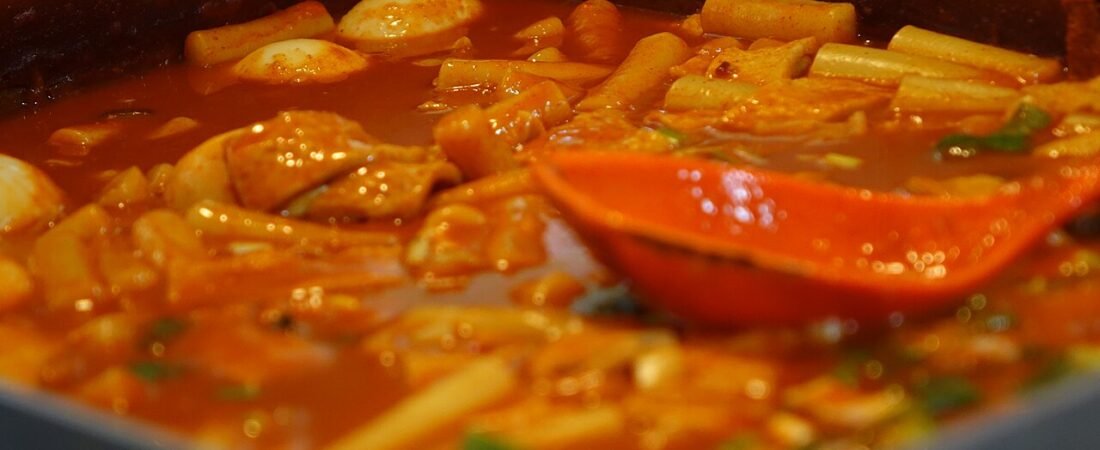
Tteokbokki in Seoul is the city’s favorite comfort snack: chewy rice cakes simmered in a glossy, sweet-and-spicy red sauce, sold everywhere from market stalls to buzzing late-night restaurants. In this 2026 guide you’ll learn what tteokbokki tastes like, why Koreans and international visitors love it, what it costs today, and two classic places to try it—Sindang-dong’s “Tteokbokki Town” and Tongin Market’s old-school oil tteokbokki.
What Is Tteokbokki? Taste and Texture
Tteokbokki (떡볶이, also spelled ddeokbokki or topokki) is made with garaetteok, cylinder-shaped rice cakes, cooked with flat fish cakes (eomuk), green onion and often a boiled egg. The modern sauce is built on gochujang (red chili paste), gochugaru (chili flakes), sugar or corn syrup and anchovy-kelp stock. The result is sweet first, then spicy, with a gentle savory depth.
The texture is the real hook. Good rice cakes are soft on the outside and pleasantly bouncy inside—Koreans call this jjolgit (쫄깃). Because the sauce reduces as it cooks, every piece is coated rather than swimming in soup. Popular variations include:
- Jeukseok tteokbokki – a “cook-it-yourself” hot pot with ramen or glass noodles, dumplings and eggs, finished with fried rice in the leftover sauce.
- Gireum (oil) tteokbokki – rice cakes stir-fried on an oiled griddle, served dry and crispy-edged, in a spicy or soy-sauce version.
- Rosé, cheese and mala tteokbokki – creamy or numbing modern twists that are hugely popular with younger diners.
- Gungjung (royal) tteokbokki – the older, non-spicy style seasoned with soy sauce and sesame oil, with beef and vegetables.
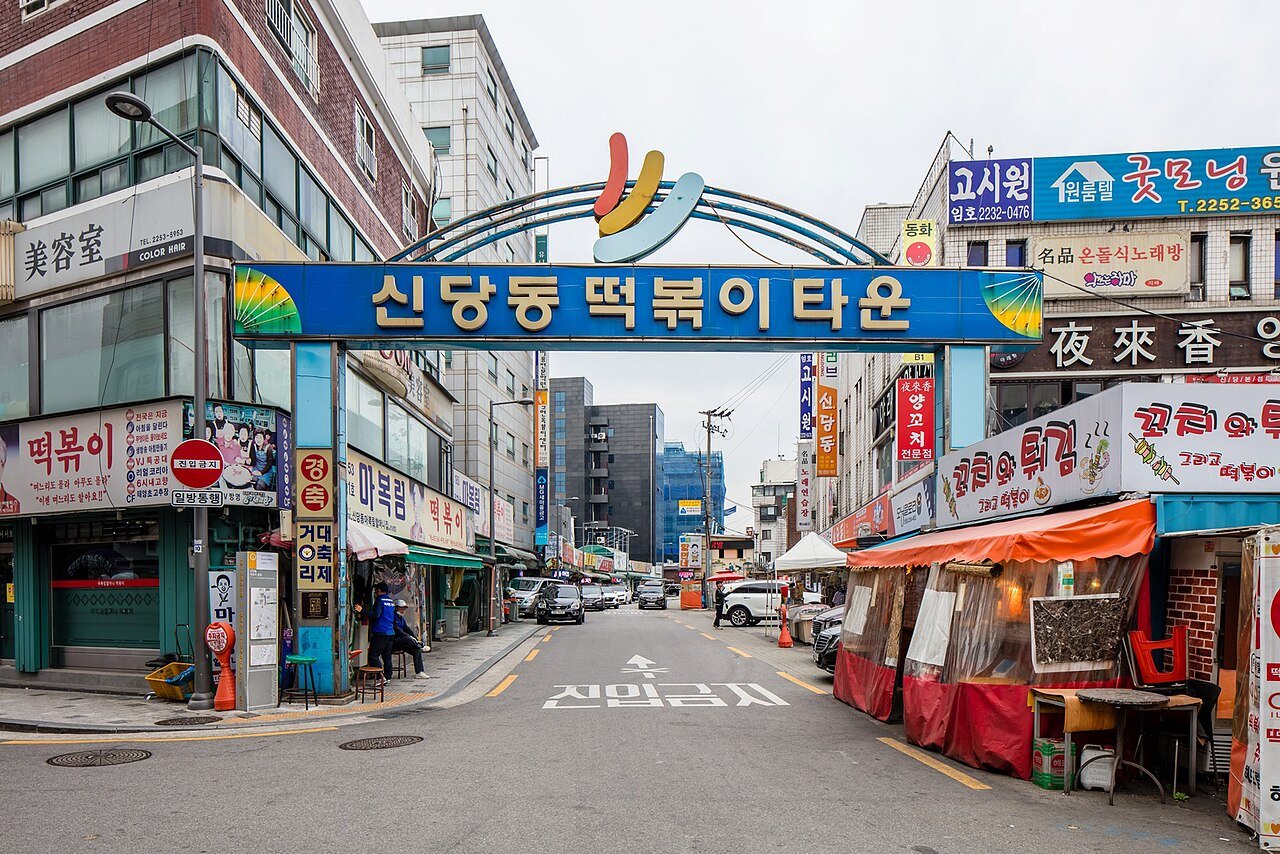
Sindang-dong Tteokbokki Town gate, Jung-gu. Photo: 서울연구원 (The Seoul Institute) / Wikimedia Commons, CC BY 4.0
Why Koreans Love Tteokbokki in Seoul
For Koreans, tteokbokki is pure nostalgia. It is the after-school snack bought from a bunsikjip (snack shop) near every school, the late-night craving after work, and the dish friends share straight from one pan. It is cheap, fast and endlessly adaptable, so it fits every budget and mood. Meanwhile, the gochujang style that dominates today only became widespread from the late 1960s, and Sindang-dong’s restaurants helped make it a national icon.
Why International Visitors Love It
K-dramas and K-pop variety shows constantly show stars eating tteokbokki at street carts, so many travelers arrive already knowing what it is. The numbers back up this curiosity:
- Korean rice cake (tteok) exports reached a record US$91.4 million in 2024, nearly triple 2019’s level, with growing tteokbokki demand named as the main driver; the U.S. alone took about 37% (Asia Economy, citing customs data).
- Exports of rice-based processed foods—including frozen tteokbokki and gimbap—rose to US$315 million in 2025 (Financial News, citing MAFRA and aT).
- The tteokbokki buffet chain Dookki runs about 188 overseas outlets, mostly in Vietnam, plus Thailand, Taiwan, the U.S. and Australia (The Korea Times, June 2026).
Visitors also love how social it is: a bubbling pan in the middle of the table, plus fried snacks, sundae (Korean blood sausage) and fish-cake broth on the side.
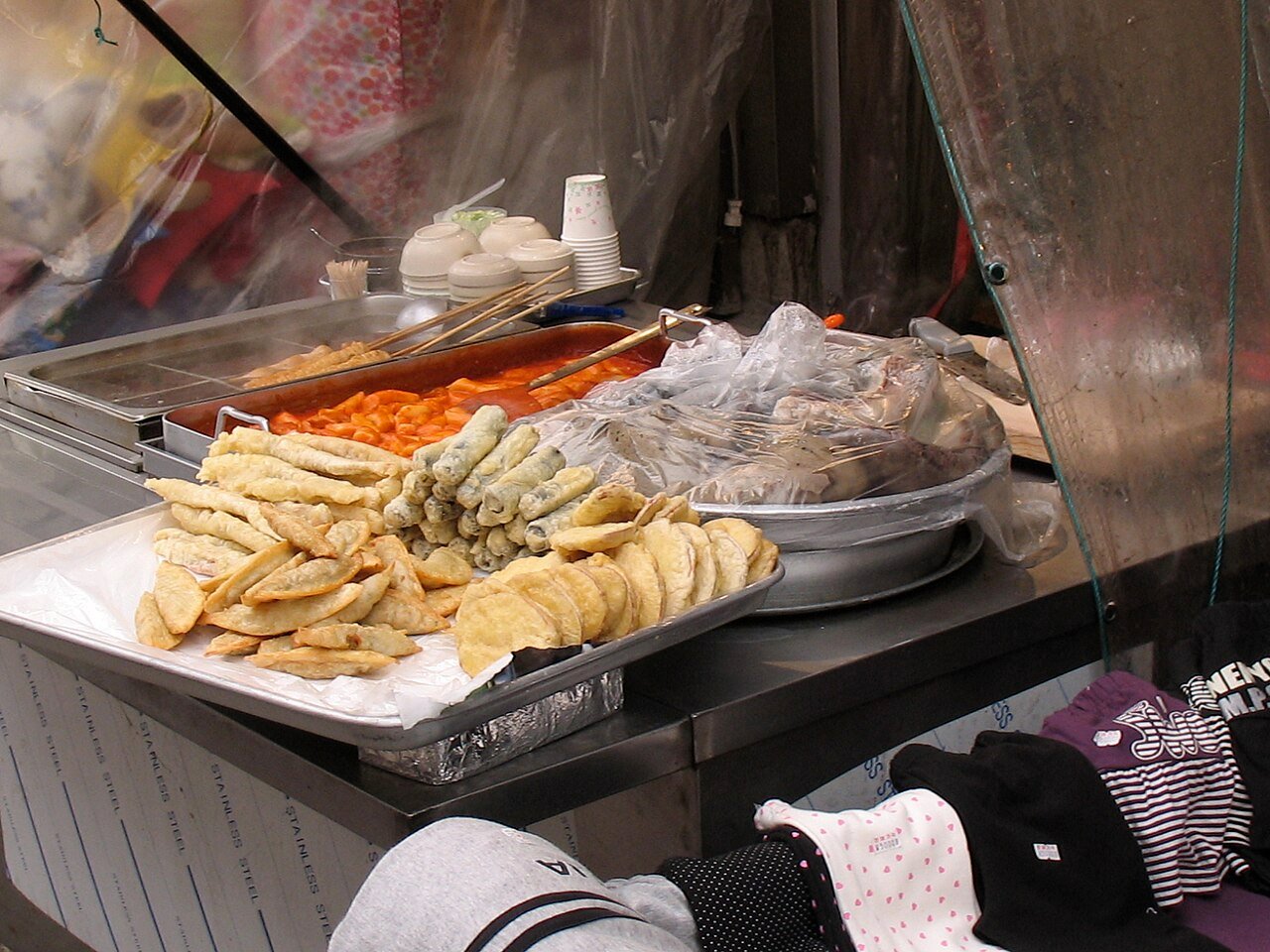
A bunsik stall with twigim (fritters), sundae and tteokbokki. Photo: Jens Ohlig / Wikimedia Commons, CC BY-SA 2.0
How Much Does Tteokbokki Cost in Seoul in 2026?
Prices depend on the style and where you eat. Exchange rates are approximate (about ₩1,400 per US$1).
| Where / style | Typical 2026 price | Approx. USD |
|---|---|---|
| Street stall or market portion (1 person) | ₩4,000–6,000 | $3–4.50 |
| Snack shop (bunsikjip) plate | ₩5,000–8,000 | $3.50–6 |
| Franchise delivery set, e.g. Yupdduk original (2–3 people) | ₩14,000 | ~$10 |
| Jeukseok hot pot in Sindang-dong (2 people) | ₩17,000 + add-ons | ~$12+ |
Prices are rising: Dongdaemun Yupdduk, one of the biggest chains, sells its signature tteokbokki for ₩14,000 and has announced a roughly 7% increase from July 2027 (Herald Economy, June 2026). Even so, tteokbokki remains one of the cheapest satisfying meals in Seoul.
2 Best Places to Eat Tteokbokki in Seoul
1. Mabokrim Halmeoni-jip (마복림할머니집), Sindang-dong Tteokbokki Town
Ma Bok-rim began selling gochujang tteokbokki here in 1953, and her family still runs the restaurant that turned this alley into Seoul’s “Tteokbokki Town.” It serves the classic jeukseok style: a pan of rice cakes, fish cakes, cabbage, ramen and dumplings cooked at your table.
- Address: 5 Dasan-ro 35-gil, Jung-gu, Seoul
- Subway: Sindang Station (Lines 2 & 6); exits 7 and 8 are both used—about a 5-minute walk
- Price: 2-person set ₩17,000, 3 people ₩20,000, 4 people ₩27,000; add-ons (noodles, dumplings, eggs, cheese) ₩1,000–4,000; fried rice ₩3,000
- Hours: 09:00–22:50; closed on the 2nd Monday of the month (some reviews also mention the 4th Monday—call 02-2232-8930)
- Tip: Order fried rice (bokkeumbap) at the end; staff cook it in the remaining sauce.
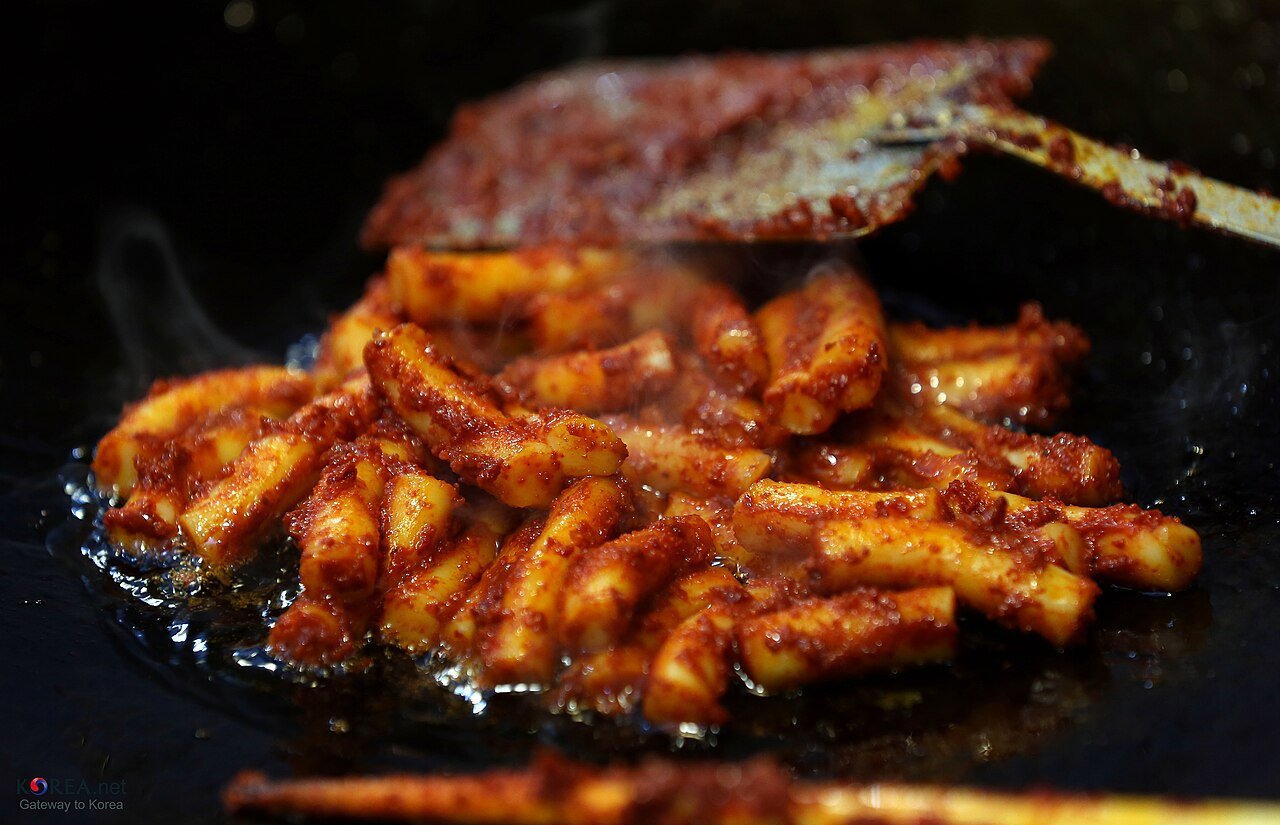
Oil tteokbokki on the griddle at Tongin Market. Photo: Republic of Korea (Korea.net) / Wikimedia Commons, CC BY-SA 2.0
2. Tongin Market Oil Tteokbokki (통인시장 기름떡볶이), Seochon
Near Gyeongbokgung Palace, Tongin Market is famous for gireum tteokbokki, a style said to date back to 1956, when a street vendor began frying thin rice cakes on an oiled griddle. Stalls such as Wonjo Halmeoni Tteokbokki and Wonjo Jeong Halmeoni Gireum Tteokbokki serve a spicy red version and a mild soy-sauce version—order both.
- Address: Tongin Market, 18 Jahamun-ro 15-gil, Jongno-gu, Seoul
- Subway: Gyeongbokgung Station (Line 3), exit 2, about a 7–9-minute walk
- Price: a portion has been about ₩4,000 (2023), so expect roughly ₩4,000–6,000 today
- Coin lunchbox: at the Dosirak Cafe, buy brass coins (yeopjeon, ₩500 each) and “spend” them at market stalls to fill a lunch tray—oil tteokbokki is the star item
- Hours (Dosirak Cafe): weekdays 11:00–16:00 (coins until 15:00), weekends 11:00–17:00 (coins until 16:00); closed Tuesdays and the 3rd Sunday
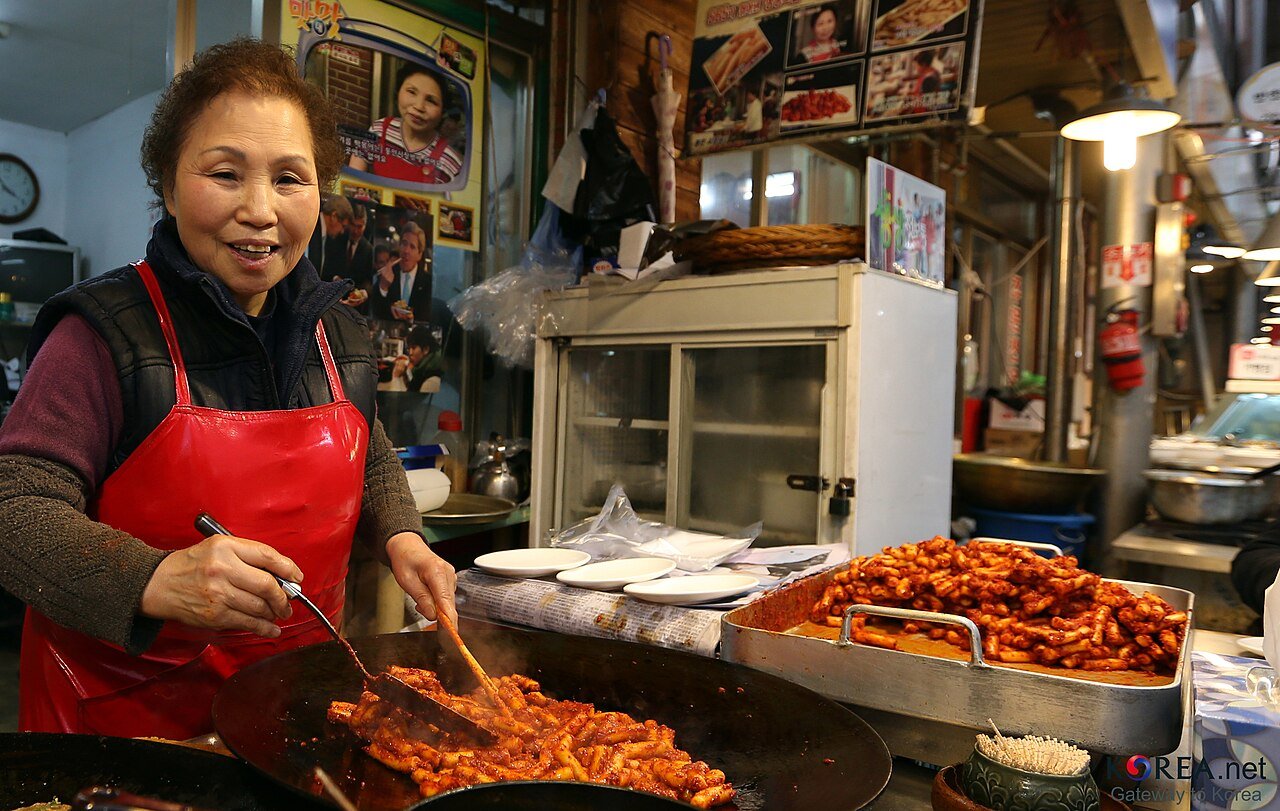
A Tongin Market vendor with spicy oil tteokbokki. Photo: Republic of Korea (Korea.net) / Wikimedia Commons, CC BY-SA 2.0
Ordering and Eating Tips
- Spice level: most tteokbokki is medium-hot. If you are sensitive, try soy-sauce oil tteokbokki or ask for “deol maepge” (덜 맵게, less spicy).
- Classic combo: “tteok-twi-sun” — tteokbokki, twigim (fried snacks) and sundae, all dipped in the sauce.
- Share the pan: jeukseok restaurants usually require a minimum of two portions, so it is best with a friend.
- Drink: a cup of free fish-cake broth or a cold soda cools the heat.
- Cash and cards: cards work almost everywhere, but small market stalls are faster with cash.
Hungry for more Korean classics? Read our guides to bibimbap in Seoul and samgyeopsal in Seoul.
FAQ: Tteokbokki in Seoul
Is tteokbokki very spicy?
Most red tteokbokki is moderately spicy with plenty of sweetness. Soy-sauce (ganjang) or royal tteokbokki is not spicy at all, while some franchise “extreme” levels are very hot.
How much does tteokbokki cost in Seoul?
Expect about ₩4,000–6,000 for a street or market portion, around ₩14,000 for a franchise set for two to three people, and ₩17,000 for a two-person hot pot in Sindang-dong (2026).
Where is the best place to try tteokbokki in Seoul?
For the classic hot pot, go to Sindang-dong Tteokbokki Town (Mabokrim Halmeoni-jip). For a unique style, try oil tteokbokki at Tongin Market near Gyeongbokgung.
Is tteokbokki vegetarian?
Usually not, because the sauce often uses anchovy stock and is served with fish cakes. Ask for a version without eomuk and broth, or choose a vegan-friendly restaurant.
Sources
- Asia Economy – Rice cake exports hit record high (Jan 2025)
- Financial News – Rice-based processed food exports (Mar 2026)
- The Korea Times – Tteokbokki simmers around world at Dookki (Jun 2026)
- Herald Economy – Yupdduk price plan (Jun 2026)
- K-Trip Tips – Mabokrim Halmeoni-jip · DiningCode menu
- Seoul Media Hub – Tongin Market coin lunchbox (2025) · Tongin Market oil tteokbokki (2023)
- Brunch – Since 1956, Tongin Market oil tteokbokki
Featured image: Tteok-bokki 2.jpg — Photo: Choe Kwangmo / Wikimedia Commons, CC0. Prices and hours were checked in October 2026 and may change.