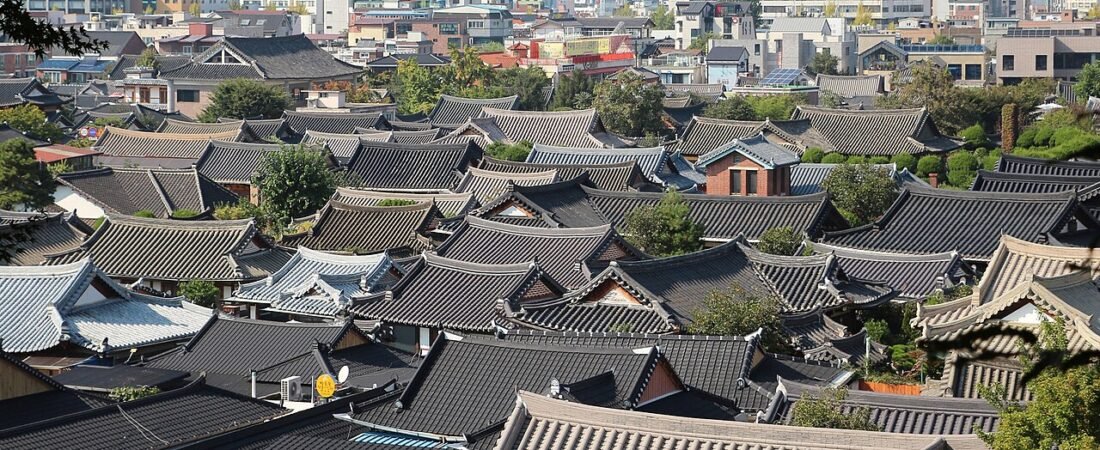
Jeonju Hanok Village in autumn is one of the easiest and most rewarding trips from Seoul: more than 700 traditional tile-roofed houses, golden ginkgo trees, crisp blue skies and the city that gave Korea its most famous bibimbap—all less than two hours away by KTX. This 2026 guide covers when to go, how to get there, what it costs, a one-day itinerary, nearby sights and two local restaurants worth the trip.
Why Visit Jeonju Hanok Village in Autumn
October and November bring dry, comfortable weather (roughly 8–22°C) that is perfect for wandering hanok alleys in a rented hanbok. The village’s old trees turn color later than the mountains around Seoul: the Korea Tourism Organization’s 2026 foliage map expects the Jeolla region, which includes Jeonju, to peak in early to mid-November, after the central region peaks in late October. In practice:
- Mid–late October: pleasant weather, first touches of color, fewer crowds on weekdays.
- Early–mid November: best time for the 400-year-old ginkgo trees at Jeonju Hyanggyo and the maples around Gyeonggijeon and Omokdae.
- Bonus: Naejangsan, Korea’s top maple spot, is about an hour from Jeonju, so you can combine both in a 1-night trip (see our Naejangsan autumn foliage guide).
Note for 2026: the main shrine hall (Jeongjeon) of Gyeonggijeon is under repair from March 26 to December 17, 2026 (scheduled). The rest of the grounds and the Royal Portrait Museum remain open.
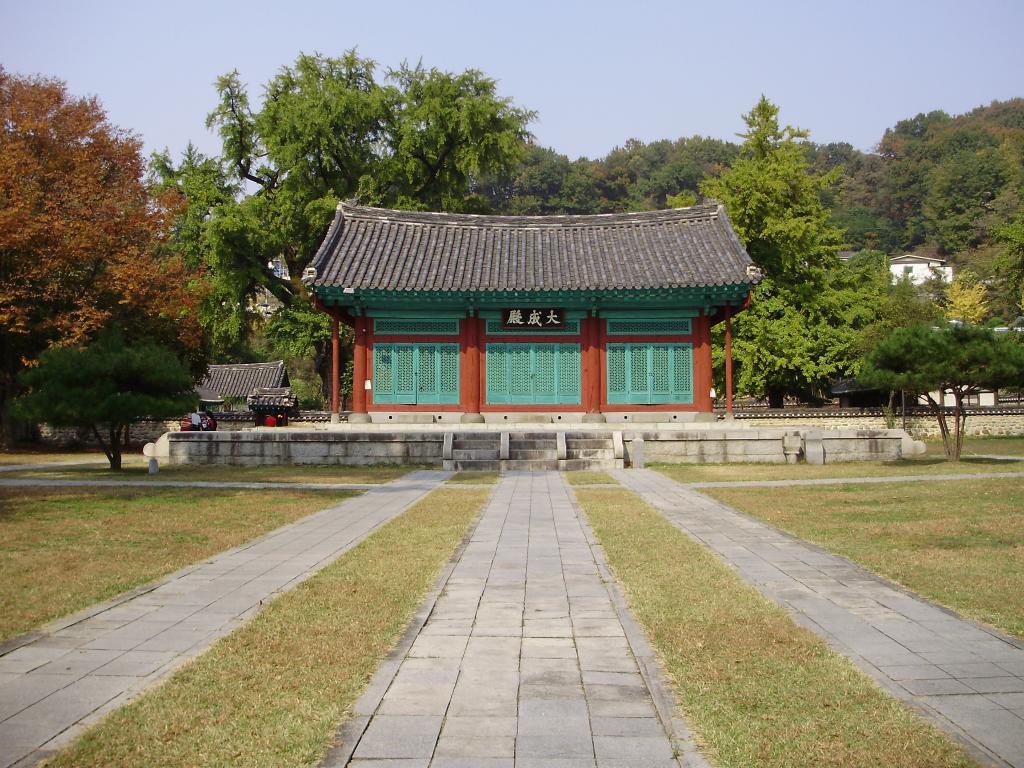
Daeseongjeon of Jeonju Hyanggyo in late October. Photo: nachof / Wikimedia Commons, CC BY-SA 2.0
How to Get to Jeonju from Seoul
By KTX (fastest)
- Route: Yongsan Station → Jeonju Station (Jeolla Line)
- Time: about 1 hour 32 minutes to 1 hour 49 minutes on most trains
- Fare: ₩31,600 one way (adult, standard class); standing/free seat ₩26,900
- Frequency: about 24–27 trains a day; book on the Korail app or Let’s Korail website. Slower ITX-Saemaeul (₩26,200, ~3h20m) and Mugunghwa (₩17,600) trains also run.
- Station to the village: city buses (79 and several 500-series routes) take about 15–20 minutes; a taxi costs roughly ₩8,000–10,000.
By express bus (cheapest)
- Route: Seoul Express Bus Terminal (Central City, Honam Line) → Jeonju Express Bus Terminal
- Time: about 2 hours 40 minutes to 3 hours, depending on traffic
- Fare: deluxe (udeung) ₩23,900, premium ₩31,000, a few standard buses ₩16,400
- Frequency: around 90 departures a day, 05:30 to midnight
Approximate Cost of a Jeonju Autumn Trip
| Item | Day trip (per person) | 1 night 2 days |
|---|---|---|
| KTX round trip (Yongsan–Jeonju) | ₩63,200 | ₩63,200 |
| Local buses / taxis | ₩5,000–15,000 | ₩10,000–25,000 |
| Gyeonggijeon admission (adult) | ₩3,000 | ₩3,000 |
| Hanbok rental (optional, 2–4 hours) | ₩15,000–30,000 | ₩15,000–30,000 |
| Meals and snacks | ₩30,000–45,000 | ₩60,000–90,000 |
| Hanok guesthouse (per room) | — | ₩80,000–200,000 |
| Total (approx.) | ₩100,000–155,000 (US$70–110) | ₩230,000–410,000 (US$165–295) |
Hanbok and lodging prices are typical ranges and change with the season; weekends in November book up early. The village itself is free to enter.
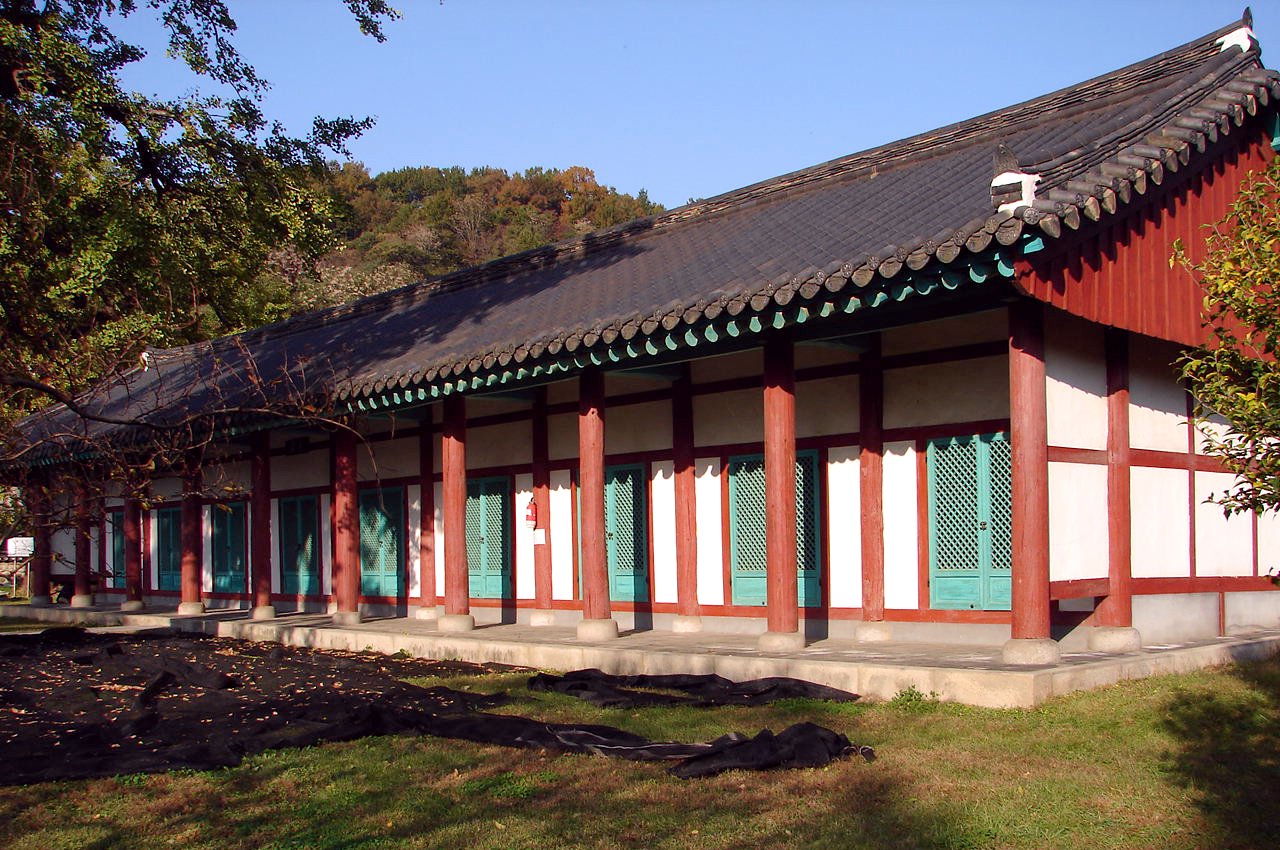
Jeonju Hyanggyo, home to giant ginkgo trees. Photo: Steve46814 / Wikimedia Commons, CC BY-SA 3.0
Suggested One-Day Itinerary
- 07:30–09:30 – KTX from Yongsan to Jeonju; bus or taxi to the village.
- 09:45 – Early breakfast-style bowl of kongnamul gukbap (bean sprout soup) near the village.
- 10:30 – Rent a hanbok, then visit Gyeonggijeon and the Royal Portrait Museum (Eojin Museum).
- 12:00 – Photo stop at Jeondong Catholic Cathedral across the street.
- 12:45 – Lunch: Jeonju bibimbap.
- 14:00 – Walk up to Omokdae for a view over the tiled rooftops, then cross to Jaman Mural Village.
- 15:30 – Jeonju Hyanggyo for golden ginkgo trees (best in early–mid November); stroll along Jeonjucheon Stream, where silver grass sways in October.
- 17:00 – Snacks at Nambu Market, then return KTX in the evening.
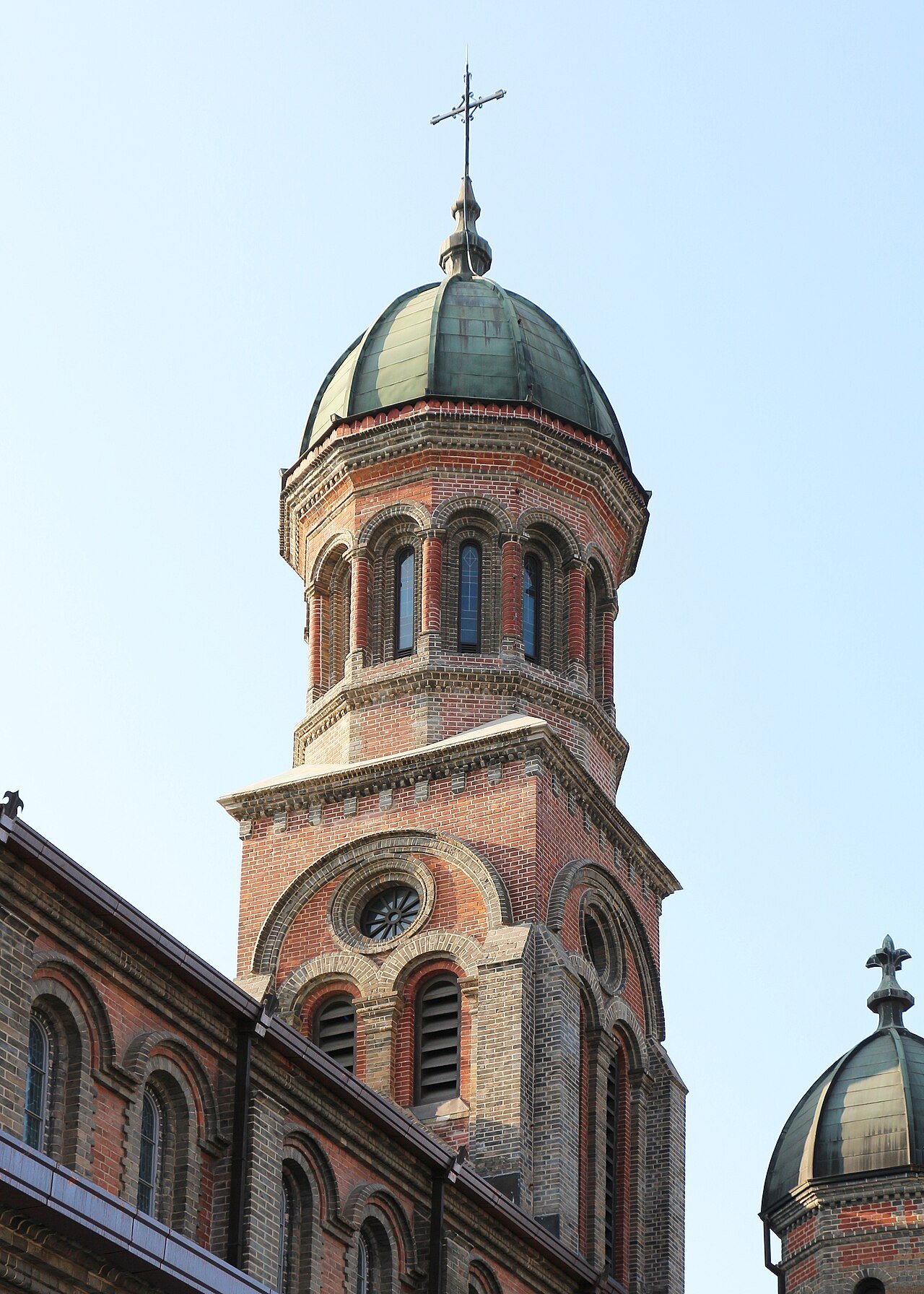
Jeondong Catholic Cathedral. Photo: Bernard Gagnon / Wikimedia Commons, CC0
Nearby Attractions
- Gyeonggijeon Shrine – built in 1410 to enshrine the portrait of King Taejo, founder of the Joseon dynasty. Open 09:00–19:00 (last entry 18:00 in September; winter hours are shorter). Adults ₩3,000, youth ₩2,000, children ₩1,000; 50% off in hanbok on the 4th Saturday of each month. In 2025 the gate-guard ceremony ran on Saturdays at 14:00 in June, September and November—check the 2026 schedule.
- Jeondong Catholic Cathedral – a red-brick Romanesque-Byzantine church completed in 1914 on a site linked to Korea’s first Catholic martyrs; beautiful with autumn trees and late-afternoon light.
- Omokdae & Jaman Mural Village – a short climb to a pavilion overlooking the village, then colorful painted alleys and small cafés on the next hill.
- Jeonju Hyanggyo – a Joseon-era Confucian school famous for its huge ginkgo trees; free to enter and one of the best autumn photo spots in Jeonju.
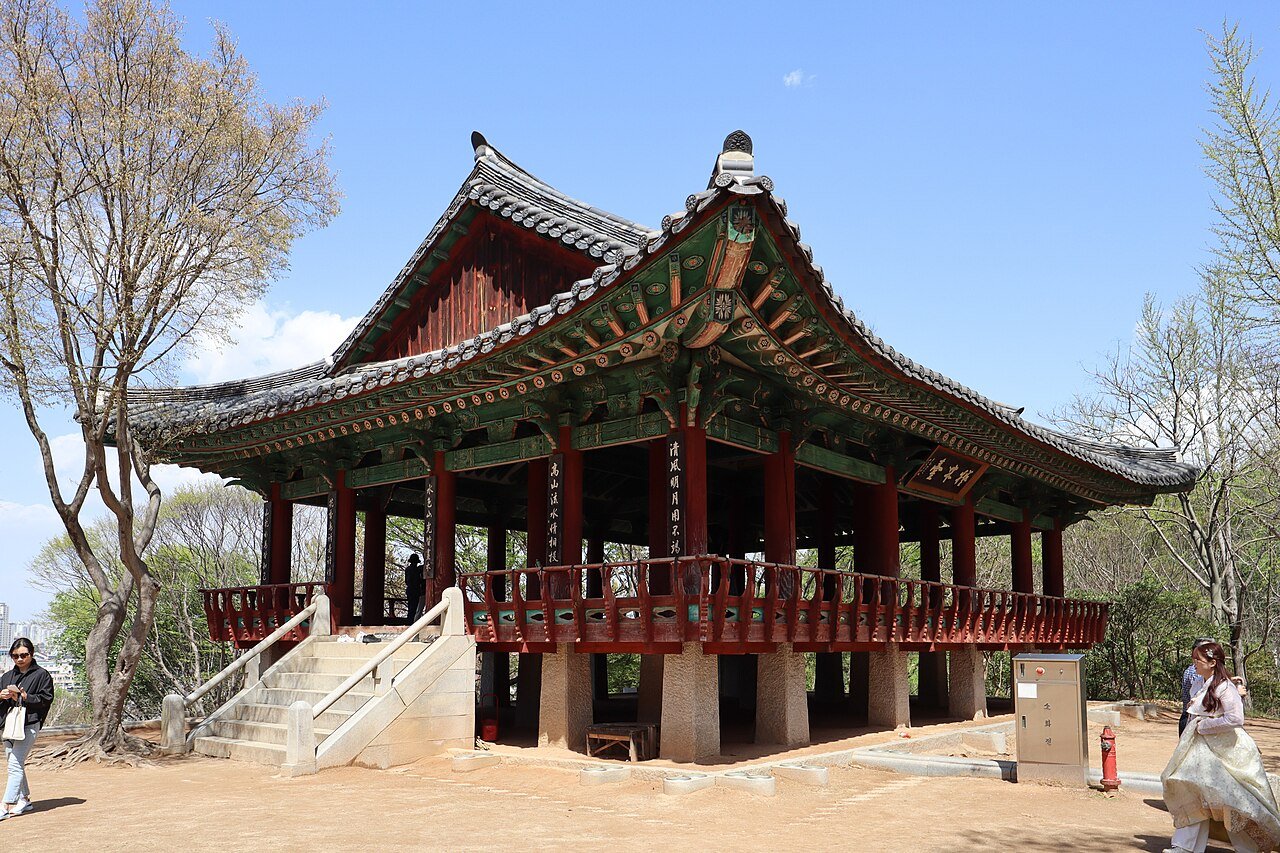
Omokdae pavilion. Photo: Mobius6 / Wikimedia Commons, CC BY-SA 4.0
Where to Eat Near Jeonju Hanok Village
Hankookjib (한국집) – Jeonju bibimbap since 1952
- Address: 119 Eojin-gil, Wansan-gu, Jeonju (a few minutes from Gyeonggijeon)
- Signature: Jeonju bibimbap ₩15,000, yukhoe (beef tartare) bibimbap ₩17,000, yukjeon (pan-fried beef) ₩25,000
- Hours: about 09:50–20:50 (to 20:00 on Thursdays); listings show Fridays as closed—check before you go
- Tip: expect a wait at lunchtime; no reservations. New to the dish? Read our bibimbap guide.
Waengi Kongnamul Gukbap (왱이콩나물국밥)
- Address: 88 Dongmun-gil, Wansan-gu, Jeonju (annex at 9-12 Jeondongseongdang-gil)
- Signature: Jeonju-style bean sprout soup with rice ₩9,000; moju (sweet herbal rice wine) ₩2,000 a cup
- Hours: daily 07:00–21:00 (reportedly open year-round)
- Tip: a perfect early breakfast or hangover cure; add the soft egg and seaweed served on the side.
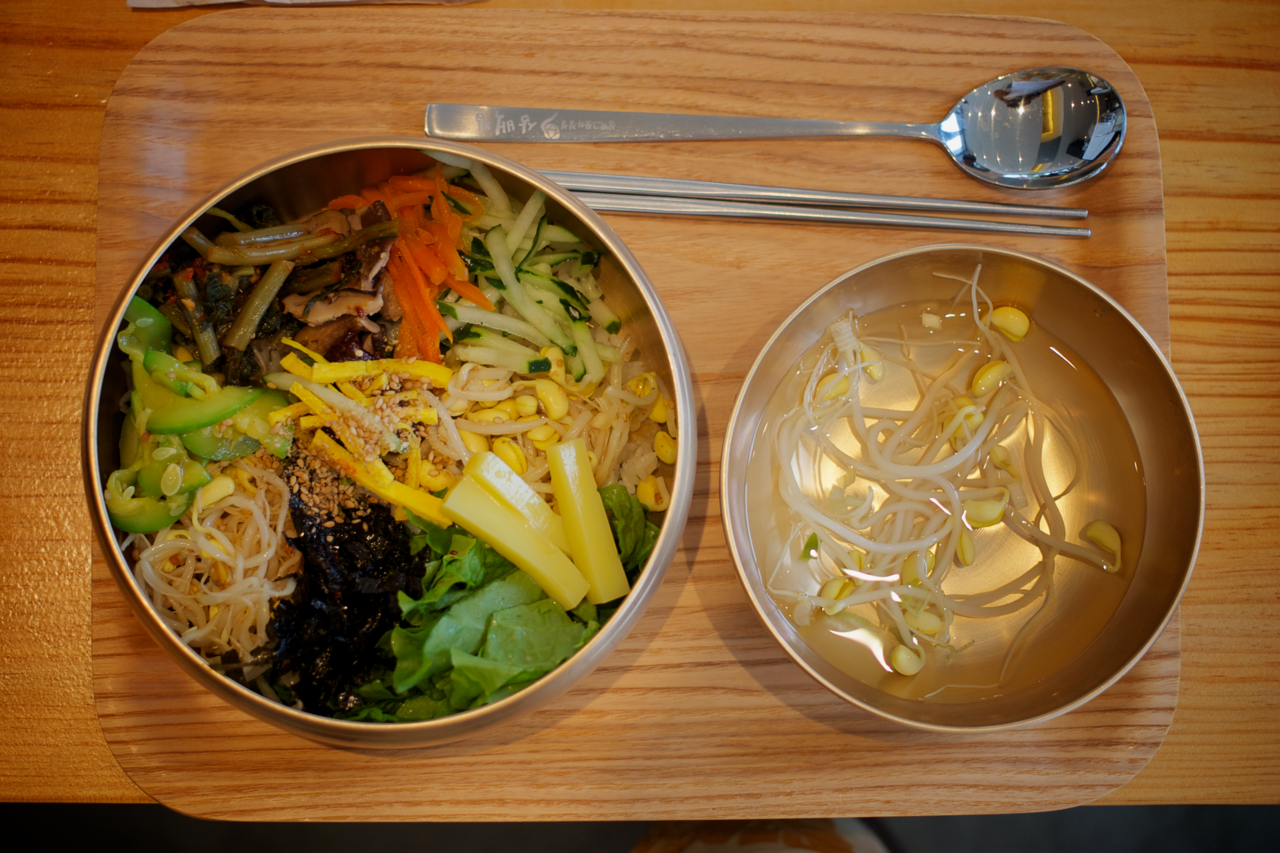
Jeonju bibimbap with kongnamul-guk. Photo: ecodallaluna / Wikimedia Commons, CC BY-SA 2.0
Tips for Visiting Jeonju Hanok Village in Autumn
- Go early on weekends. By 11:00 the main Taejo-ro street is packed; side alleys stay quiet.
- Book KTX in advance for November weekends, especially the return train.
- Bring layers. Mornings and evenings in November can drop to near 5°C.
- Stay overnight in a hanok guesthouse to see the lantern-lit village at night and visit Naejangsan the next morning.
- Check closures: Gyeonggijeon’s main shrine is under repair until mid-December 2026.
FAQ: Jeonju Hanok Village in Autumn
When is the best time to see autumn colors in Jeonju?
Early to mid-November. The 2026 KTO foliage map expects the Jeolla region to peak then, and Jeonju Hyanggyo’s ginkgo trees usually turn gold in the same window.
Can I visit Jeonju Hanok Village as a day trip from Seoul?
Yes. The KTX from Yongsan takes about 1.5–1.8 hours, so you can leave around 07:30 and return in the evening with six to seven hours in Jeonju.
How much does a Jeonju day trip cost?
Roughly ₩100,000–155,000 per person including the KTX round trip (₩63,200), local transport, admission, food and an optional hanbok rental.
Is there an entrance fee for Jeonju Hanok Village?
No. The village is free. Gyeonggijeon charges ₩3,000 for adults, while Jeonju Hyanggyo, Omokdae and Jeondong Cathedral are free.
Sources
- Financial News – KTO 2026 autumn foliage map (Oct 8, 2026)
- Korail timetable & fares, Jeonju–Yongsan (Oct 2026)
- Express bus timetable, Central City–Jeonju
- Gyeonggijeon repair period, hours and admission (Sep 2026)
- Jeonbuk Ilbo – Gyeonggijeon gate-guard ceremony
- DiningCode – Hankookjib · DiningCode – Waengi
Featured image: Jeonju Hanok Maeul 02.jpg — Photo: Bernard Gagnon / Wikimedia Commons, CC0. Fares, hours and prices were checked in October 2026 and may change.