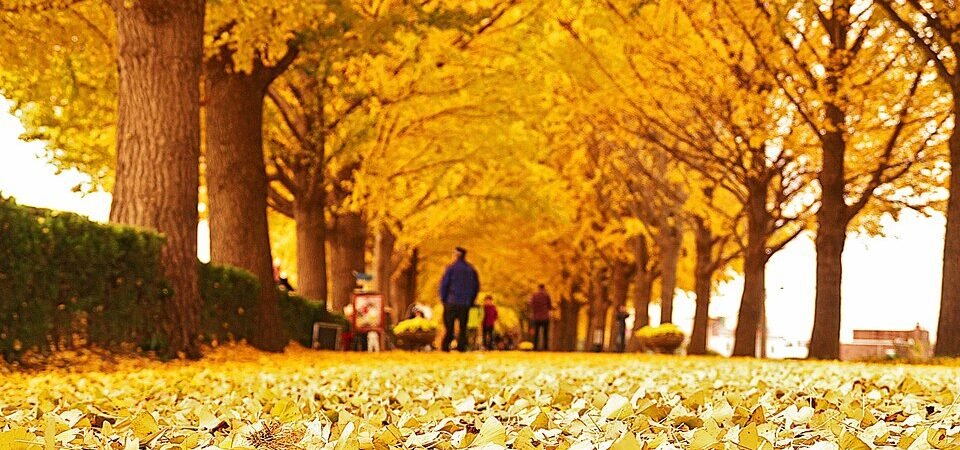
Asan Ginkgo Tree Road in autumn is one of the easiest golden-foliage trips you can take from Seoul: a 2.2 km car-free avenue of about 350 old ginkgo trees that turns bright yellow every late October and November. With direct trains from Yongsan in about 1.5 hours, a free national shrine at one end and a 500-year-old folk village nearby, it makes a relaxed, low-cost day trip in South Chungcheong Province.
Why Visit Asan Ginkgo Tree Road in Autumn
The avenue runs along the Gokgyocheon stream embankment from Chungmu Bridge to the entrance of Hyeonchungsa Shrine. Planting began in 1966 as part of the Hyeonchungsa project and continued in earnest from 1973, so most of the roughly 350 trees are now more than 60 years old, with another 180 planted along the riverside. Cars have been banned since October 2013, so the whole road is for walking and cycling (newsWA, Oct 17 2026).
Best timing in 2026: the leaves usually turn fully yellow in late October to early November, and Weekly Kyunghyang’s travel column notes that every leaf is golden by early November. Weather i’s 2026 foliage forecast put the central-region peak around October 31–November 5. For a “golden carpet” of fallen leaves, mid-November is best. Evening walkway lights and light sculptures also make a sunset visit worthwhile.

How to Get to Asan Ginkgo Tree Road from Seoul
| Route | Time | 2026 fare (one way) |
|---|---|---|
| Korail Mugunghwa, Yongsan → Onyangoncheon | about 1 h 27–1 h 38 | ₩7,000 (standing ₩6,000) |
| ITX-Saemaeul / ITX-Maeum, Yongsan → Onyangoncheon | about 1 h 22–1 h 30 | ₩10,400 (standing ₩8,800) |
| Seoul Subway Line 1 (Cheonan/Sinchang line) → Onyangoncheon | about 2 h 10–2 h 30 | distance-based T-money fare (cheapest option) |
| KTX Seoul/Yongsan → Cheonan-Asan, then bus or taxi | about 40 min + 20 min | check Korail (more expensive) |
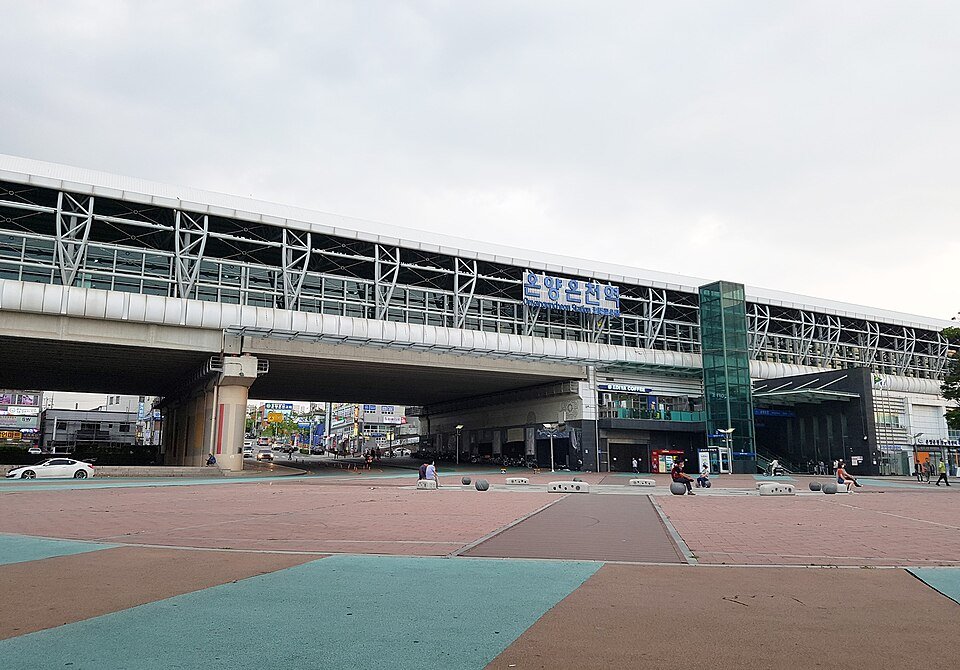
Around 15–16 trains a day run each way between Yongsan and Onyangoncheon (first from Yongsan about 05:32, last back from Onyangoncheon about 22:26 in late October 2026). From Onyangoncheon Station the ginkgo road is about 6 km away: local buses take roughly 25–30 minutes (Kakao Map shows the live route), and a taxi takes about 15 minutes. On Tuesdays to Thursdays the Asan City Tour circular bus leaves Onyangoncheon Station five times a day and stops at the Onyang Folk Museum, the ginkgo road and Hyeonchungsa with unlimited hop-on, hop-off.

Approximate Cost for a Day Trip (per person)
| Item | Cost |
|---|---|
| Train, Yongsan ↔ Onyangoncheon (round trip) | ₩14,000–20,800 |
| Local bus / taxi share in Asan | ₩3,000–15,000 |
| Ginkgo road and Hyeonchungsa | Free |
| Bicycle rental (2 hours) | ₩1,000 single / ₩2,000 tandem |
| Oeam Folk Village | ₩2,000 |
| Lunch + café/snack | ₩15,000–30,000 |
| Total | about ₩35,000–70,000 (US$26–53) |
Want to stay overnight? Onyang Oncheon, Korea’s oldest hot-spring town (about 1,300 years), has spa hotels next to the station, so the trip works well as a one-night autumn break.
Suggested One-Day Itinerary
- 08:00–09:30 – Train from Yongsan to Onyangoncheon; bus or taxi to Hyeonchungsa.
- 09:45–11:00 – Hyeonchungsa Shrine, dedicated to Admiral Yi Sun-sin.
- 11:00–12:30 – Walk (about 40 minutes one way) or cycle the ginkgo road toward Chungmu Bridge; stop at the riverside deck and cafés.
- 12:30–14:00 – Taxi to Oeam Folk Village; lunch of pajeon and makgeolli.
- 14:00–15:30 – Stroll the stone-walled lanes of Oeam and Geonjae Gotaek.
- 16:00–18:00 – Hot-spring bath in Onyang, then the train back to Seoul (or return to the ginkgo road for the evening lights).
Nearby Attractions
Hyeonchungsa Shrine
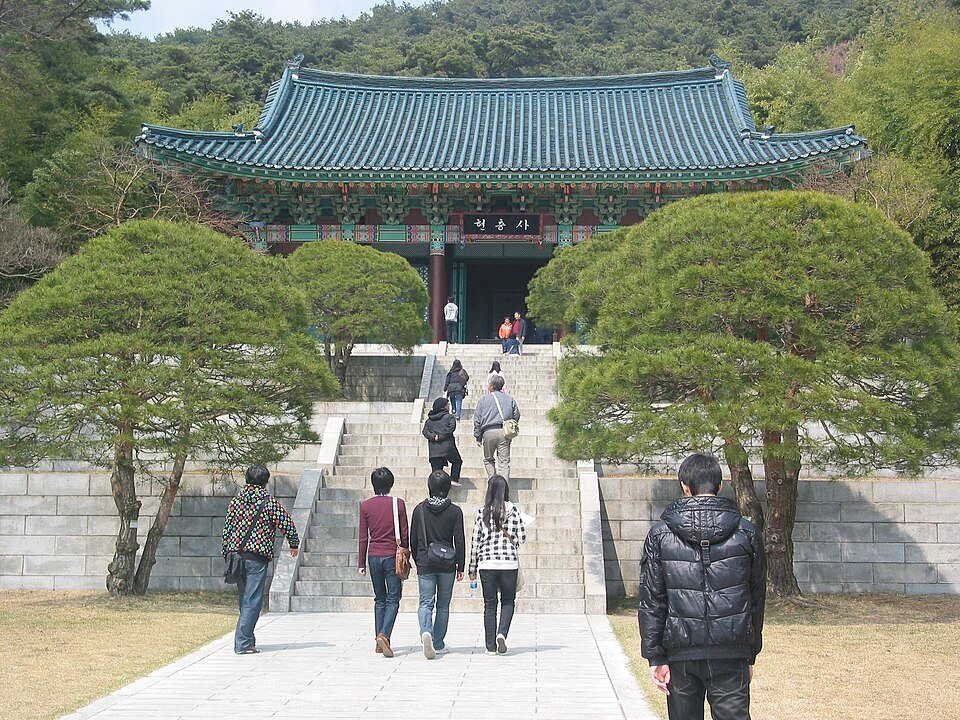
Built in 1706 with King Sukjong’s approval, Hyeonchungsa honors Admiral Yi Sun-sin, the hero of the Imjin War. The grounds hold the house where Yi lived before passing the military exam in 1576, his archery field and his family graves, and the exhibition hall displays the National Treasure Nanjung Ilgi (War Diary) and his long swords. It opens at 9 a.m. and closes on Mondays; admission is free.

Oeam Folk Village
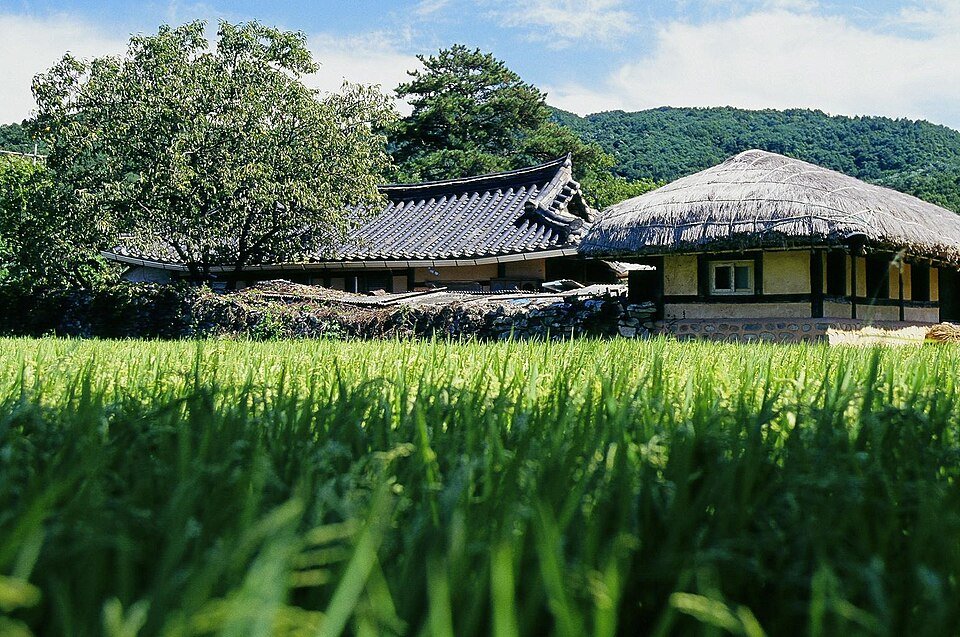
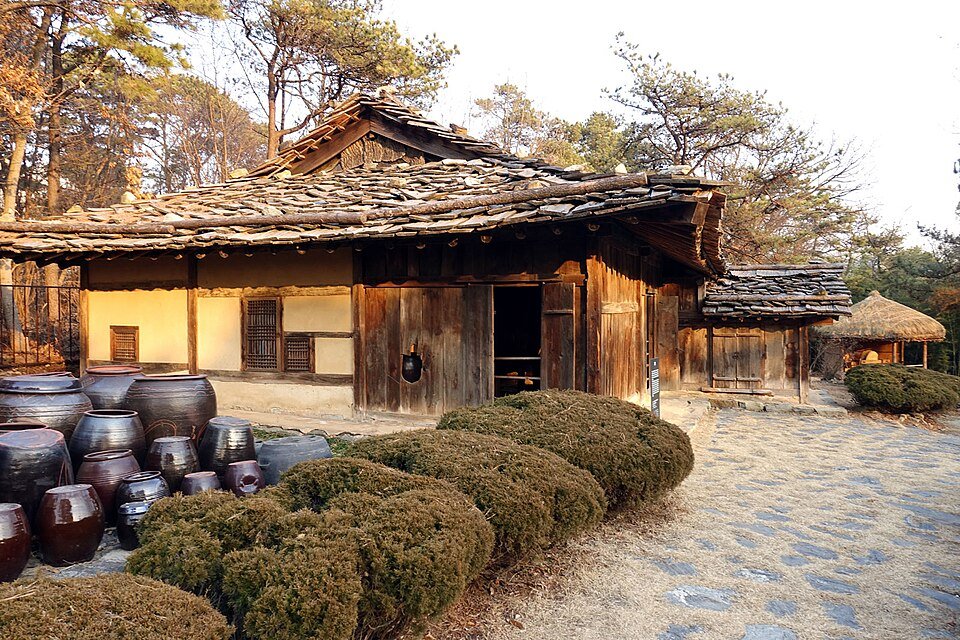
About 20 minutes south, Oeam is a “living museum” clan village formed around 500 years ago, where some 60 households still live behind low stone walls in thatched and tiled hanok. In autumn, persimmons, golden rice fields and the Geonjae Gotaek garden make it very photogenic. Adults ₩2,000; open 09:00–17:00 in winter and 09:00–18:00 in summer (some halls close on Mondays).


Onyang Oncheon (hot springs)
The hot-spring town around Onyangoncheon Station has public bathhouses and spa hotels – perfect after a long walk on a cool November day.
Gokgyocheon riverside and Yeohae Naru
A 16 km round-trip bike path follows the stream, and the Yi Sun-sin tourism experience center (Yeohae Naru) has a media-art hall about the admiral.
Where to Eat Nearby
- Sangjeon (상전) – 1F, 1030-14 Oeam-ro, Songak-myeon (Oeam Folk Village entrance). Seafood pajeon ₩20,000, kimchi pajeon ₩18,000, acorn-jelly rice (mukbap) ₩7,000, wild-vegetable bibimbap ₩10,000; tel. 041-541-2545.
- Yeomintteul (여민뜰) – 62 Yeominru-gil, Yeongin-myeon. Known for Hanwoo tteokgalbi (grilled beef patties) with gondre pot rice and dried yellow croaker; a good sit-down lunch if you drive or take a taxi.
- Ginkgo road kiosks and cafés – food stalls on the road sell tteokbokki, hot dogs and fish cakes in season, and cafés such as Gallery Cafe Monet sit just off the avenue.
If you are planning more autumn foliage trips, compare Andong Hahoe Village, Naejangsan and Mungyeong Saejae, or enjoy a galbi dinner in Seoul after you return.
Travel Tips
- Avoid Mondays: Hyeonchungsa and the bike rental close on Mondays.
- Go early on weekends: parking (about 1,200 spaces) and buses fill up at peak foliage – arrive before 10:00.
- Mind the ginkgo nuts: fallen fruit smells strong and stains shoes; wear old sneakers.
- Check the leaves: search “곡교천 은행나무길” on Naver or Instagram the day before to see live color.
- Layer up: mornings in early November can be close to 0–5 °C.
Asan Ginkgo Tree Road: FAQ
When is the best time to visit Asan Ginkgo Tree Road in autumn?
Late October to early November is the usual peak, with the 2026 central-region foliage forecast around October 31–November 5. Mid-November is best for fallen leaves.
How do I get to Asan Ginkgo Tree Road from Seoul by public transport?
Take a Mugunghwa or ITX train from Yongsan to Onyangoncheon (about 1.5 hours, ₩7,000–10,400), then a local bus or taxi about 6 km to the road near Hyeonchungsa.
Is there an entrance fee?
No. The ginkgo road and Hyeonchungsa Shrine are free. Bike rental costs ₩1,000–2,000 for two hours and Oeam Folk Village is ₩2,000.
Can I combine it with other places in one day?
Yes. Hyeonchungsa is at the end of the road, Oeam Folk Village is about 20 minutes away, and Onyang hot springs are next to the station.
Sources
- newsWA – Gokgyocheon ginkgo road, 350 trees, car-free since 2013 (Oct 17 2026)
- iNews24 – Autumn in Asan: ginkgo road, bike rental, Oeam Village (Oct 6 2026)
- Weekly Kyunghyang – Gokgyocheon ginkgo road in early November
- Train timetable – Onyangoncheon–Yongsan fares (Oct 2026)
- Korea JoongAng Daily – Asan: hot springs, Hyeonchungsa, Oeam
- Korea travel info – Oeam Folk Village fees and hours
- Travel-Stained – Asan Ginkgo Tree Road guide
- Polle – Sangjeon menu
Featured photo: travel oriented / Wikimedia Commons, CC BY-SA 2.0 (Asan Ginkgo Tree Road, November 2013). Schedules and fares change – check Korail and Kakao Map before you travel.