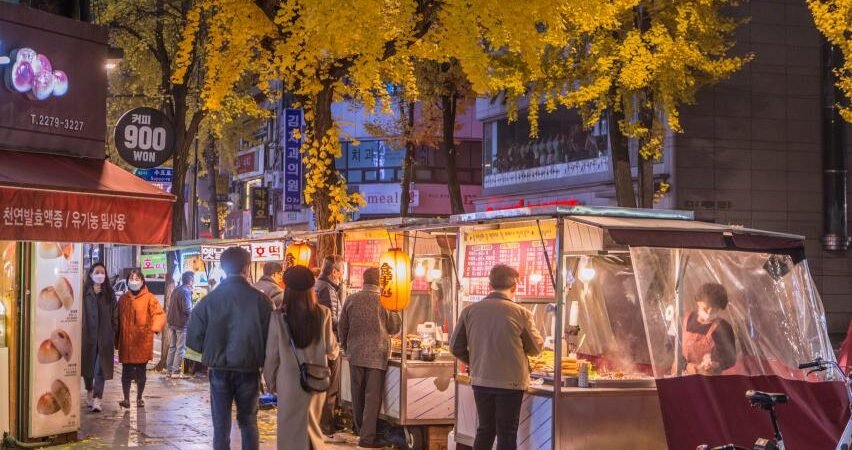
I visit Jongno’s pocha area about once a month, and it is a place I recommend to overseas visitors who want a lively evening in Seoul. Come after a day of sightseeing, find a small table, and share something hot from the pan. Young Koreans and international travelers gather around these food stalls for the same simple pleasure: good company, a few dishes, and time to enjoy the city after dark.
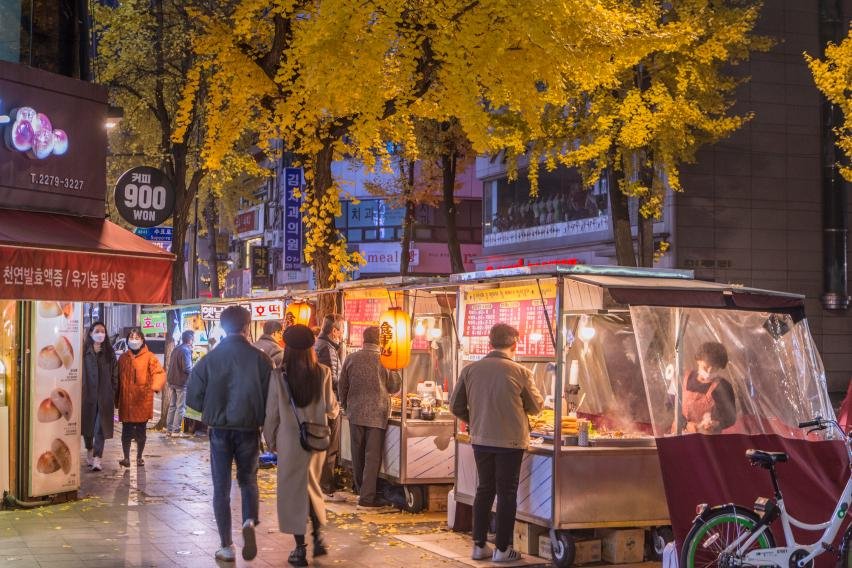
What makes a night in Jongno special?
A pojangmacha (포장마차), often shortened to pocha (포차), is a casual street food tent or stall. Yajang (야장) means the outdoor seating that turns a meal into part of the evening street scene. In Jongno, the pleasure is as much the setting as the food: bright stall lights, busy pans, close tables, and conversations flowing into the night.
Visitors sometimes call this a “Jongno night market.” Think of it as a neighborhood of food stalls and outdoor dining around Jongno 3-ga, rather than a market with one entrance and a single timetable. The lanes near Ikseon-dong, Nakwon Music Mall and Tapgol Park make it easy to combine an afternoon walk with an evening meal.
The video linked below captures a particularly busy evening: tables fill quickly, rain makes seating harder to find, and neighboring customers help put up a rain cover. That small gesture says a lot about the appeal of a pocha. The setting is informal, and the memorable part may be the warmth around the table as much as what is on it.
How to get there by subway
Your destination is Jongno 3(sam)-ga Station (종로3가역), served by Lines 1, 3 and 5. For an easy first approach, follow the signs to Exit 6 toward Nakwon Music Mall, the exit recommended by the Korea Tourism Organization. Allow a few minutes to walk around and choose a stall. The food area spreads across nearby streets, so the best final exit can depend on your chosen table.
| Starting area | Practical subway route |
|---|---|
| Seoul Station | Take Line 1 toward City Hall and Jonggak; get off at Jongno 3-ga. |
| Myeongdong | Take Line 4 to Chungmuro, then Line 3 toward Euljiro 3-ga and Jongno 3-ga. |
| Hongdae / Hongik University | Take Line 2 toward Sinchon and the city center to Euljiro 3-ga; transfer to Line 3 for Jongno 3-ga. |
| Gwanghwamun | Take Line 5 toward Jongno 3-ga and the east of Seoul; get off at Jongno 3-ga. |
If you are already exploring Insadong or Ikseon-dong, walking is an easy way to continue your evening. Use Jongno 3-ga Pocha Street on a map or search the Korean name 종로3가 포장마차 거리 in Naver Map or KakaoMap. Check the current route and final train before settling in; the station’s connecting passages can add walking time.
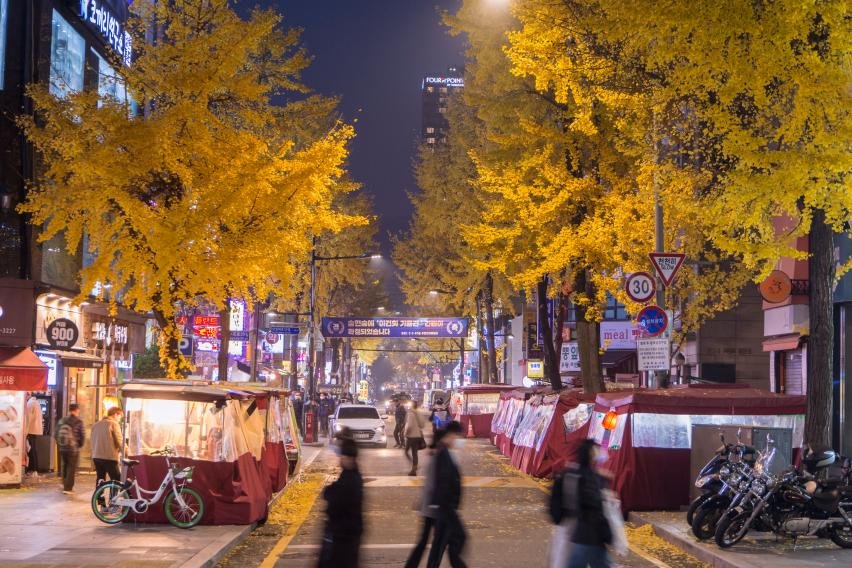
What to order at a Korean pocha
Most tables order anju (안주): savory dishes to share, often alongside drinks. Start with one or two dishes and add more if you are hungry. Menus vary between stalls; look at the board before choosing your seat.
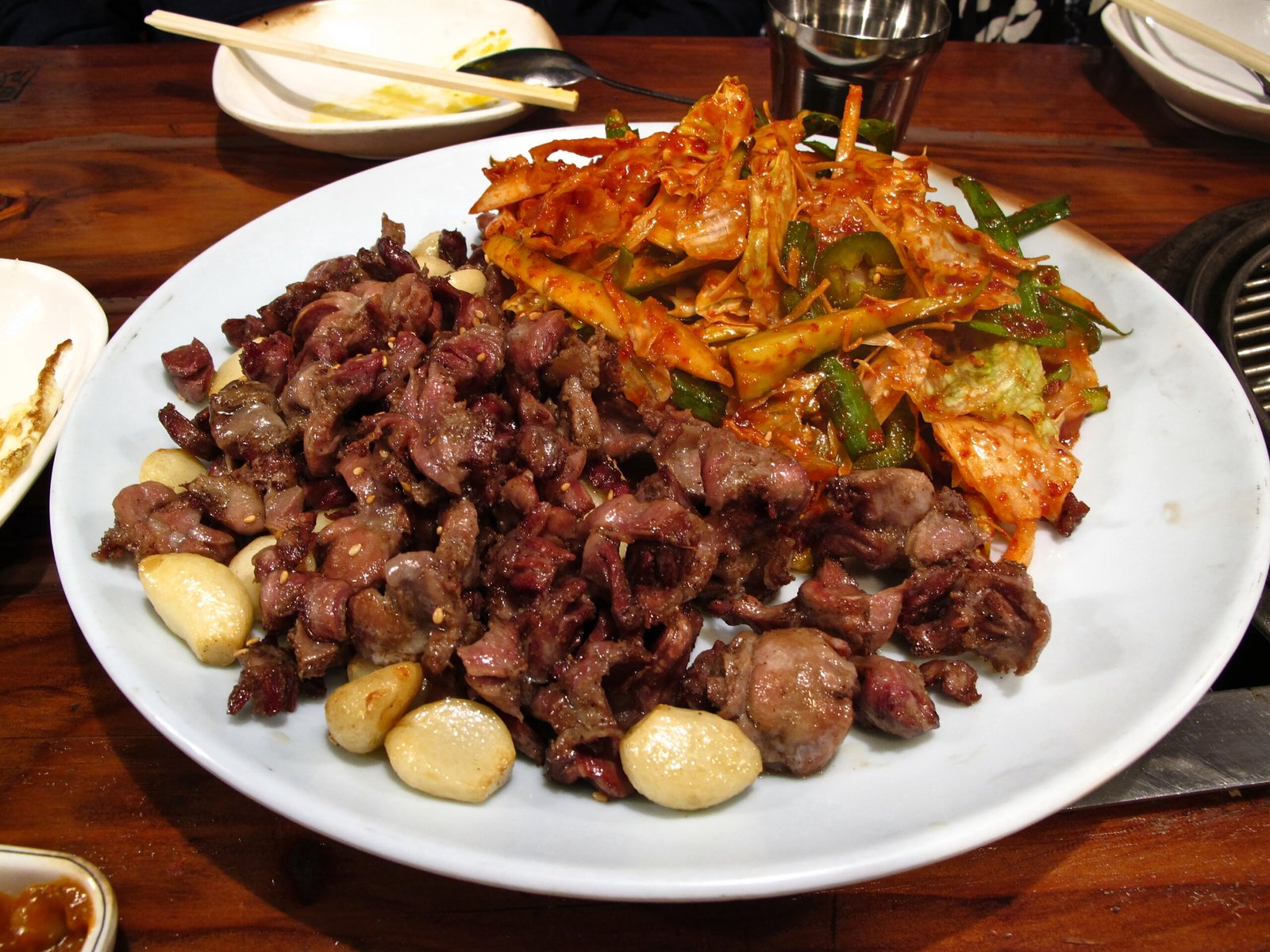
Dakttongjip · 닭똥집 — stir-fried chicken gizzards
Firm and pleasantly chewy, chicken gizzards are a classic choice for visitors who enjoy texture. In the featured video, the cook prepares generous pieces with onion and green chili, served with an oil-based dipping sauce. Even a dish without a red sauce can contain hot peppers, so ask for less chili if you prefer a gentler start.

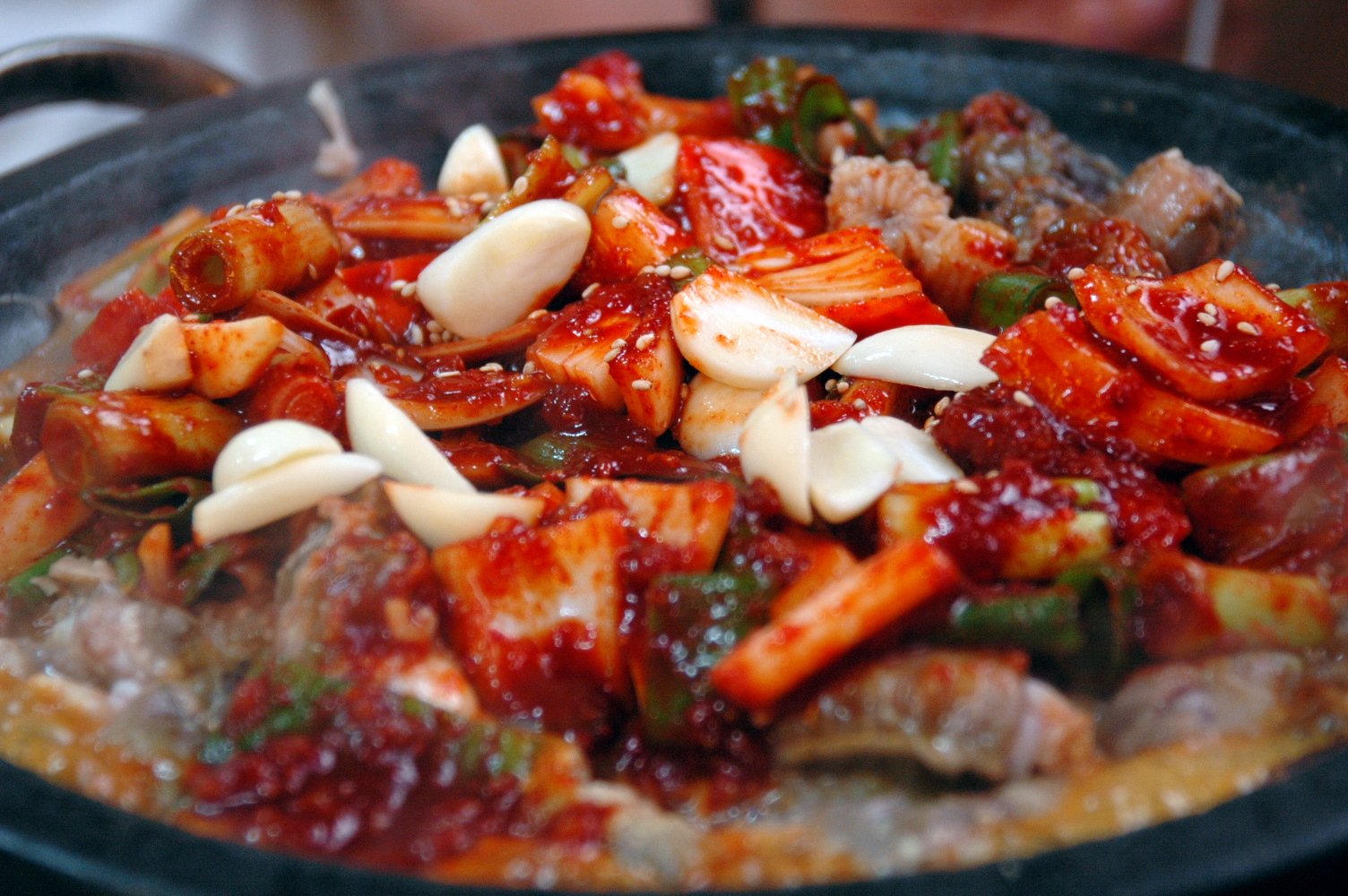
Kkomjangeo · 꼼장어 — spicy stir-fried hagfish
For a bolder order, try kkomjangeo, often translated on menus as “hagfish” or “slime eel.” It has a springy, chewy bite. The video shows the cook adding chili peppers, sesame oil and a special sauce, then finishing the dish over high heat. It is an inviting choice if you like spicy Korean food and want to try something beyond the usual barbecue dinner.

Other dishes and drinks to look for
For something familiar, look for gyeran-mari (계란말이, rolled omelet), kimchi-jeon (김치전, kimchi pancake), haemul-pajeon (해물파전, seafood and scallion pancake) or udon (우동, noodle soup). More adventurous eaters can ask about dakbal (닭발, chicken feet) or cooked octopus dishes. These are menu ideas drawn from official Visit Seoul and VISITKOREA guides; each stall has its own selection.
Soju and beer are common companions, while a soft drink is an easy choice if you do not drink alcohol. Choose the food and drink combination that suits you; there is plenty of atmosphere to enjoy around the table.
Pagoda Jip in the video and what to budget
The featured video visits Pagoda Jip / Pagoda Pocha (파고다집 / 파고다 포차), beside Tapgol Park, and orders chicken gizzards and kkomjangeo. The narrator describes roughly twenty dishes, with most priced at ₩15,000 at that visit. Two dishes at that quoted price would be ₩30,000 before drinks.
Use that as an example from the video, rather than a price promise for every stall. Ask to see today’s menu, confirm the portion size and drink prices, and check payment options before ordering. For a first evening, sharing two dishes between two people is a useful starting point; you can always order another plate.
Watch the original Jongno 3-ga visit by 맛있겠다 Yummy. The food scenes and the Pagoda Jip price example come from this video; my monthly visits refer to the wider Jongno pocha area.
A simple evening plan
- Late afternoon: walk through Insadong or Ikseon-dong and leave room for dinner.
- Around 5–6 p.m.: head toward Jongno 3-ga and look for stalls opening for the evening. Visit Seoul describes tents beginning to appear around 5 p.m.; individual hours vary.
- Dinner: find an available table, check the menu, and order a dish you know plus one you are curious about.
- After dinner: enjoy a short walk through the neighborhood before taking the subway back to your accommodation.
For your first visit, I suggest a weekday and an earlier dinner. The video shows how busy a later evening can become, especially when rain reduces the seating. If you enjoy a louder, more energetic scene, stay as the streets fill and the night gets going.
A few Korean phrases for your first visit
- 자리 있어요? · Jari isseoyo? — Do you have a table?
- 이거 하나 주세요 · Igeo hana juseyo. — One of this, please.
- 덜 맵게 해 주세요 · Deol maepge hae juseyo. — Please make it less spicy.
- 얼마예요? · Eolmayeyo? — How much is it?
- 카드 돼요? · Kadeu dwaeyo? — Can I pay by card?
Bring a card and some Korean won, ask about ingredients if you have dietary needs, and check before photographing a vendor or another table. Keep the walkway open as you browse. These small courtesies help everyone enjoy the evening.
What brings me back each month is how easily an ordinary dinner becomes a memorable Seoul evening. You can arrive by subway, walk over from the nearby sightseeing streets, and settle into the energy of a neighborhood that is still very much alive after sunset. For overseas visitors curious about Korea’s outdoor dining culture, Jongno 3-ga is a rewarding place to begin.
Visitor information checked October 18, 2026. Stall hours, menus, prices and outdoor seating depend on the individual business and weather. Sources: Korea Tourism Organization, Visit Seoul’s yajang guide, and the featured video. All four images are real photographs; the two food photographs illustrate the dishes rather than the featured stall’s exact servings.