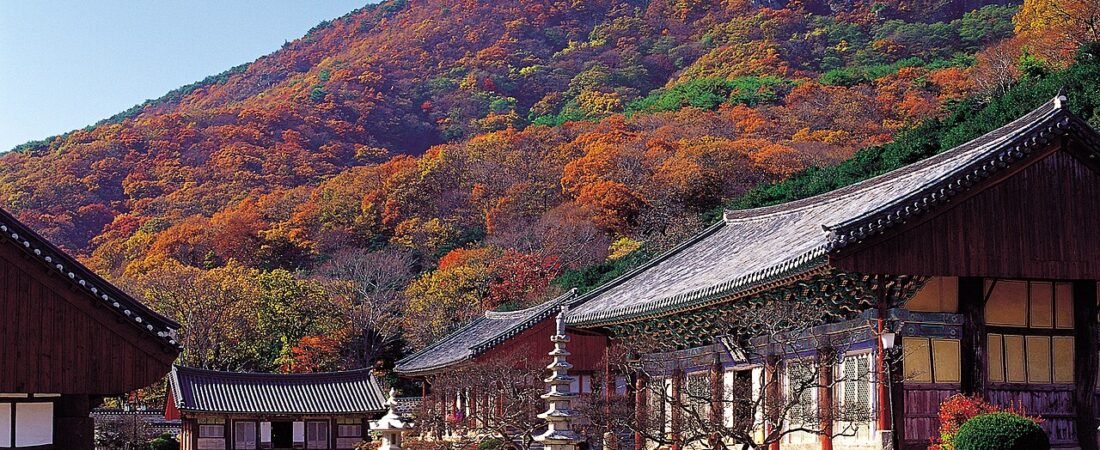
Seonunsan in autumn is one of the last great foliage shows of the Korean year. While Seoul’s maples are already fading in early November, the tiny red “baby maples” (aegi danpung) of Seonunsan Provincial Park in Gochang, North Jeolla, are only reaching their peak, reflecting in the dark water of Dosolcheon stream beside 1,400-year-old Seonunsa Temple. This 2026 guide covers the best dates, how to get there from Seoul by bus, costs, a one-day itinerary, nearby sights and where to eat Gochang’s famous grilled eel.
Why Visit Seonunsan in Autumn (2026 Peak Dates)
Seonunsan is a low, gentle mountain (Dosolsan, 336 m at its main peak) near the west coast, so its leaves turn later than the big inland mountains. For 2026, local travel media put the main viewing window for Seonunsan in autumn at around November 5–15 (Balpum News, Nov 3, 2026), and the Korea Forest Service’s 2026 forecast placed nearby Naejangsan’s peak around November 4 — Seonunsan typically follows a few days later. In 2025 the Dosolcheon trail kept its color until about November 12.
What makes Seonunsan special is that you don’t need to climb: the classic foliage walk follows a flat dirt path along Dosolcheon stream from Seonunsa Temple to Dosolam Hermitage. Small maples arch over the water, which is stained dark by tannins from fallen leaves, so the red canopy is mirrored almost perfectly on calm days.
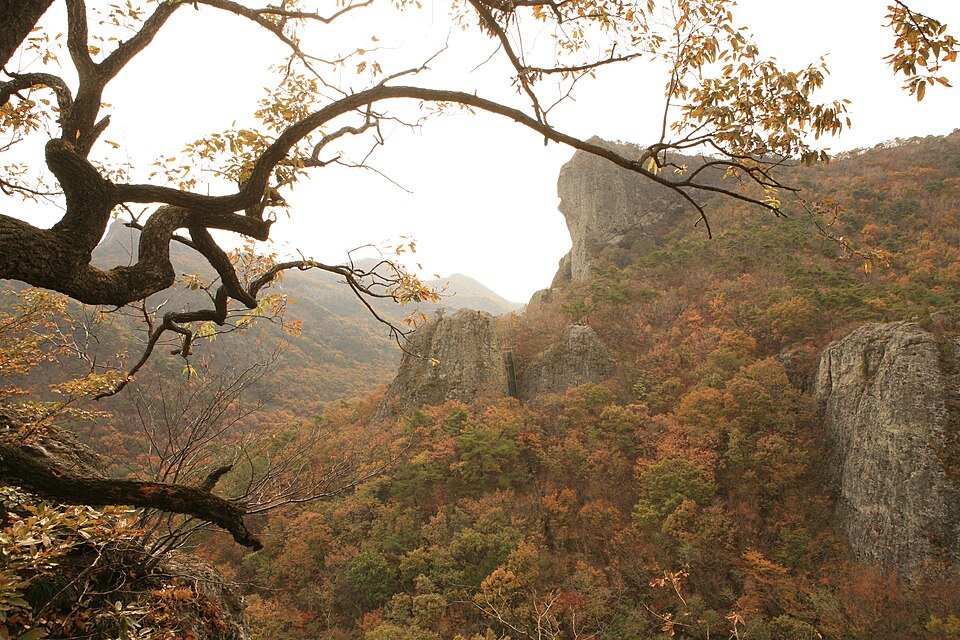
Photo: Seong Ilhan / Wikimedia Commons, CC BY-SA 4.0
How to Get to Seonunsan from Seoul
Express bus: Seoul Express Bus Terminal → Gochang
- Departure: Central City Terminal (Honam Line side of Seoul Express Bus Terminal, Line 3/7/9)
- Frequency: 16 buses a day, 07:05–19:30
- Travel time: about 3 h 06 min to Gochang Culture Terminal
- Fare (adult, one way): standard ₩21,700 · premium (udeung) ₩28,300
- Return: 16 buses a day from Gochang, 06:30–19:00 (about 3 h 20 min) — book the return in advance on weekends
Gochang town → Seonunsa Temple
Seonunsa is about 20 km west of Gochang-eup. Local county buses run from the Gochang bus terminal to the Seonunsa stop; Kakao Map estimates about 1 h 20 min door to door including waiting time, so check the next departure at the terminal. A taxi takes roughly 25–30 minutes (estimate about ₩25,000–30,000). If you start early, catch the 07:05 bus from Seoul to arrive in Seonunsa before noon.
By car
Take the Seohaean (West Coast) Expressway to Seonunsan IC; the temple is about 10 minutes from the interchange (roughly 3.5 hours from Seoul without traffic). On peak weekends parking fills before 10 a.m.
Seonunsan Day Trip Cost (2026)
| Item | Cost (KRW) | Notes |
|---|---|---|
| Express bus Seoul ↔ Gochang (round trip) | ₩43,400–56,600 | standard / premium |
| Gochang ↔ Seonunsa | a few thousand won by bus; ~₩50,000–60,000 by taxi (round trip, estimate) | buses are infrequent |
| Seonunsa / provincial park admission | Free | cultural-heritage fee abolished |
| Parking (if driving) | Free–₩2,000 | sources differ; check on site |
| Lunch: grilled pungcheon eel | ₩36,000–39,000 per serving | eel soup ₩12,000 |
| Gochang Eupseong Fortress | ₩3,000 | youth ₩2,000, child ₩1,500 |
| Total (bus, day trip) | about ₩100,000–160,000 | ≈ $75–120 at ₩1,340/USD |
Staying the night? Motels and pensions around the Seonunsa entrance and Gochang-eup usually cost about ₩60,000–120,000 per room on autumn weekends (estimate; book early in peak week).
Suggested One-Day Itinerary
- 07:05 — Express bus from Seoul; arrive Gochang 10:11, then bus or taxi to Seonunsa.
- 11:30 — Pass the Iljumun gate and walk along Dosolcheon to Seonunsa Temple (founded 577 according to temple tradition). See the Daeungbojeon hall and the 500-year-old camellia grove behind it, a Natural Monument.
- 12:30 — Continue on the flat stream path to Jinheunggul cave and the roughly 600-year-old Jangsasong pine (Natural Monument), then up to Dosolam Hermitage — about 3.2 km from the temple, around one hour each way.
- 13:45 — See the giant Maae Buddha carved into the cliff below Dosolam; fit hikers can add the 10-minute climb to Cheonmabong for the best view over the colored valley.
- 15:00 — Late lunch of salt-grilled or sauce-grilled eel with bokbunja (black raspberry) wine at the entrance village.
- 16:30 — Taxi to Gochang-eup and walk part of the Gochang Eupseong wall at sunset, then take a 17:10–19:00 bus back to Seoul.
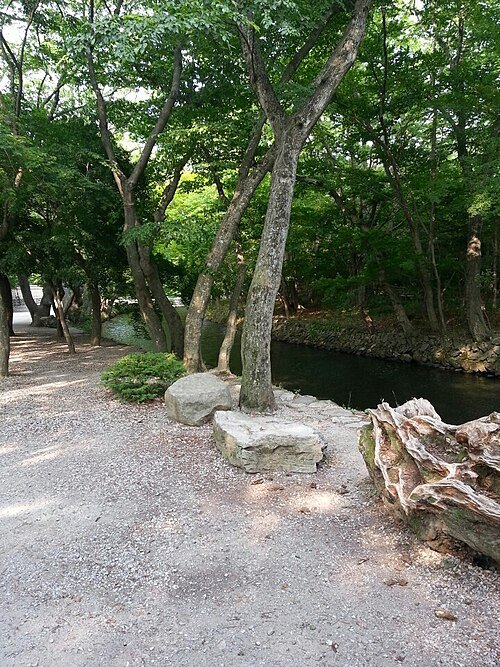
Photo: 나랑드 / Wikimedia Commons, CC BY-SA 3.0
Nearby Attractions
Dosolam Hermitage and the Maae Buddha
Dosolam sits at the head of the foliage valley. Below it, a seated Buddha carved into a cliff face in the early Goryeo period (Dongbulam-ji Maae Yeorae Jwasang, a Treasure) is one of the largest rock-carved Buddhas in Korea; it is linked to legends from the 1894 Donghak Peasant Revolution.
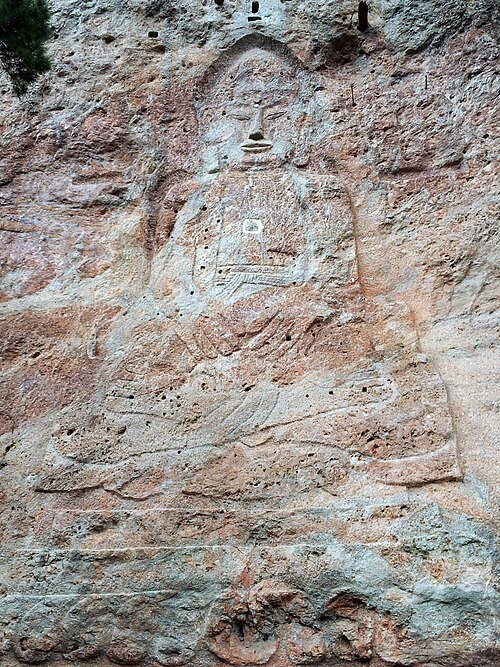
Photo: Eggmoon / Wikimedia Commons, CC BY-SA 3.0
Gochang Eupseong Fortress
A beautifully preserved Joseon-era town wall (about 1.7 km around) in Gochang-eup, open 05:00–22:00 year-round. Local tradition says walking the wall with a stone on your head brings good health. Admission ₩3,000.
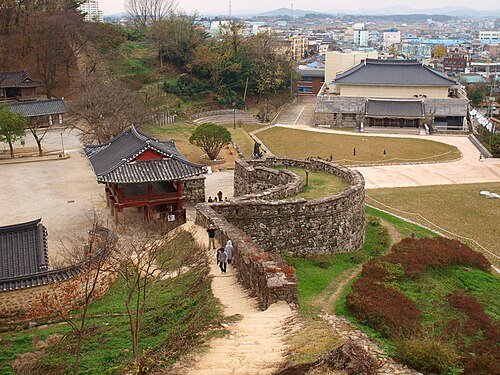
Photo: Yonghwan SO / Wikimedia Commons, CC BY-SA 2.0
Gochang Dolmen Sites (UNESCO)
Gochang holds one of the world’s densest clusters of prehistoric dolmens — part of the “Gochang, Hwasun and Ganghwa Dolmen Sites” UNESCO World Heritage listing since 2000. The site and museum are about 20 minutes by car from Gochang-eup.
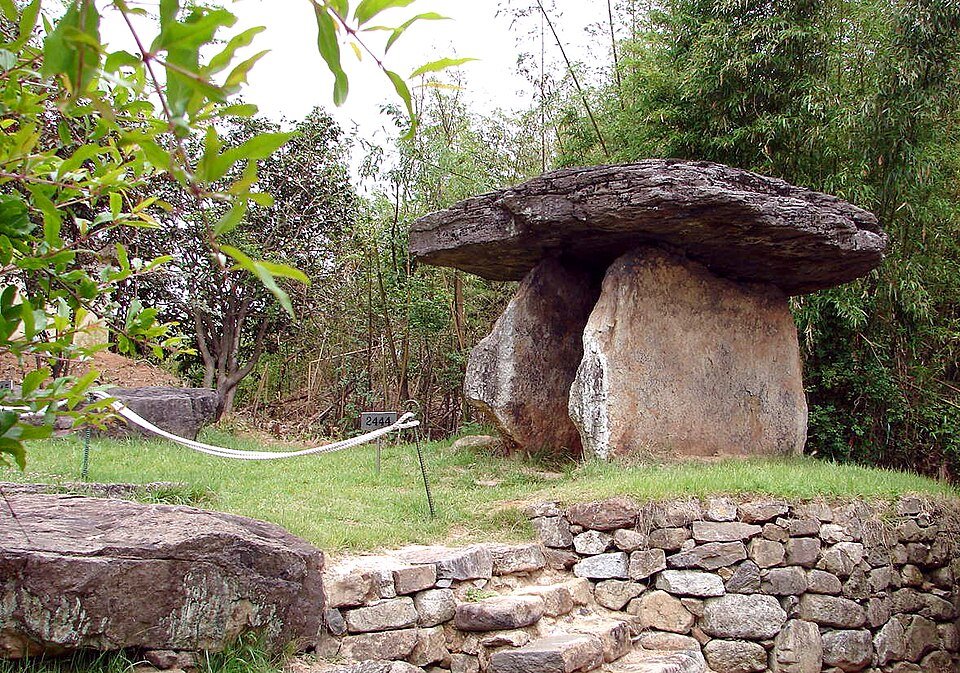
Photo: Steve46814 / Wikimedia Commons, CC BY-SA 3.0
More autumn trips in the region
Combine Gochang with Naejangsan autumn foliage in neighboring Jeongeup or Jeonju Hanok Village in autumn for a two-day Jeolla trip. For other temple valleys see our Gyeryongsan Gapsa guide and Buseoksa Temple guide.
Where to Eat Near Seonunsan
Gochang is Korea’s top producer of freshwater eel, with more than 30% of national output (Korea Policy Briefing, Feb 2026). “Pungcheon jangeo” refers to eel raised where river meets sea; it is grilled with salt or gochujang sauce and wrapped with ginger slivers in leafy greens, and paired with local bokbunja wine.
- Wonjo Yeongi Sikdang (원조연기식당) — 2727 Seonun-daero, Asan-myeon. Said to be the first restaurant in Gochang to sell grilled eel. Regular eel ₩36,000 per serving, mudflat (gaetbeol) eel ₩39,000, 1 kg for 2–3 people ₩90,000–97,000, eel soup ₩12,000 (Polle menu). Kakao Map
- Cheongwon Garden (청원가든) — 67 Seonunsa-ro, Asan-myeon, in the Seonunsa entrance area. A pungcheon eel specialist known for tidy side dishes (Korea Policy Briefing); prices are not published, so expect roughly the same ₩35,000–40,000 per serving range. Kakao Map
- Seonunsa entrance village (Jungchon-gil) — a row of eel houses such as Sanjang Hoegwan (20-5 Jungchon-gil), handy if you arrive by bus and want lunch right after the walk.
Tips for Visiting Seonunsan in Autumn
- Go on a weekday or arrive before 9 a.m. — tour buses crowd the stream path on peak weekends.
- Look for calm water: the famous reflections are best in the morning before wind ripples Dosolcheon.
- Wear walking shoes, not hiking boots: the main path is flat; only Cheonmabong needs real hiking.
- Temple hours: Seonunsa 06:00–19:00, Dosolam 09:00–18:00. Keep voices low near the halls.
- Book the last bus: the final bus from Gochang to Seoul leaves around 19:00.
FAQ: Seonunsan in Autumn
When is the best time to see Seonunsan autumn foliage in 2026?
Around November 5–15, 2026, with the first and second weekends of November as the best bets. Seonunsan peaks later than most Korean mountains because it is low and close to the coast.
How do I get to Seonunsa from Seoul without a car?
Take an express bus from Seoul Express Bus Terminal (Central City) to Gochang (about 3 hours, ₩21,700–28,300), then a local bus or taxi about 20 km to Seonunsa Temple.
Is there an entrance fee for Seonunsa Temple?
No. The cultural-heritage admission fee has been abolished, so entry to Seonunsa and the provincial park is free. Parking is free or about ₩2,000.
Is the Seonunsan foliage walk difficult?
No. The Seonunsa–Dosolam path along the stream is a flat dirt trail of about 3.2 km each way (around 2–3 hours round trip). Only the optional climb to Cheonmabong is steep.
Sources
- Balpum News (Nov 3, 2026) — Seonunsa foliage, peak Nov 5–15
- Carprism (2026) — Seonunsa–Dosolam distances, Gochang Eupseong fees
- Asamaru — Central City → Gochang bus timetable (updated Nov 1, 2026)
- Korea Tourism Organization (ktriptips) — Seonunsa
- Jeonbuk Ilbo — Gochang foliage spots
- Korea Policy Briefing (Feb 19, 2026) — Gochang pungcheon eel
- Polle — Yeongi Sikdang menu
Featured image — Photo: (c)한국불교문화사업단 (Cultural Corps of Korean Buddhism) / Wikimedia Commons, CC BY-SA 4.0