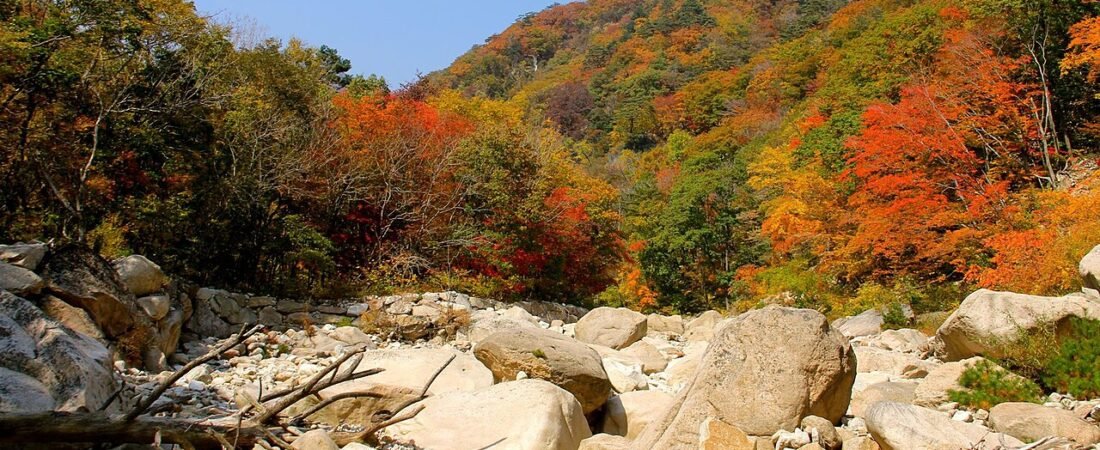
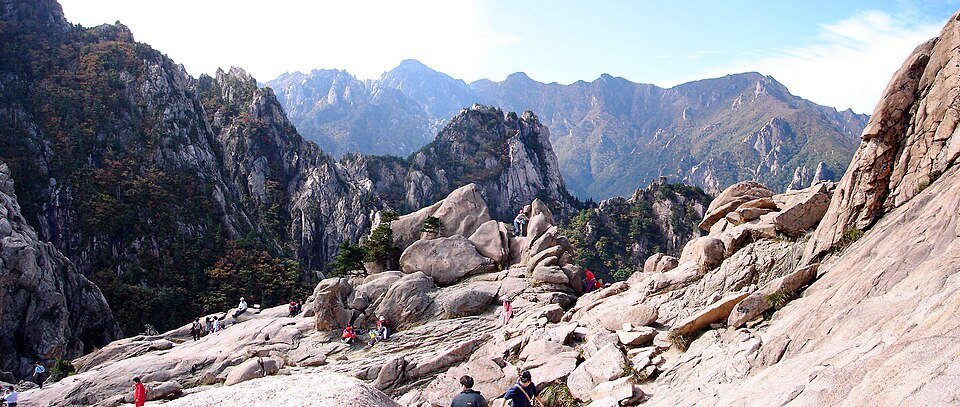
Every October, Koreans watch one mountain before all others: Seoraksan. Its granite peaks on the east coast are the first place in mainland Korea where the leaves turn, and when the maples ignite against the gray rock, it becomes the country’s most famous autumn landscape. In 2026 the foliage is right on schedule — which makes the next two weeks the perfect time for an autumn trip from Seoul. Here is everything you need: timing, transport and fares, a cost table, a ready-made itinerary, nearby attractions and where to eat in Sokcho.
Why Go in Autumn 2026
Seoraksan’s first foliage appeared on September 28, 2026 (Korea Meteorological Administration / K-weather observation), a few days earlier than last year. Peak color usually arrives about two weeks after the first leaves turn, and the Korea Forest Service expects Seoraksan to peak around October 19 — ahead of Odaesan (around Oct 20) and Bukhansan in Seoul (around Nov 1). Color starts high on the ridges and spreads down to the valleys near the entrance over the following week, so mid- to late October is ideal for the Outer Seorak area most visitors explore.
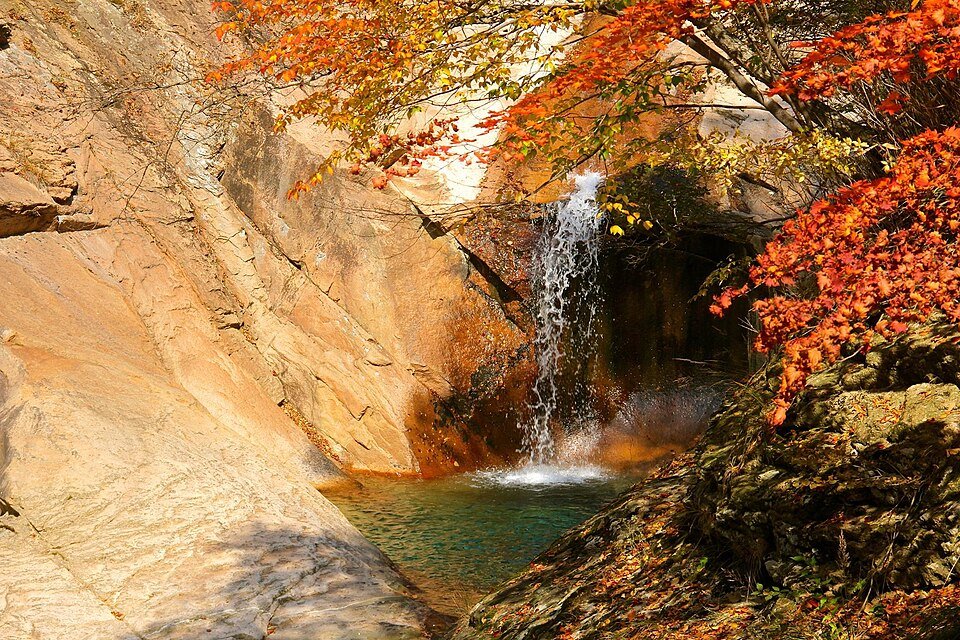
Beyond the leaves, autumn brings crisp, clear air, comfortable hiking temperatures and seafood season on the nearby Sokcho coast.
Outer Seorak, Inner Seorak or the summit?
Seoraksan is huge, so decide which side you want before you go. Outer Seorak (Oeseorak), entered from Sokcho, is the easiest for first-timers: the cable car, Sinheungsa Temple, Biseondae and Ulsanbawi are all here, and the buses from Seoul connect directly. Inner Seorak (Naeseorak), on the Inje side, has quieter valleys such as Baekdamsa but needs more transfers. The summit, Daecheongbong (1,708 m), is a long, demanding day hike usually started before dawn — rewarding for experienced hikers, but not necessary to enjoy the autumn colors. This guide focuses on Outer Seorak.
How to Get There from Seoul
Express bus (recommended)
- Route: Dong Seoul Bus Terminal (Gangbyeon Station, Line 2) → Sokcho Express Bus Terminal
- Travel time: about 2 hours 15 minutes (longer on foliage weekends)
- Fares (adult, one way): Deluxe (udeung) 22,800 won; Premium 29,600 won
- Schedule: about 15 departures a day, first bus 07:00, last 20:30; return buses from Sokcho 06:45–20:30
- Tip: book on the Kobus / T-money Bus app in advance – October weekends sell out.
Local bus to the park
From Sokcho, city bus 7 or 7-1 runs to the Seoraksan (Sogongwon) entrance — about 24 minutes from the Express Bus Terminal or about 38 minutes from the Intercity Bus Terminal. The fare is roughly 1,500–1,700 won with a transit card. A taxi takes 20–25 minutes.
Approximate Cost (per person)
| Item | Day trip | 1 night / 2 days |
|---|---|---|
| Express bus Seoul ↔ Sokcho (deluxe, round trip) | 45,600 won | 45,600 won |
| Local bus 7/7-1 (round trip) | about 3,400 won | about 6,800 won |
| Park entry (Sinheungsa area) | Free | Free |
| Seoraksan cable car (adult round trip) | 16,000 won | 16,000 won |
| Meals and snacks | about 35,000 won | about 70,000 won |
| Lodging (half of a twin room, Sokcho) | – | about 50,000–90,000 won |
| Total | about 100,000 won (~US$70) | about 190,000–230,000 won (~US$130–160) |
Hotel prices in Sokcho rise sharply on peak-foliage weekends, so a weekday stay saves the most.
Suggested Itinerary
Day trip
- 07:00 – Bus from Dong Seoul; arrive Sokcho about 09:15, then bus 7/7-1 to the park.
- 10:00 – Buy same-day cable car tickets first (they sell out), then visit Sinheungsa Temple and its giant bronze Buddha.
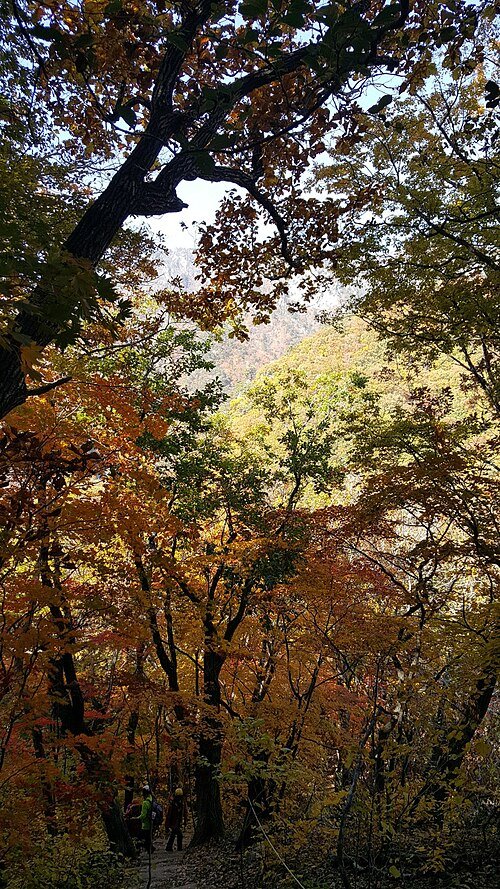
- 11:00 – Hike to Biseondae (about 3 km, 1 hr 20 min one way) along a valley lined with maples.
- 14:00 – Ride the cable car to Gwongeumseong for a 360-degree view of the peaks and the East Sea.
- 16:30 – Back to Sokcho for dakgangjeong at the Central Market and the Abai Village ferry.
- 19:00 – Return bus to Seoul (last bus 20:30).
1 night / 2 days
Spend Day 1 in Sokcho (Abai Village, Yeongnangho Lake, Sokcho Beach and a seafood dinner). On Day 2, start early in the park and choose either the Ulsanbawi Rock hike (3.8 km, about 2 hours one way, with steep stairs at the end) or the gentler Heundeulbawi Rock route (2.8 km, about 1 hour), then ride the cable car before taking an afternoon bus back to Seoul.
Nearby Attractions
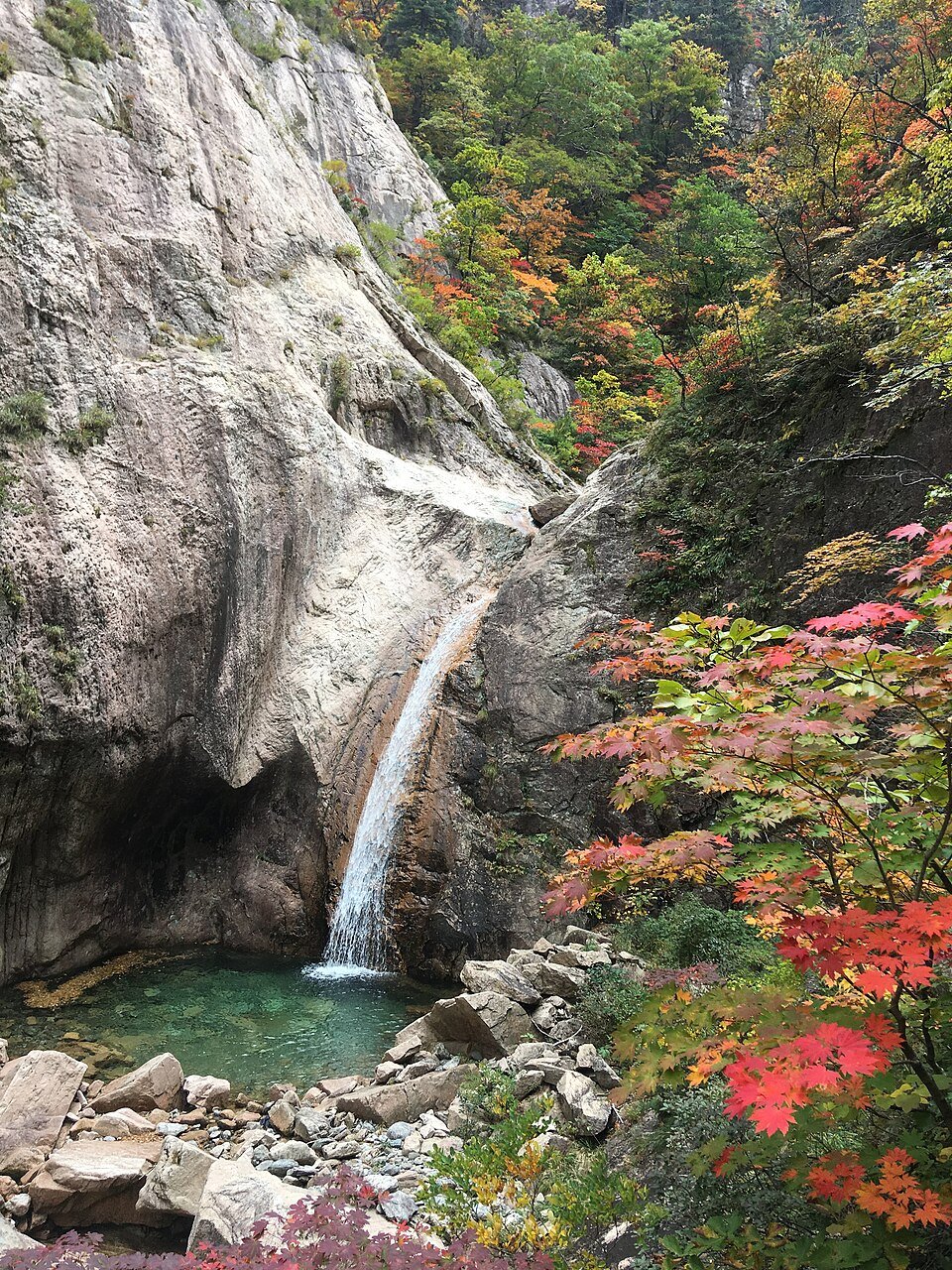
- Sinheungsa Temple – an ancient Seon Buddhist temple just inside the entrance, with a giant seated bronze Buddha and foliage-framed halls.
- Gwongeumseong – the rocky summit at the top of the cable car (about 5 minutes ride, then a 10–15 minute walk) with sweeping autumn views.
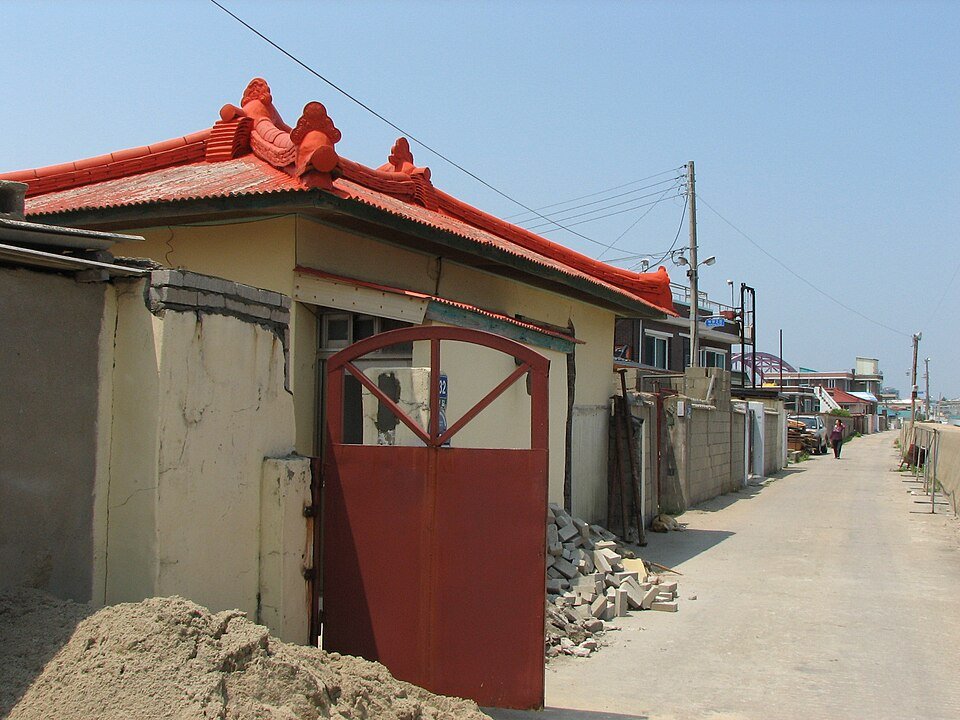
- Abai Village & Gaetbae ferry – a settlement founded by North Korean refugees; cross the channel on a small hand-pulled cable ferry.
- Sokcho Central (Tourist) Market & Yeongnangho Lake – street food and fresh seafood, plus an easy lakeside walk with views back to Seoraksan.
Where to Eat Nearby
- Mansuk Dakgangjeong (만석닭강정), Sokcho Central Market – 16 Jungang-ro 147beon-gil. Sokcho’s famous sweet, sticky and crispy fried chicken, sold in take-away boxes; expect roughly 20,000–30,000 won per box depending on size and flavor.
- Dancheon Sikdang (단천식당), Abai Village – 17 Abaimaeul-gil. Known for Abai sundae (North Korean-style blood sausage) and squid sundae; open 08:30–19:00 (last order 18:30). Plan on about 15,000–20,000 won per person.
- 88 Saengseon Gui (88생선구이) – 71 Jungangbudu-gil, by the harbor. A popular grilled-fish set of several local fish cooked at your table; around 20,000–25,000 won per person.
Tips for a Smooth Trip
- Go on a weekday if possible – peak-foliage weekends bring heavy traffic and long cable car lines.
- Buy cable car tickets first. They are sold on site for the same day only, and hours change with season and weather – check the official site the day before.
- Dress in layers. Mornings can be near freezing on the ridges in late October; bring gloves and a wind jacket.
- Start early. Daylight ends around 17:45 in late October, and trail entry may be restricted in the afternoon.
- Check fares and schedules before you travel – prices in this guide are as of October 2026.
FAQ
When is the best time to see Seoraksan autumn foliage in 2026?
The Korea Forest Service expects Seoraksan to peak around October 19, 2026. The ridges color first, and the lower valleys near the main entrance are usually at their best from mid- to late October.
How do I get from Seoul to Seoraksan by public transport?
Take an express bus from Dong Seoul Bus Terminal to Sokcho (about 2 hours 15 minutes, 22,800 won deluxe), then city bus 7 or 7-1 to the Seoraksan (Sogongwon) entrance in about 25–40 minutes.
Is there an entrance fee for Seoraksan National Park?
No. Entry to the park and the Sinheungsa area is free. The Seoraksan cable car costs 16,000 won for an adult round trip.
Can I visit Seoraksan as a day trip from Seoul?
Yes. With a 07:00 bus you can hike to Biseondae, ride the cable car and eat in Sokcho before taking an evening bus back. An overnight stay lets you add Ulsanbawi and the Sokcho coast.
Sources
- Wikitree, “2026 Seoraksan foliage timing” (KMA / K-weather observation; Korea Forest Service forecast)
- transportation.asamaru.net – Dong Seoul → Sokcho express bus timetable and fares (updated Oct 12, 2026)
- travelmapjourney.com – Seoraksan cable car fares and on-site ticketing (Sept 24, 2026); koreatodo.com – Seoraksan trails and bus times
- Korea Tourism Organization (ktriptips.com) – Dancheon Sikdang; Kakao Map listings for Mansuk Dakgangjeong and 88 Saengseon Gui
Featured image: Joycekim77 / Wikimedia Commons, CC BY-SA 3.0
Related Guides
- Naejangsan Autumn Foliage 2026: Best Day Trip from Seoul
- Jeonju Hanok Village in Autumn: Best Trip from Seoul 2026
- Yeoncheon 1-Night 2-Day Trip: Jaein Falls