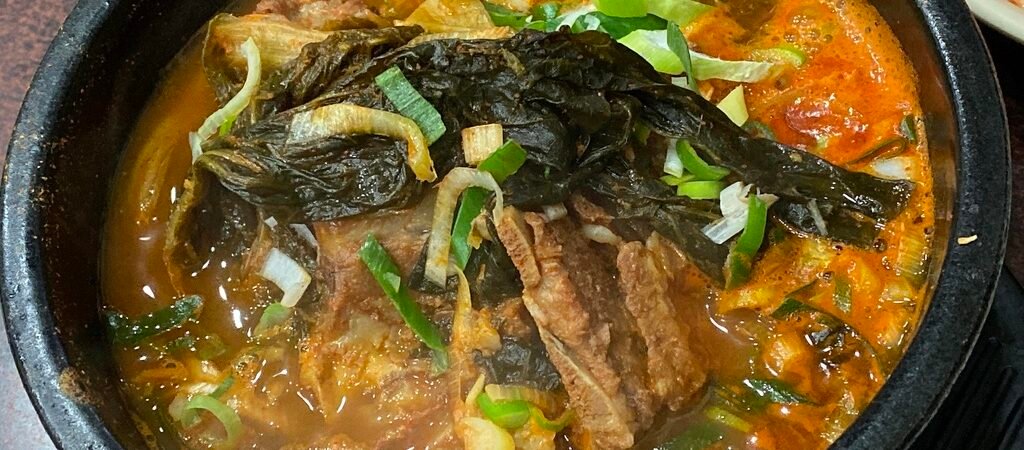
Haejangguk in Seoul is the city’s favorite morning-after meal: a boiling earthenware bowl of beef-bone broth with cabbage greens, bean sprouts and, in the classic version, soft cubes of ox blood curd. The name literally means “soup to chase away a hangover,” but locals eat it at any hour and in every season. It tastes best on a cold winter morning. This guide explains what the dish is, what it costs in 2026, and two long-running Seoul restaurants where you can try it.
Quick links: Cheongjinok (Jongno, since 1937) · Changseongok (Yongmun Market, Yongsan)
What Is Haejangguk? Taste and Texture
Haejangguk (해장국) is a family of Korean “hangover soups” rather than one fixed recipe. In Seoul, the traditional style starts with beef bones simmered for hours. The broth is lightly seasoned with doenjang (soybean paste), then filled with ugeoji (outer napa cabbage leaves), bean sprouts, beef and seonji, ox blood curd that has a soft, liver-like texture and a mild iron flavor. A spoonful of red pepper seasoning and chopped green onion goes on top.
The first sip is savory and earthy, with a gentle heat that builds as you eat. The cabbage is silky, the beef is tender, and the broth gets richer as the bowl simmers at the table. Most people stir a bowl of rice into the soup halfway through. Other common styles include:
- Seonji haejangguk – beef broth with ox blood curd; the Seoul classic.
- Ppyeo haejangguk – spicy pork-spine soup, a single-serving cousin of gamjatang.
- Hwangtae / bugeo haejangguk – a clear, mild dried-pollack soup with egg.
- Kongnamul haejangguk – bean-sprout soup, the Jeonju specialty.
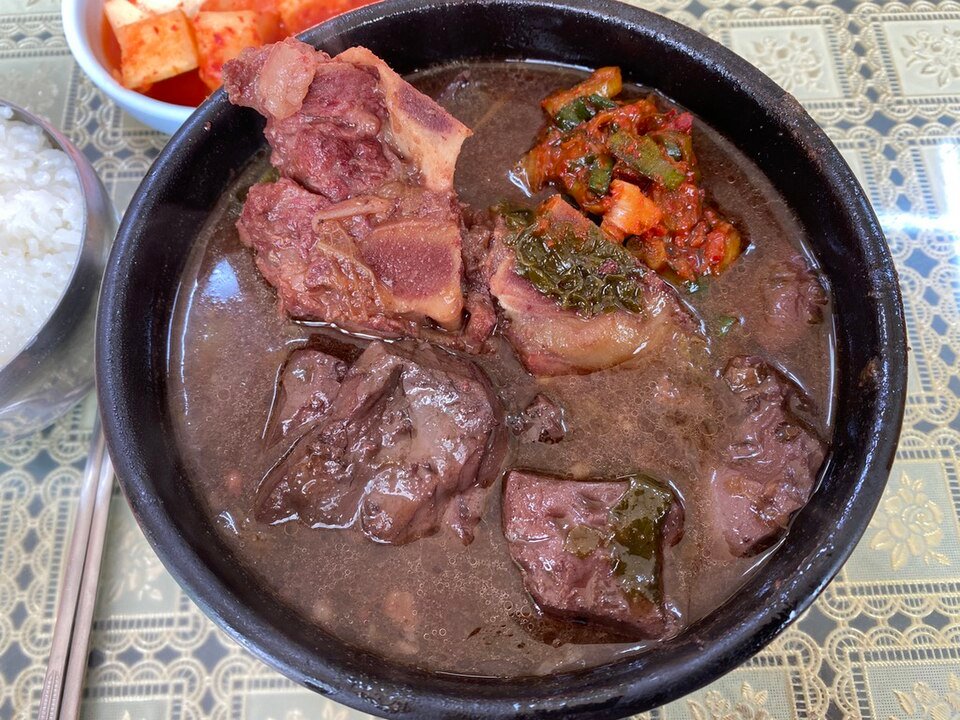
Photo lazy fri13th Wikimedia Commons CC BY 20
Why Koreans (and Visitors) Love Haejangguk in Seoul
For Koreans, haejangguk is tied to the country’s drinking culture: after a long night of soju, a hot, salty, spicy broth feels like a reset. The idea is old. Late-Joseon records describe hyojonggaeng, a “soup eaten at the dawn bell” that was simmered overnight and carried in jars to wealthy households as a hangover cure. Modern writers often call it Korea’s first delivery food (Asia Economy).
In Seoul, the dish grew up with the city’s workers. Cheongjinok opened in 1937 near a timber yard in Cheongjin-dong, feeding woodcutters and cart drivers, and the alley around it later became known as “haejangguk street” (Bizhankook). Seoul now lists both restaurants in this guide among its Seoul Future Heritage old shops (Seoul Media Hub).
International visitors like haejangguk for practical reasons too. It is filling, it is served early in the morning (good for jet lag), and one bowl with rice and kimchi is a complete meal for about US$9–11. Cheongjinok also appears in English-language guides such as Time Out Seoul and the Korea Tourism Organization’s travel site, so it is easy to find.
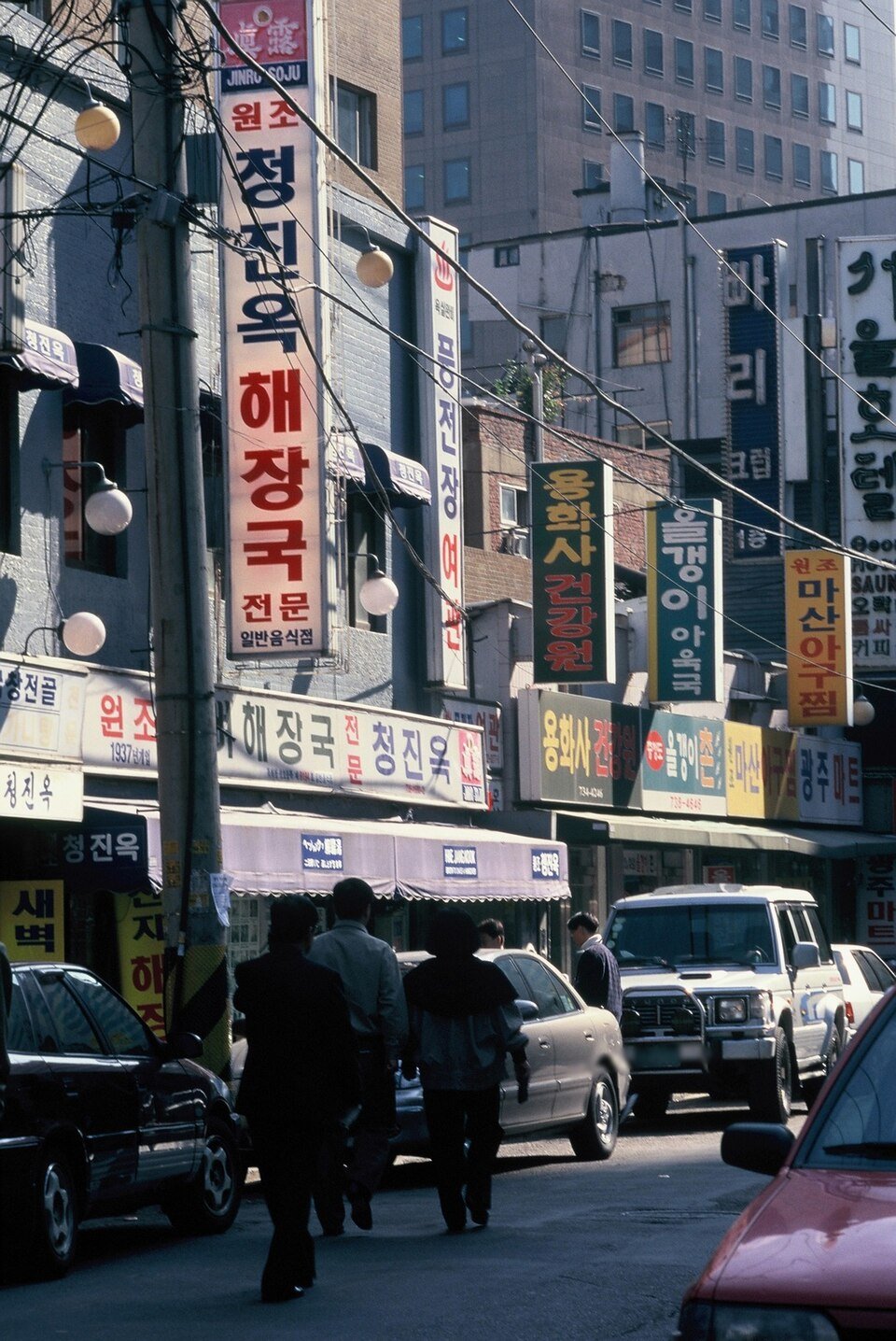
Photo The Seoul Institute 서울연구원 Wikimedia Commons CC BY 40
How Much Does Haejangguk Cost in Seoul? (2026)
Seoul’s official “eating-out price” survey does not track haejangguk, so the figures below come from current menus. In 2026, a regular bowl of haejangguk in Seoul usually costs ₩10,000–15,000 (about US$7.50–11 at roughly ₩1,360 per dollar). Famous heritage shops sit at the upper end.
| Item (2026) | Typical price | Approx. USD |
|---|---|---|
| Haejangguk, regular bowl | ₩10,000–12,000 | $7.50–9 |
| Haejangguk, large (teuk) | ₩15,000 | $11 |
| Bone hot pot (ppyeo jeongol), for 2–3 | ₩32,000–43,000 | $24–32 |
| Boiled beef or tripe (suyuk), shared | ₩28,000–50,000 | $21–37 |
Prices from menus listed on Polle and Hot Siksin (2026). Rice, kimchi and kkakdugi (radish kimchi) are included with every bowl.
2 Best Places to Eat Haejangguk in Seoul
1. Cheongjinok (청진옥) – Jongno, since 1937
Cheongjinok is the most famous name in Seoul haejangguk. It was founded in 1937 in Cheongjin-dong and is now run by the founders’ grandson. The family says the fire under the stock pot was never allowed to go out. After the old alley was redeveloped, the restaurant moved into a modern building nearby but kept its recipe: a clear-brown beef-bone broth with doenjang, ugeoji cabbage, tripe and generous seonji. The flavor is clean and deep rather than fiery.
| Address | 1F, 32 Jongno 3-gil, Jongno-gu, Seoul (서울 종로구 종로3길 32) |
|---|---|
| Subway | Jonggak Station (Line 1) or Gwanghwamun Station (Line 5), about 5 minutes on foot |
| Hours | Daily 06:00–22:00 (last order 21:30), open year-round (Korea Tourism Organization, updated Aug 2026) |
| Price | Haejangguk ₩12,000 / large ₩15,000; tripe suyuk ₩28,000; mixed suyuk ₩35,000; bindaetteok ₩20,000 |
| Phone | +82-2-735-1690 |
| Map | Kakao Map · Google Maps |
Tip: Weekday lunch brings a queue of office workers from the Jongno towers. Go before 11:30 or after 13:30, or come for an early breakfast.
2. Changseongok (창성옥) – Yongmun Market, Yongsan
Tucked into an alley of Yongmun Market, Changseongok is often called the root of Yongsan’s “haejangguk town.” Seoul lists it as a Seoul Future Heritage shop, and the family is now in its third generation. Its bowl is milder and slightly sweet: beef-bone broth seasoned with doenjang, tender napa-cabbage hearts, plenty of seonji, and a spoonful of green-onion chili sauce on top. Regulars also order a fried egg (₩500) to put on their rice, a quirky house tradition (Seoul Media Hub).
| Address | 1F, 124-10 Saechang-ro, Yongsan-gu, Seoul (서울 용산구 새창로 124-10) |
|---|---|
| Subway | Hyochang Park Station (Line 6 / Gyeongui–Jungang Line), roughly 10 minutes on foot through Yongmun Market |
| Hours | Daily 06:00–23:00 (Hot Siksin, Jul 2026) |
| Price | Haejangguk ₩11,000; bone hot pot ₩32,000 (M) / ₩43,000 (L); extra seonji & ugeoji ₩5,000; fried egg ₩500 |
| Phone | +82-2-718-2878 |
| Map | Kakao Map · Google Maps |
Tip: For a group, order the bone hot pot (ppyeo jeongol), then add a fried egg to your rice and spoon the broth over it.
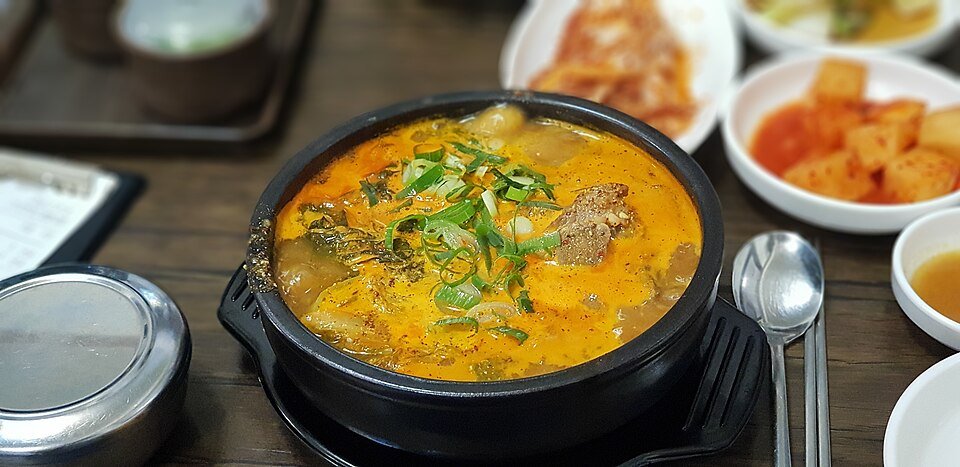
Photo 박진영 Wikimedia Commons CC0
How to Order and Eat Haejangguk
- Just say “haejangguk hana juseyo” (one haejangguk, please). Most shops have one main soup, so ordering is easy.
- Taste before seasoning. Add salt, pepper or extra chili paste only after the first few spoonfuls.
- Not sure about blood curd? Seonji is soft and mild, but you can ask for it on the side (“seonji ppaego” = without seonji).
- Rice goes in halfway. Stir the rice into the soup once it has cooled a little; this is called malasseo meokgi.
- Use the kkakdugi. Crunchy radish kimchi balances the rich broth.
- Prefer fish? Look for a bugeo/hwangtae haejangguk shop, which serves a clear, gentle pollack soup.
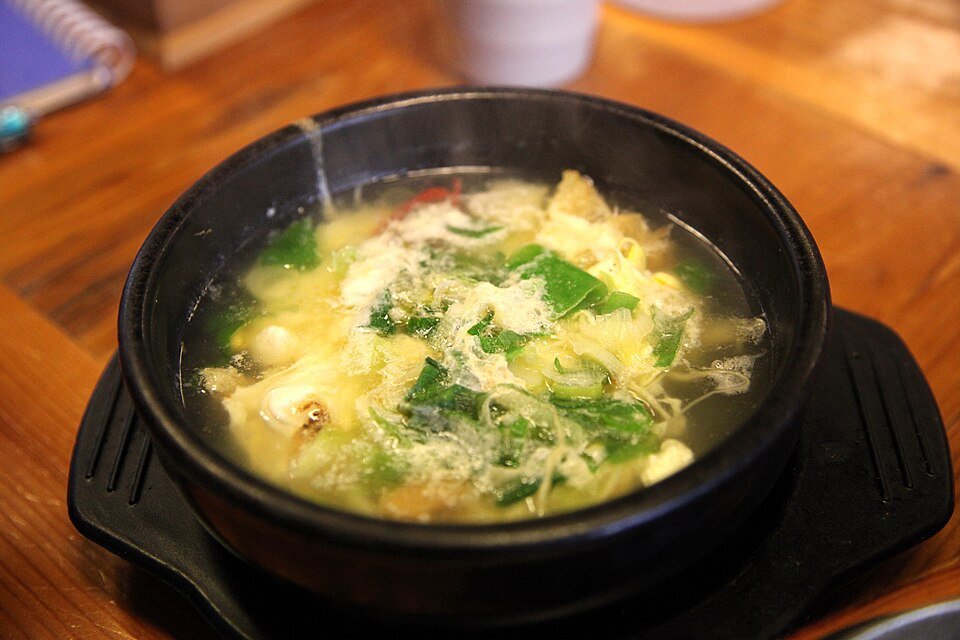
Photo Jinho Jung Wikimedia Commons CC BY SA 20
Looking for more warming bowls? Try our guides to seolleongtang in Seoul, sundae-guk, and our 10 best Korean soup restaurants for winter.
Haejangguk in Seoul: FAQ
Does haejangguk really cure a hangover?
There is no scientific proof that it cures a hangover. However, the hot, salty broth rehydrates you, and the bean sprouts, cabbage and protein make it an easy meal when your stomach is tired.
Is haejangguk spicy?
Seoul-style beef haejangguk is only mildly spicy; you control the heat with the chili paste on the table. Ppyeo (pork bone) haejangguk is usually spicier.
What is seonji, and can I skip it?
Seonji is cooked ox blood curd, soft like silken tofu with a mild iron taste. Most restaurants will leave it out if you ask, but try one piece first.
When is the best time to eat haejangguk?
Early morning is traditional, and both shops in this guide open at 6 a.m. In winter, it is also a perfect warming lunch.
Sources
- Korea Tourism Organization – Cheongjinok (updated Aug 2026)
- Polle – Cheongjinok menu · Polle – Changseongok menu
- Hot Siksin – Haejangguk BEST 5 (Jul 6, 2026)
- Bizhankook – Cheongjinok history
- Seoul Media Hub – Seoul Future Heritage restaurants · Yongmun Market haejangguk
- Asia Economy – Hyojonggaeng, Joseon-era hangover soup
Featured image: Haejang-guk 3.jpg — Photo: lazy fri13th / Wikimedia Commons, CC BY 2.0. Prices and hours were checked in November 2026 and may change; confirm on Kakao Map before visiting.