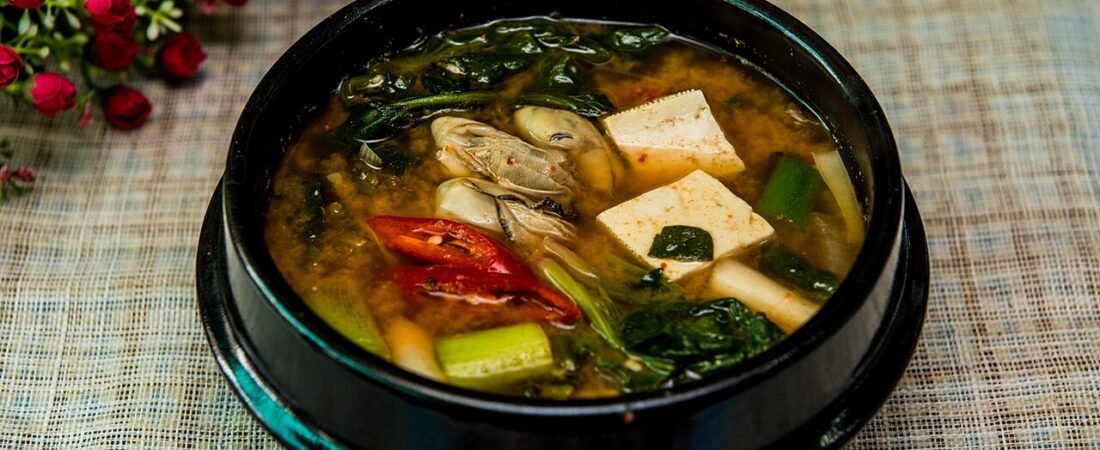
Doenjang jjigae in Seoul is the stew most Koreans call “the taste of home”: a bubbling earthenware pot of fermented soybean paste, tofu, zucchini, onion and chili that shows up on almost every Korean table. In this 2026 guide you will learn what doenjang jjigae tastes like, why Koreans and visitors love it, what it costs in Seoul right now, and two places where it is worth ordering.
What Is Doenjang Jjigae? Taste and Texture
Doenjang jjigae (된장찌개) is a thick, savory stew built on doenjang, a paste made by fermenting blocks of cooked soybeans (meju) in brine for months. The broth is usually started with anchovy-and-kelp stock or rice-washing water, then simmered with cubes of soft tofu, Korean zucchini (aehobak), potato, onion, green and red chili, and either clams, shrimp or thin slices of beef brisket (chadolbaegi). It is served boiling hot in a black ttukbaegi pot with a bowl of rice and banchan.
The flavor is deep, earthy and salty, with a pleasant funk similar to aged miso but rounder and stronger. The tofu turns silky, the zucchini goes soft and sweet, and a spoonful of chili adds a clean heat. In other words, it is comfort food rather than a showpiece — Koreans eat it for lunch, after a barbecue and on cold evenings.
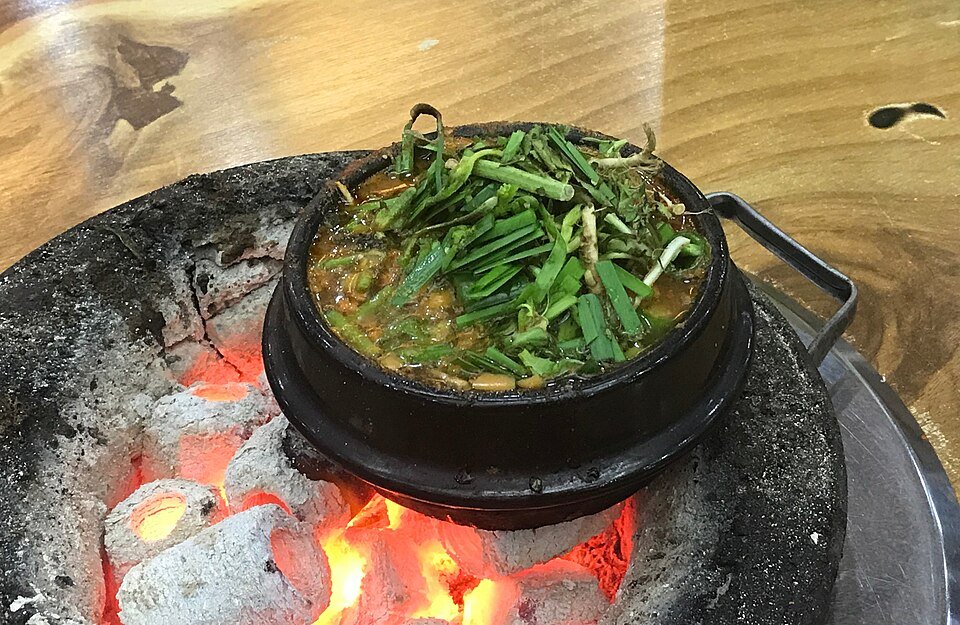
Photo: lazy fri13th / Wikimedia Commons, CC BY 2.0
Why Koreans Love Doenjang Jjigae
For Koreans, doenjang jjigae is the everyday “mom’s stew.” In Gallup Korea’s 2024 favorite-food survey, doenjang jjigae was named by 10% of respondents, third after kimchi jjigae (14%) and bulgogi (11%). It is also the default finale of a Korean BBQ meal: after the meat, restaurants bring a small pot of doenjang jjigae with rice, often using the leftover brisket or pork.
The paste behind it carries cultural weight too. In December 2024, UNESCO added Korean jang-making culture (the tradition of making doenjang, ganjang and gochujang) to its Representative List of the Intangible Cultural Heritage of Humanity. Many households still receive homemade doenjang from relatives, and every family claims its own version is the best.
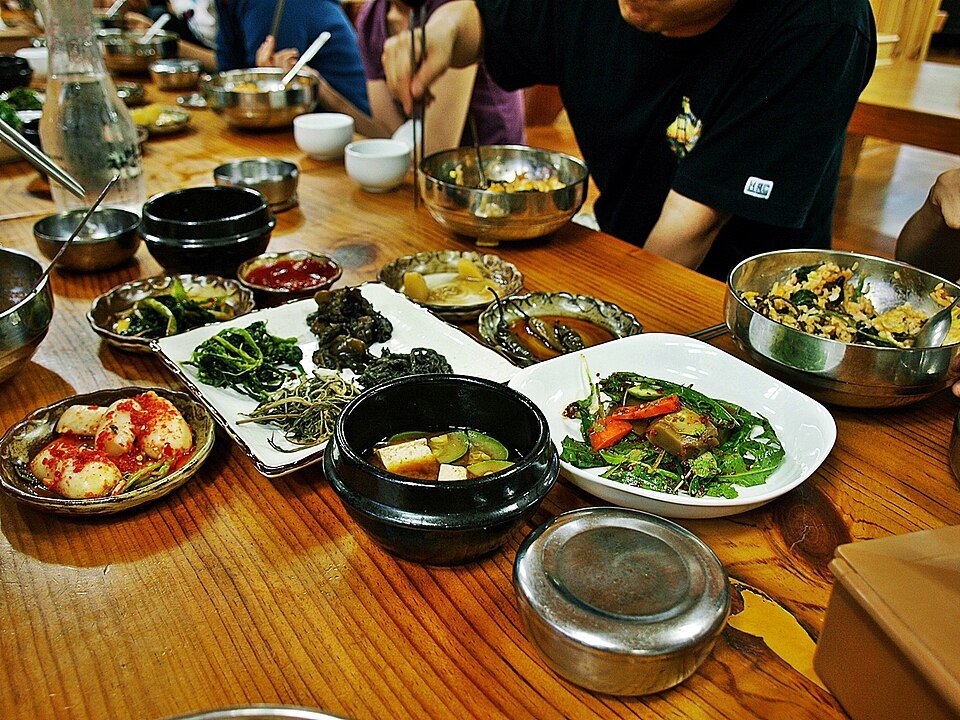
Photo: magicinprogress (Flickr) / Wikimedia Commons, CC BY 2.0
Why International Visitors Love It
Visitors usually meet doenjang jjigae as the free stew at the end of a barbecue dinner or in a cheap baekban (set meal) near their hotel, and many are surprised that a “side” stew is so satisfying. It suits travelers for several reasons:
- Not too spicy: it is far milder than kimchi jjigae or budae jjigae, so it works for first-timers.
- Vegetable-heavy: tofu and vegetables make it an easy option for people who eat little meat (ask for no seafood or meat stock if needed).
- Familiar yet new: fans of Japanese miso soup recognize the idea but find doenjang bolder and more filling.
- Great value: it comes with rice and refillable banchan, so a full meal rarely costs more than ₩12,000.
Doenjang Jjigae Price in Seoul (2026)
The Korea Consumer Agency’s Chamgagyeok service does not track doenjang jjigae on its own, but it does track the closely related kimchi-jjigae baekban, which averaged ₩8,846 in Seoul in September 2026. Doenjang jjigae set meals sit in the same band. Here is what to expect in 2026 (USD at about ₩1,340):
| Type | Typical price (KRW) | Approx. USD |
|---|---|---|
| Doenjang jjigae baekban (stew + rice + banchan) | ₩9,000–12,000 | $7–9 |
| Doenjang jeongol (hot pot, specialist restaurant) | ₩10,000–12,000 per person | $7.50–9 |
| Stew after Korean BBQ | ₩2,000–10,000 (sometimes free) | $1.50–7.50 |
| Beef brisket (chadol) doenjang jjigae | ₩10,000–14,000 | $7.50–10.50 |
2 Best Places to Eat Doenjang Jjigae in Seoul
1. Bongsanjip (봉산집), Samgakji — Brisket and a Legendary Stew
Bongsanjip is a small, old-school beef house near Samgakji that has been serving thin-sliced chadolbaegi (beef brisket) for more than 50 years. Regulars come for the brisket, but many say the real reason to go is the thick, dark soybean stew you order at the end: a chadol makjang jjigae made with barley-based makjang paste, brisket and cabbage. It is richer and more rustic than a typical doenjang jjigae.
- Address: 1F, 24 Hangang-daero 62na-gil, Yongsan-gu, Seoul (서울 용산구 한강대로62나길 24)
- Nearest station: Samgakji Station (Line 4/6), a few minutes’ walk
- Prices: chadolbaegi ₩25,000 (130 g), tripe (yang) ₩28,000, chadol makjang jjigae ₩10,000 for two (Polle menu)
- Hours: around 11:30–22:00 (ZDNet listing; confirm on Kakao Map before going — it does not stay open late)
- Tip: the dining room seats only about 15 people, so arrive before 18:00 or go at lunch. Kakao Map
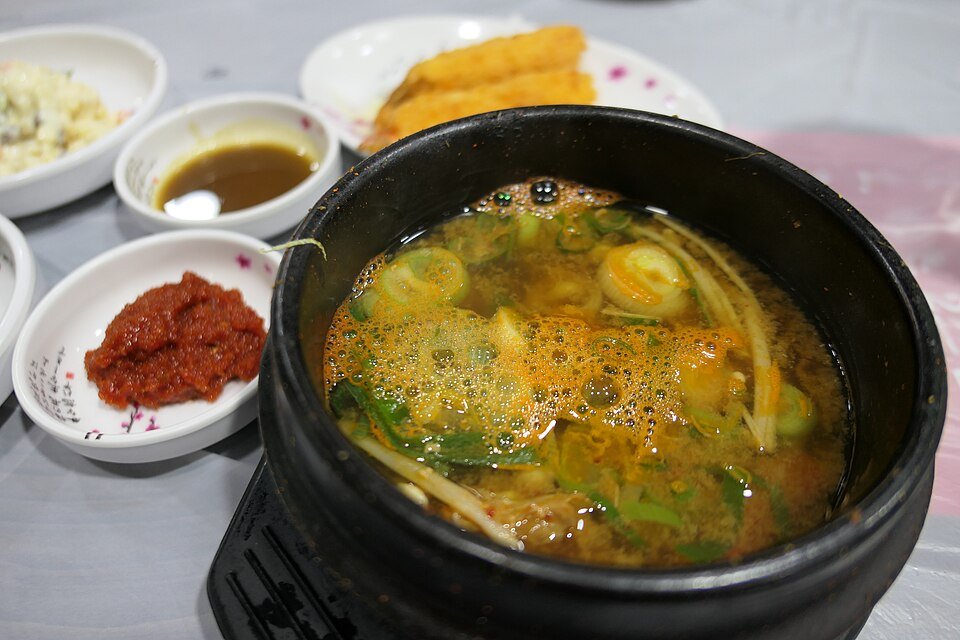
Photo: bryan… from Taipei, Taiwan / Wikimedia Commons, CC BY-SA 2.0
2. Ok Doenjang (옥된장) Yeouido — A Doenjang Specialist
If you want doenjang as the main event rather than an after-BBQ extra, Ok Doenjang is a doenjang-focused Korean restaurant with several branches in western Seoul. The menu is built around bubbling doenjang hot pots, and lunch is excellent value for office workers and travelers alike.
- Address: 1F #102, ILEX shopping arcade, 108 Uisadang-daero, Yeongdeungpo-gu, Seoul (서울 영등포구 의사당대로 108)
- Nearest station: Yeouido Station (Line 5/9)
- Prices (lunch specials): beef-belly doenjang ₩11,000, river-snail (ureong) doenjang jeongol ₩11,000, shiitake doenjang jeongol ₩11,000, beef-tendon doenjang jeongol ₩12,000, perilla-seaweed doenjang ₩10,000, clam doenjang (for 2) ₩22,000 (Polle menu)
- Hours: lunch and dinner service; hours are not published online, so check Kakao Map
- Other branches: Gongdeok (92 Mapo-daero), Sangam and Dangsan. Kakao Map (Yeouido)
Bonus for BBQ fans: at Seowon Jeongyuk Sikdang in Yeoksam-dong (1F, 11 Nonhyeon-ro 72-gil, Gangnam), the doenjang jjigae after your grilled meat costs only ₩2,000 (Hotplace Hunter, Feb 2026).
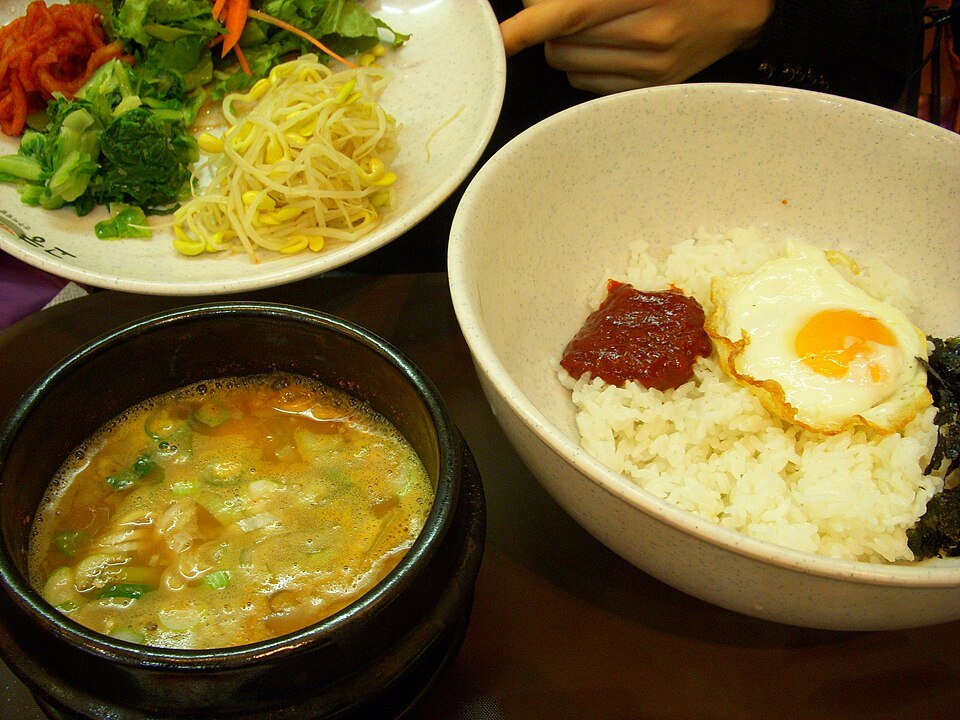
Photo: LWY (Flickr) / Wikimedia Commons, CC BY 2.0
How to Order and Eat Doenjang Jjigae
- Say it: “Doenjang jjigae juseyo” (된장찌개 주세요). At BBQ restaurants ask for “doenjang jjigae hana” after the meat.
- Spoon, don’t sip: take a spoonful of stew, pour it over a bite of rice, and add banchan. Many Koreans mix a little stew into the rice bowl.
- Mind the heat: the ttukbaegi stays boiling for minutes — let each spoonful cool.
- Vegetarians: most versions use anchovy or meat stock; ask “gogi, haemul ppaego” (no meat, no seafood), and consider temple-food restaurants in Insadong.
- Pair it: doenjang jjigae is classic with samgyeopsal, galbi and grilled fish. Read our samgyeopsal guide, galbi guide and sundubu jjigae guide next.
FAQ: Doenjang Jjigae in Seoul
Is doenjang jjigae spicy?
Usually only mildly. The base is salty and savory rather than hot; a few slices of chili add a gentle kick. It is one of the easiest Korean stews for people who don’t like strong heat.
How much does doenjang jjigae cost in Seoul in 2026?
A doenjang jjigae set meal with rice and side dishes costs about ₩9,000–12,000 (roughly $7–9). After a Korean BBQ meal it is often ₩2,000–10,000, and some places include it free.
What is the difference between doenjang jjigae and miso soup?
Both use fermented soybean paste, but doenjang is fermented longer and is stronger and earthier. Doenjang jjigae is also a thick stew full of tofu, vegetables and often seafood or beef, eaten as a main dish with rice.
Can vegetarians eat doenjang jjigae?
The paste itself is vegan, but restaurant versions often use anchovy stock, clams or meat. Ask for a version without meat and seafood, or try Buddhist temple-food restaurants, which make it with vegetable stock.
Sources
- Polle — Bongsanjip menu
- ZDNet Korea — Chadolbaegi restaurants (Bongsanjip, 50+ years)
- Polle — Ok Doenjang Yeouido menu
- Hotplace Hunter (Feb 3, 2026) — Seowon Jeongyuk Sikdang
- Gallup Korea — 2024 favorite food survey
- UNESCO Intangible Cultural Heritage lists — Korean jang-making culture (inscribed 2024)
- Chamgagyeok (Korea Consumer Agency) — dining-out prices
Featured image — Photo: jyleen21 / Wikimedia Commons, CC0