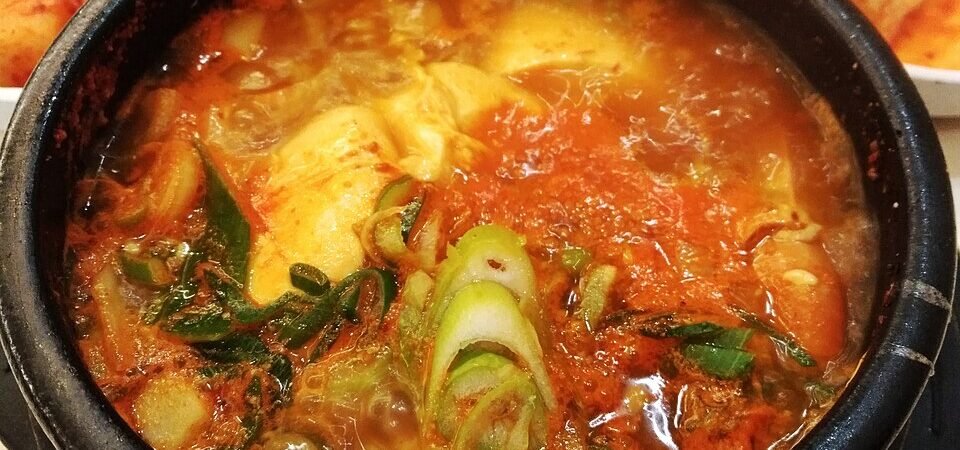
Sundubu jjigae in Seoul is the bubbling, fiery-red bowl that Koreans reach for the moment the air turns cold. This guide explains what the soft tofu stew tastes like, why it has fans from Seoul office workers to Los Angeles diners, what a bowl costs in 2026, and two proven places to eat sundubu jjigae in Seoul.
What Is Sundubu Jjigae? Taste and Texture
Sundubu means “soft” or “pure” tofu: curds that are scooped out before they are pressed into blocks, so they stay silky, almost custard-like. Jjigae is a Korean stew. Put together, sundubu jjigae is soft tofu simmered in a spicy broth of gochugaru (Korean chili flakes), garlic, scallion and a seasoned chili oil, usually with clams, shrimp, beef or pork. It arrives at the table still boiling in an individual earthenware pot (ttukbaegi), and a raw egg is cracked in at the last moment so it poaches in the heat.
The first spoonful is the best way to understand the dish: a soft, slightly sweet tofu that melts on the tongue, a clean seafood savoriness from the broth, and a heat that builds slowly rather than burning all at once. A bowl of rice, kimchi and a few banchan (side dishes) come with it, and many people tip a spoon of rice straight into the stew.
There are also milder styles. The east-coast city of Gangneung is famous for Chodang sundubu, white tofu curdled with seawater and eaten almost plain, while perilla-seed sundubu (deulkkae sundubu) is nutty and creamy instead of spicy.
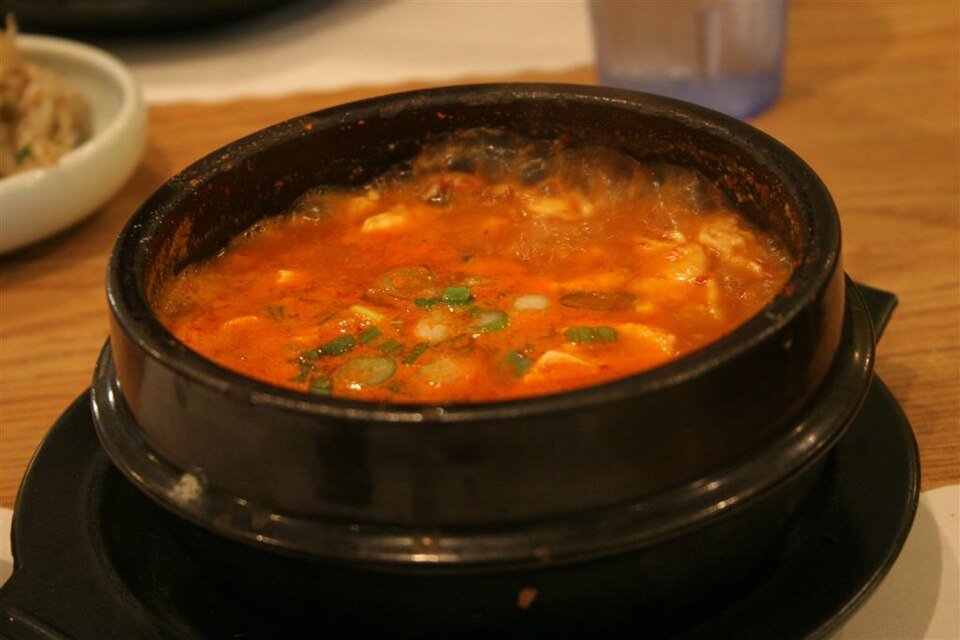
Photo: yummiec00kies / Wikimedia Commons, CC BY 2.0
Why Koreans and International Visitors Love It
For Koreans, sundubu jjigae is the definition of an honest, everyday meal: hot, filling, cheap and ready in minutes. It is a classic office-worker lunch, a hangover cure and a “too cold to cook” dinner. Because each bowl is cooked to order, you can usually choose the spice level and the protein, which makes it easy to share a table even when everyone wants something different.
Abroad, sundubu jjigae became one of the first Korean dishes many people tried. BCD Tofu House opened its first restaurant in Los Angeles Koreatown in 1996, named after Seoul’s Bukchang-dong neighborhood, where the founder’s mother-in-law ran a restaurant; the chain now lists more than 11 branches. That history matters for travelers: if you have eaten “soondubu” in the U.S., eating it in Seoul feels like visiting the source. Visitors also love that it is naturally high in protein, easy to customize, and one of the few Korean meals that is satisfying for a solo diner.
How Much Does Sundubu Jjigae Cost in Seoul (2026)?
The Korea Consumer Agency’s Chamgagyeok price service does not track sundubu jjigae on its own, but its closest benchmark, a kimchi-jjigae set meal (kimchi jjigae baekban), averaged ₩8,769 in Seoul in August 2026 (about US$6.60), and ₩9,080 nationwide, up 3.9% year on year. In practice, sundubu jjigae at a casual Seoul restaurant costs a little more:
| Type of place | Typical price per bowl (2026) | Approx. USD |
|---|---|---|
| Neighborhood restaurant / office district | ₩9,000–11,000 | $7–8.50 |
| Famous specialist (seafood, beef, intestine add-ins) | ₩11,000–14,000 | $8.50–10.50 |
| Stone-pot rice upgrade (sotbap) | +₩4,000 | +$3 |
USD at roughly ₩1,330 = US$1 (October 2026). Prices are per person and include rice and side dishes unless noted.
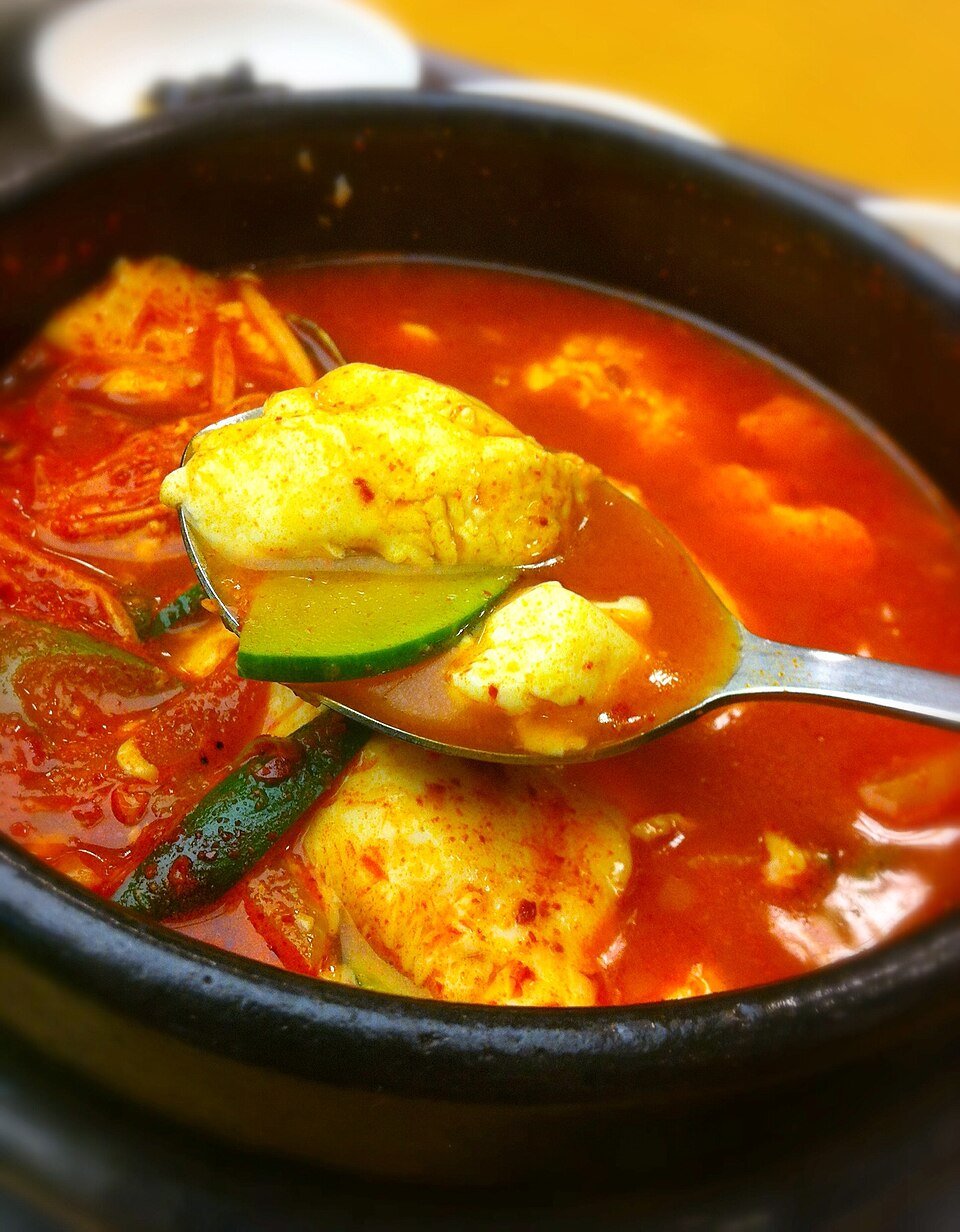
Photo: travel oriented / Wikimedia Commons, CC BY-SA 2.0
2 Best Places to Eat Sundubu Jjigae in Seoul
1. Bukchang-dong Sundubu (Main Branch), City Hall
The name says it all: Bukchang-dong is the old downtown pocket behind Seoul City Hall that gave its name to sundubu restaurants in Korea and even in L.A. The main branch of Bukchang-dong Sundubu is a quick, busy lunch spot where you choose your stew, your spice level, and whether you want a stone-pot rice that you finish as scorched-rice tea (nurungji).
- Address: 78 Sejong-daero, Jung-gu, Seoul (Taepyeongno 2-ga)
- Subway: City Hall Station (Line 1/2), Exit 8 area; a 3-minute walk
- Price: Bukchang-dong sundubu ₩11,000, seafood sundubu ₩12,000, beef-intestine sundubu ₩12,500; stone-pot rice +₩4,000; one-person sets with bulgogi or grilled mackerel ₩16,900–19,900
- Hours: Mon–Fri 10:00–21:00 (break 15:00–17:00, last order 20:00); Sat–Sun 10:00–20:00 (last order 19:00)
- Tip: Office crowds peak 12:00–13:00 on weekdays. Arrive at 11:30 or after 13:15.
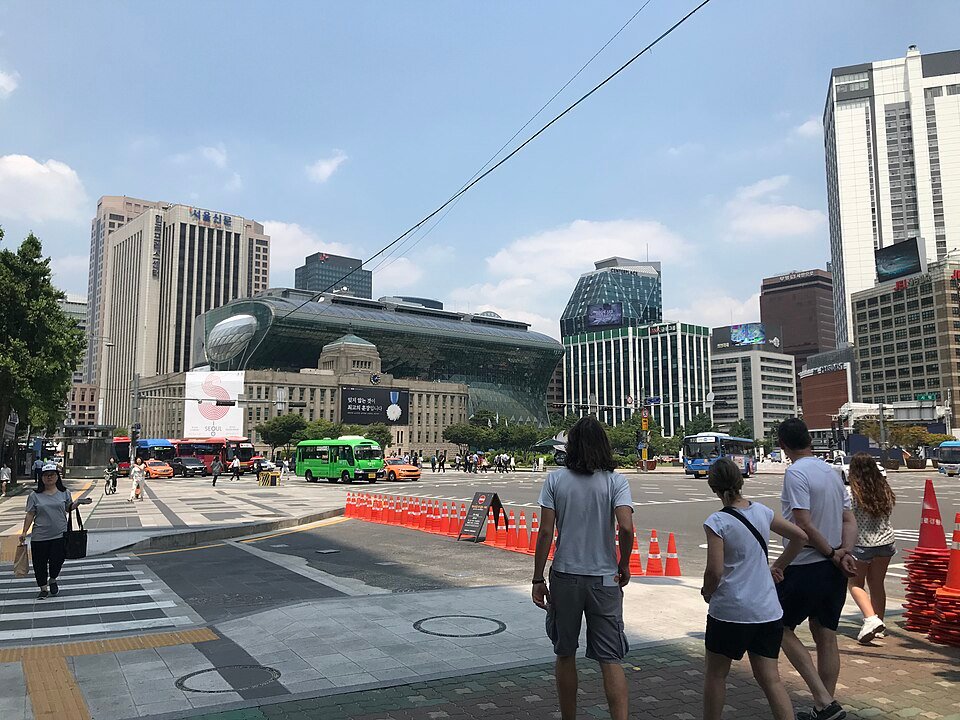
Photo: Joongwon Lee / Wikimedia Commons, CC BY-SA 4.0
2. Baeknyeonok, Seoul Arts Center (Seocho)
Baeknyeonok has served house-made tofu across the road from the Seoul Arts Center since 1992, and the MICHELIN Guide lists it as a favorite of local performers and musicians. Its strength is the tofu itself: the jayeonsik sundubu is a pure, white soft tofu served with a light seasoning sauce, the ttukbaegi sundubu is the classic spicy red stew, and the deulkkae sundubu is a creamy perilla-seed version that non-spicy eaters love.
- Address: 2407 Nambusunhwan-ro, Seocho-gu, Seoul (1F)
- Subway: Nambu Bus Terminal Station (Line 3), Exit 5; about 10 minutes on foot toward the Seoul Arts Center
- Price: All three sundubu styles ₩14,000; tofu hot pot ₩35,000 (small) / ₩45,000 (large); fresh tofu plate ₩11,000–15,000; mung-bean pancake ₩22,000
- Hours: Daily, around 10:00–20:00
- Phone: +82 2-523-2860
- Tip: Expect a queue before evening concerts; there is a second dining room downstairs, so the line moves faster than it looks.
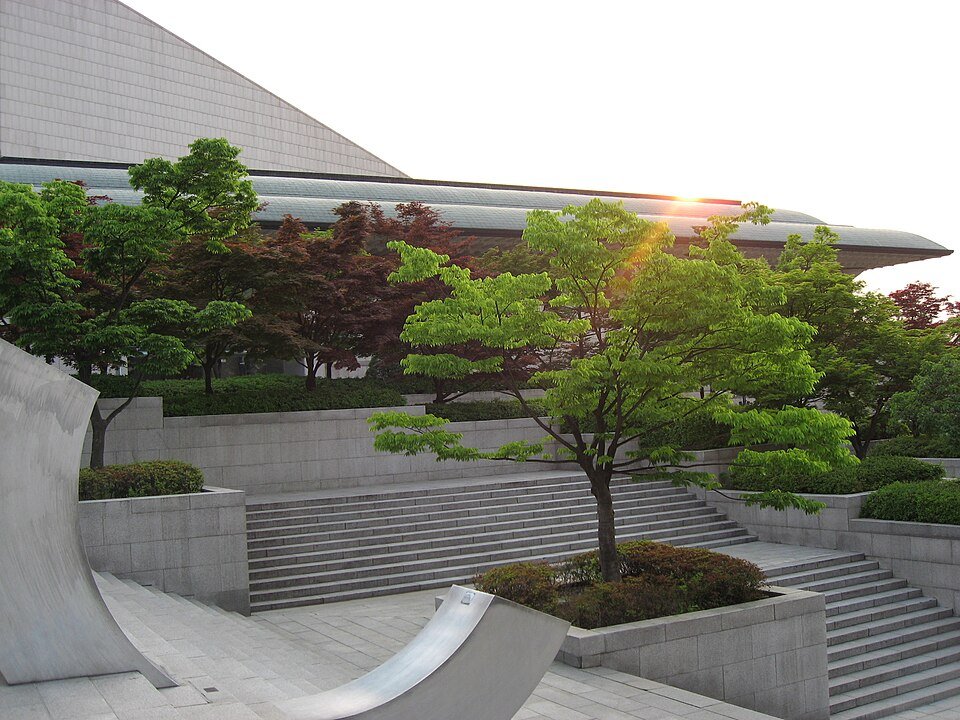
Photo: Kai Hendry / Wikimedia Commons, CC BY 2.0
Ordering and Eating Tips
- Choose your heat. Many shops ask “maeun mat?” Say deol maepge (less spicy) or an maepge (not spicy) if needed.
- Crack the egg immediately. The stew is boiling when it lands; stir the egg in for a silky broth or leave it whole to poach.
- Use the stone-pot rice. Scoop the rice into a bowl, pour hot water or tea into the pot, and drink the toasty nurungji at the end.
- Vegetarians: ask for chaesik and check the broth; many bases use anchovy or clam stock.
- Solo diners are welcome. Sundubu is one of the easiest Korean meals to order for one person.
- Pair it with our guides to samgyetang in Seoul, gamjatang and bibimbap for a full winter food trip.
FAQ: Sundubu Jjigae in Seoul
Is sundubu jjigae very spicy?
The standard version is medium-spicy, but most restaurants let you choose the level. Perilla-seed and white (Chodang-style) sundubu are not spicy at all.
How much is sundubu jjigae in Seoul in 2026?
Expect ₩9,000–11,000 at a casual restaurant and ₩11,000–14,000 at famous specialists, including rice and side dishes.
What is the difference between sundubu and regular tofu?
Sundubu is uncurdled, unpressed tofu, so it is much softer and wetter than block tofu (dubu). It breaks apart in the stew and gives it a silky body.
Where is the best area to eat sundubu jjigae in Seoul?
The City Hall/Bukchang-dong area is the classic downtown choice, and the Seoul Arts Center area in Seocho is home to Baeknyeonok, known for house-made tofu.
Sources
- Wikitree (Sep 17, 2026): kimchi-jjigae set meal prices, Korea Consumer Agency Chamgagyeok data
- BCD Tofu House: About (founded 1996, Los Angeles)
- DiningCode: Bukchang-dong Sundubu main branch (menu, hours)
- MICHELIN Guide: Baeknyeonok
- Polle: Baeknyeonok menu and prices
- The Soul of Seoul: Where to eat sundubu jjigae (updated Oct 2026)
Prices and hours were checked in October 2026 and can change; confirm on Naver or Kakao Map before you go.
Featured image: Haemul sundubu jjigae (seafood soft tofu stew) — Photo: Ajumeoni / Wikimedia Commons, CC0